Risk Factors for Surgical Site Infection after Lower Limb Revascularisation Surgery: a Systematic Review and Meta-Analysis of Prognostic Studies
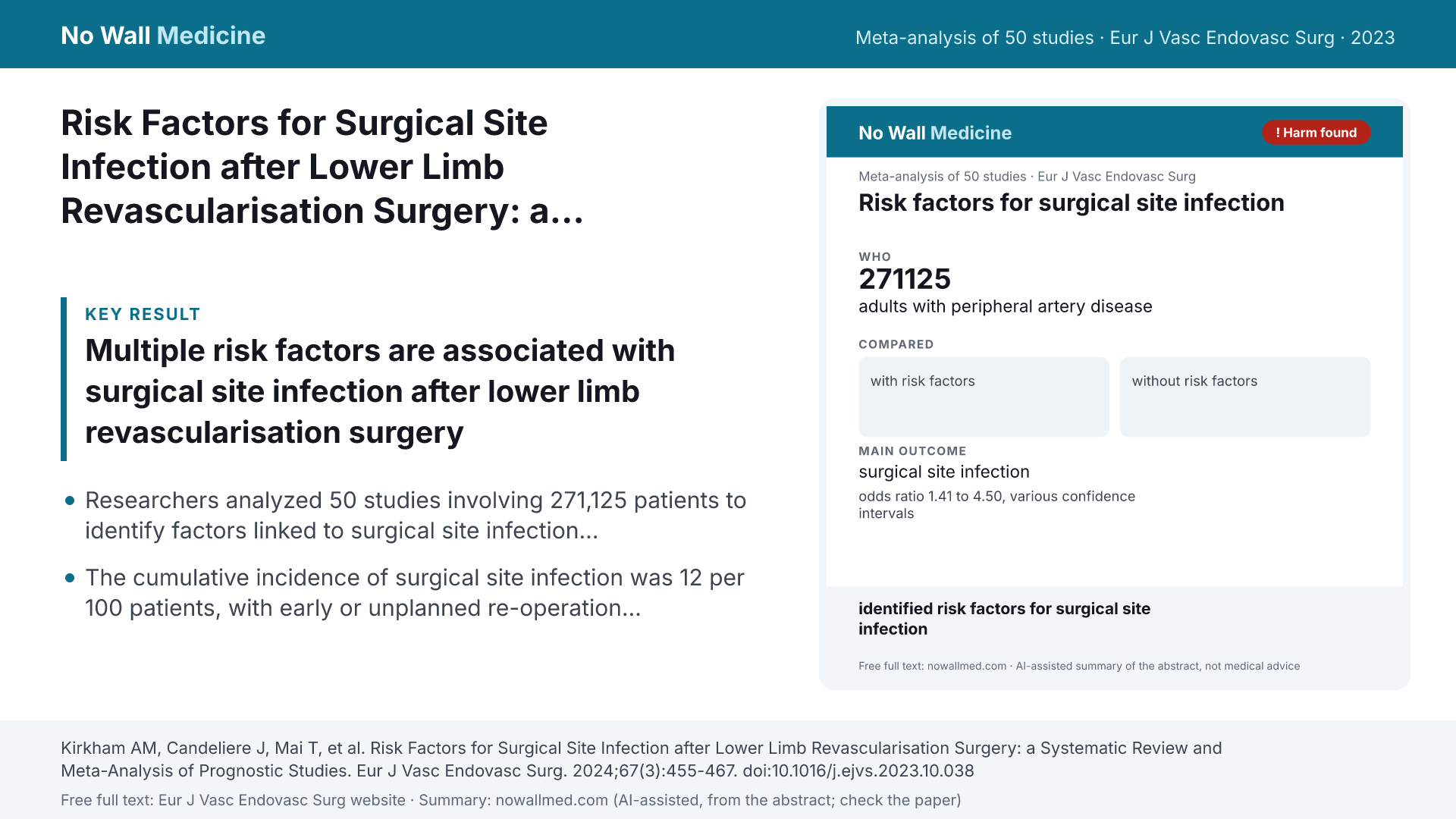
Key result: Multiple risk factors are associated with surgical site infection after lower limb revascularisation surgery
Key points
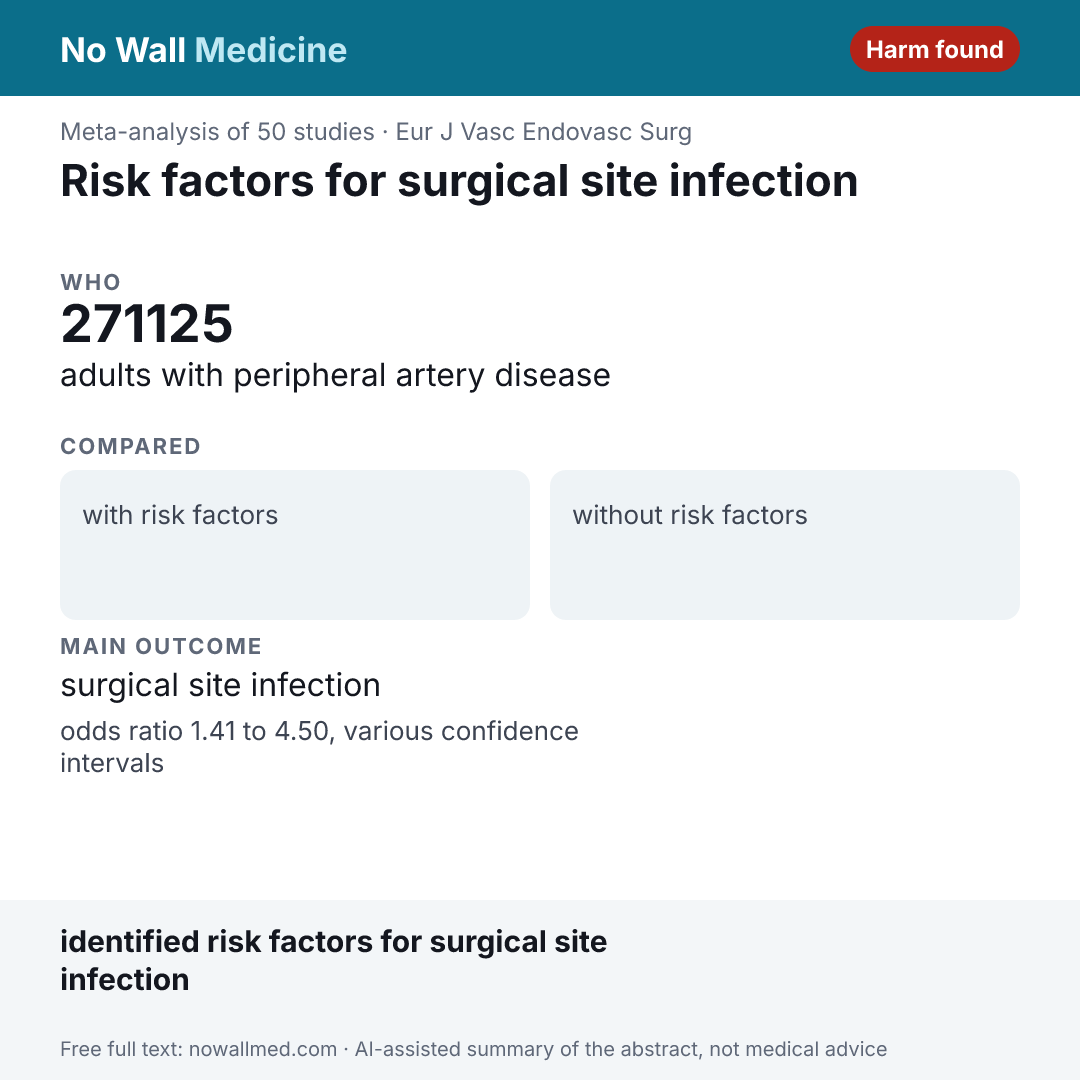
- Researchers analyzed 50 studies involving 271,125 patients to identify factors linked to surgical site infection after surgery to restore blood flow to the legs.
- The cumulative incidence of surgical site infection was 12 per 100 patients, with early or unplanned re-operation being associated with the highest odds (OR 4.50).
- Other factors associated with increased odds included obesity (OR 2.20), chronic kidney disease (OR 2.13), and urgent or emergency surgery (OR 2.12).
Why it matters: The specific risk factors that increase the likelihood of surgical site infection after lower limb revascularisation surgery were not clearly synthesized.
Discussion prompts
- Would these patients look like yours? Who was left out?
- Is the main outcome one that matters to patients?
- Is the difference large enough to change what you do?
Cite: Kirkham AM, Candeliere J, Mai T, et al. Risk Factors for Surgical Site Infection after Lower Limb Revascularisation Surgery: a Systematic Review and Meta-Analysis of Prognostic Studies. Eur J Vasc Endovasc Surg. 2024;67(3):455-467. doi:10.1016/j.ejvs.2023.10.038
Free full text: Eur J Vasc Endovasc Surg website · Summary and visual abstract: nowallmed.com/a/risk-factors-for-surgical-site-infection-after-lower-limb-16ixk5m/ (AI-assisted from the abstract; check the paper before relying on it).