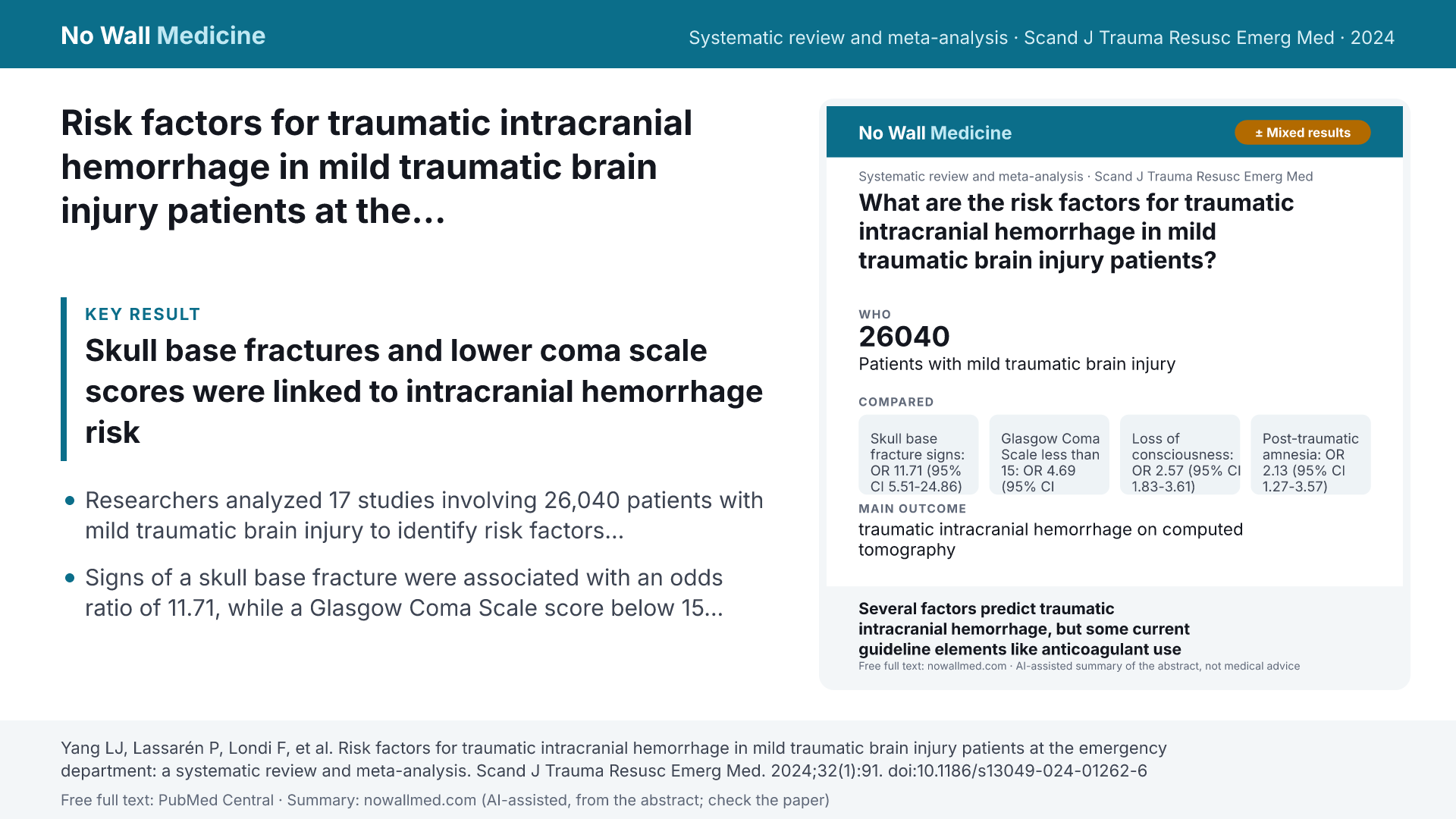
Skull base fractures and lower coma scale scores were linked to intracranial hemorrhage risk
Risk factors for traumatic intracranial hemorrhage in mild traumatic brain injury patients at the emergency department: a systematic review and meta-analysis
Systematic review and meta-analysisMixed results
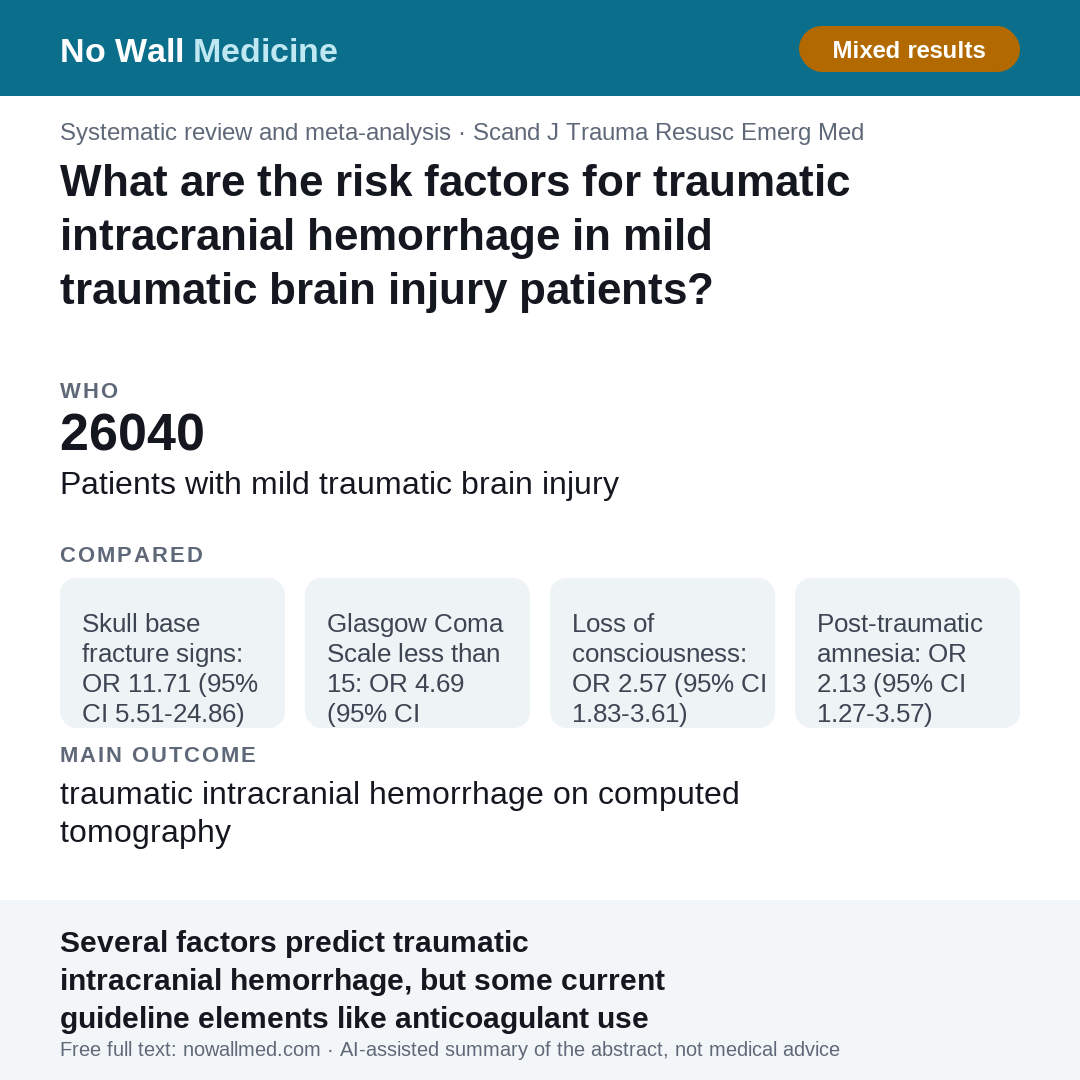
What are the risk factors for traumatic intracranial hemorrhage in mild traumatic brain injury patients?
Who
26040
Patients with mild traumatic brain injury
Compared
Skull base fracture signs: OR 11.71 (95% CI 5.51-24.86)
Glasgow Coma Scale less than 15: OR 4.69 (95% CI 2.76-7.98)
Loss of consciousness: OR 2.57 (95% CI 1.83-3.61)
Post-traumatic amnesia: OR 2.13 (95% CI 1.27-3.57)
Main outcome
traumatic intracranial hemorrhage on computed tomography
Bottom line: Several factors predict traumatic intracranial hemorrhage, but some current guideline elements like anticoagulant use were not predictive.
Limitation: There were multiple sources of heterogeneity across studies.
Scand J Trauma Resusc Emerg Med · 2024-09-17Download image
Clinical question: What are the risk factors for traumatic intracranial hemorrhage in mild traumatic brain injury patients?
Why it matters: Current emergency department guidelines may lead to the overuse of computed tomography scans for diagnosing intracranial hemorrhage in patients with mild traumatic brain injury.
Key points
- Researchers analyzed 17 studies involving 26,040 patients with mild traumatic brain injury to identify risk factors for traumatic intracranial hemorrhage.
- Signs of a skull base fracture were associated with an odds ratio of 11.71, while a Glasgow Coma Scale score below 15 was associated with an odds ratio of 4.69.
- Other significant predictors included loss of consciousness, post-traumatic amnesia, post-traumatic vomiting, antiplatelet therapy, and male sex.
Limitation the authors note: There were multiple sources of heterogeneity across the included studies.
Headline and key points written with AI from the paper’s abstract, with every number checked against it. Read the paper before relying on them.
Was this summary helpful?
Subject terms
Headline, design, result, key points, caveat and citation as plain text.
Cite this article
Yang LJ, Lassarén P, Londi F, et al. Risk factors for traumatic intracranial hemorrhage in mild traumatic brain injury patients at the emergency department: a systematic review and meta-analysis. Scand J Trauma Resusc Emerg Med. 2024. doi:10.1186/s13049-024-01262-6
Spotted a mistake? Suggest a correction