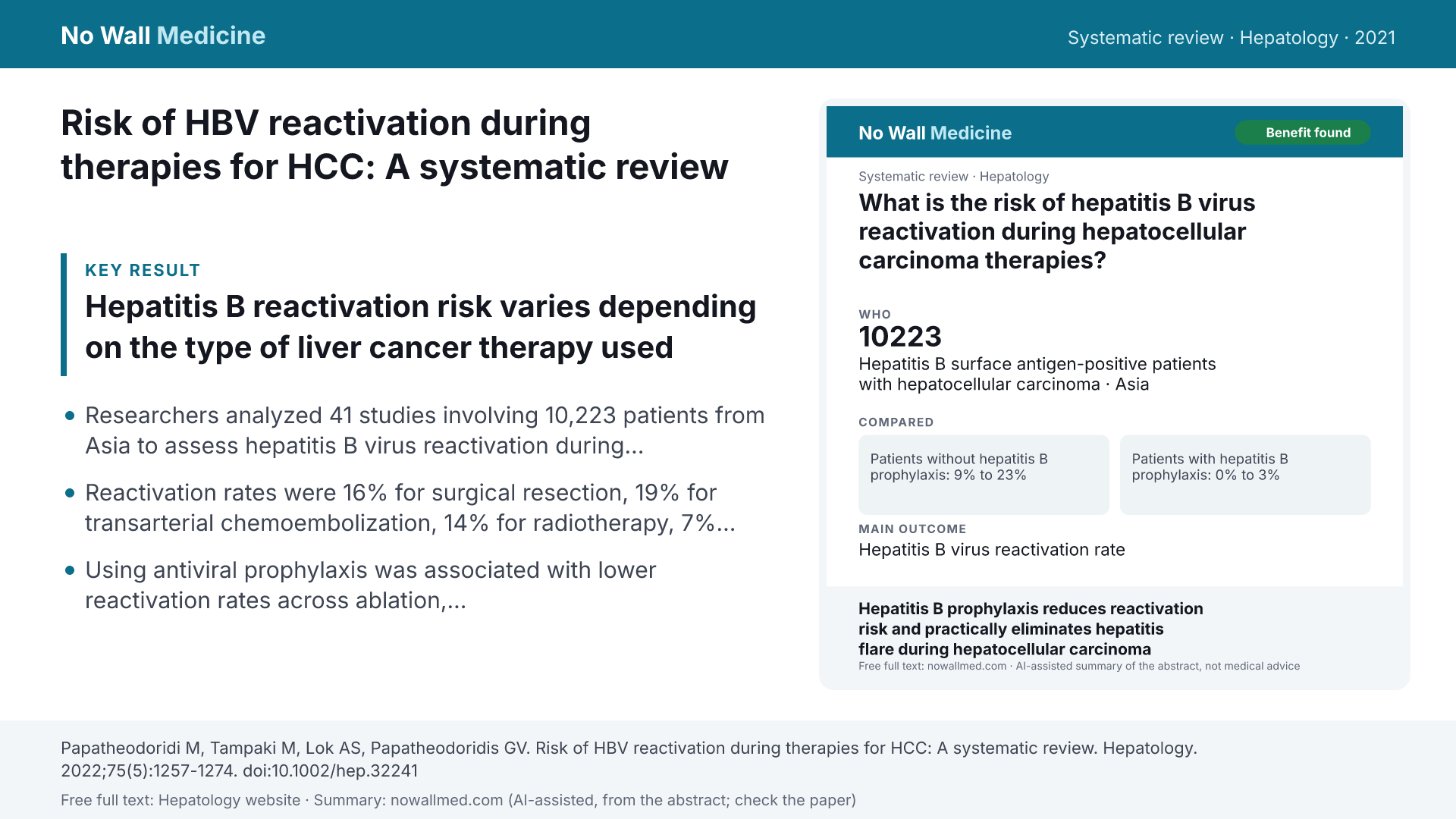
Hepatitis B reactivation risk varies depending on the type of liver cancer therapy used
Risk of HBV reactivation during therapies for HCC: A systematic review
Systematic reviewBenefit found
What is the risk of hepatitis B virus reactivation during hepatocellular carcinoma therapies?
Who
10223
Hepatitis B surface antigen-positive patients with hepatocellular carcinoma · Asia
Compared
Patients without hepatitis B prophylaxis: 9% to 23%
Patients with hepatitis B prophylaxis: 0% to 3%
Main outcome
Hepatitis B virus reactivation rate
Bottom line: Hepatitis B prophylaxis reduces reactivation risk and practically eliminates hepatitis flare during hepatocellular carcinoma therapy.
Hepatology · 2021-12-16 · Save PNG
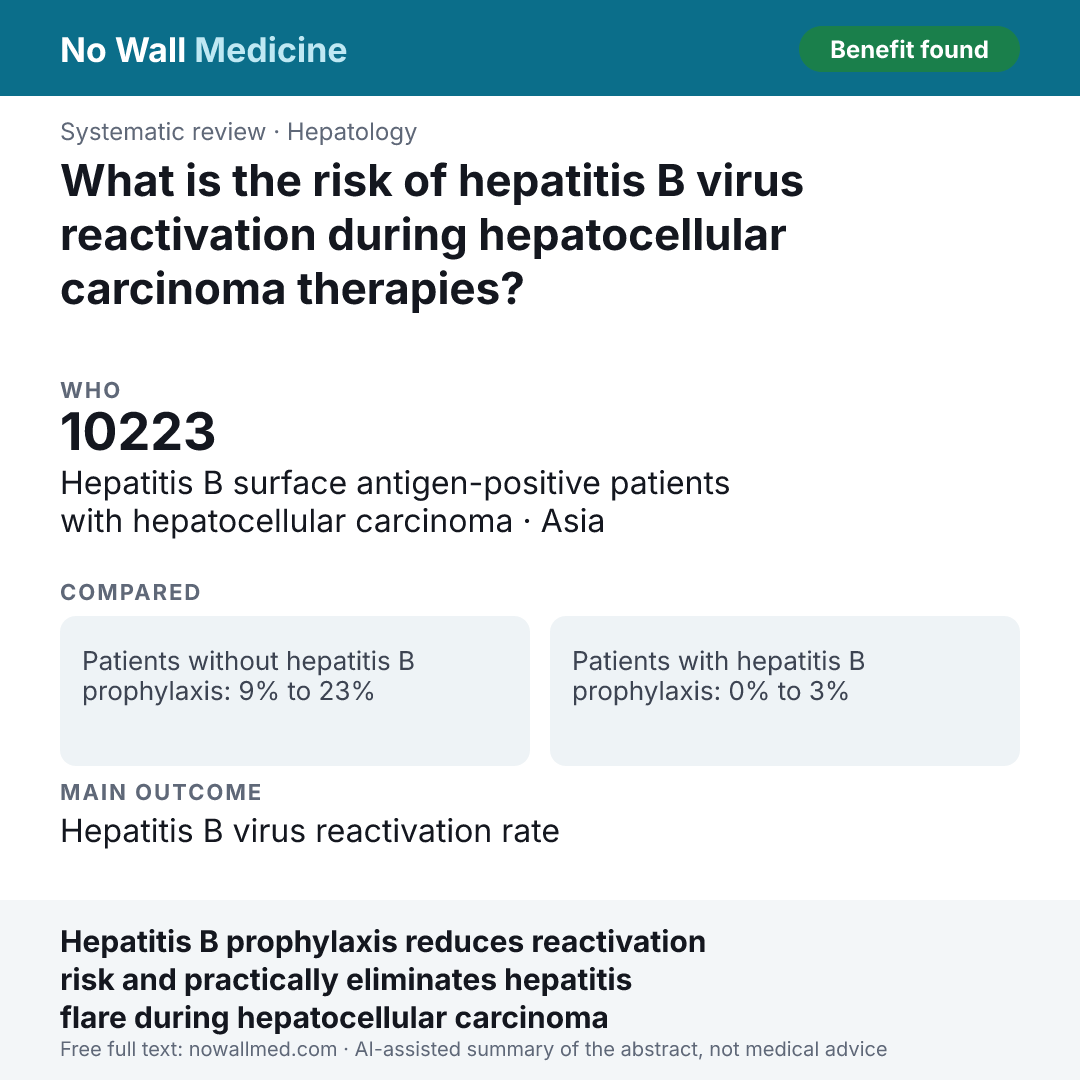
Clinical question: What is the risk of hepatitis B virus reactivation during hepatocellular carcinoma therapies?
Key points
- Researchers analyzed 41 studies involving 10,223 patients from Asia to assess hepatitis B virus reactivation during liver cancer treatments.
- Reactivation rates were 16% for surgical resection, 19% for transarterial chemoembolization, 14% for radiotherapy, 7% for local ablation, and 7% for systemic agents.
- Using antiviral prophylaxis was associated with lower reactivation rates across ablation, resection, chemoembolization, radiotherapy, and systemic therapy groups.
Headline and key points written with AI from the paper’s abstract, with every number checked against it. Read the paper before relying on them.
Was this summary helpful?
Subject terms
Headline, design, result, key points, caveat and citation as plain text.
Cite this article
Papatheodoridi M, Tampaki M, Lok AS, Papatheodoridis GV. Risk of HBV reactivation during therapies for HCC: A systematic review. Hepatology. 2022;75(5):1257-1274. doi:10.1002/hep.32241
Spotted a mistake? Suggest a correction