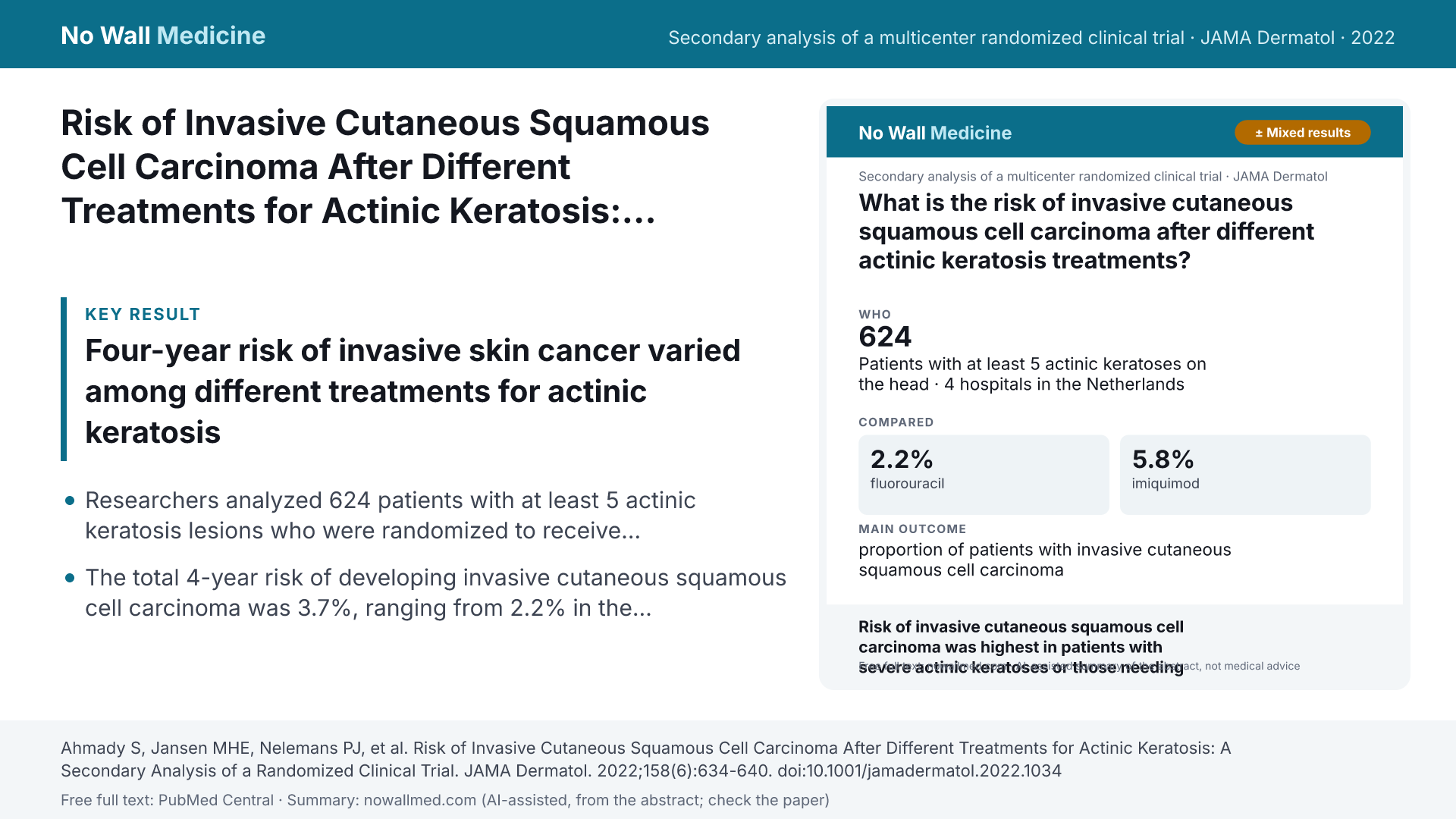
Four-year risk of invasive skin cancer varied among different treatments for actinic keratosis
Risk of Invasive Cutaneous Squamous Cell Carcinoma After Different Treatments for Actinic Keratosis: A Secondary Analysis of a Randomized Clinical Trial
Secondary analysis of a multicenter randomized clinical trialMixed results
What is the risk of invasive cutaneous squamous cell carcinoma after different actinic keratosis treatments?
Who
624
Patients with at least 5 actinic keratoses on the head · 4 hospitals in the Netherlands
Compared
2.2%fluorouracil (95% CI, 0.7%-6.6%)
5.8%imiquimod (95% CI, 2.9%-11.3%)
Main outcome
proportion of patients with invasive cutaneous squamous cell carcinoma
Result: 3.7% (95% CI, 2.4%-5.7%)
Bottom line: Risk of invasive cutaneous squamous cell carcinoma was highest in patients with severe actinic keratoses or those needing additional treatment.
JAMA Dermatol · 2022-04-28 · Save PNG
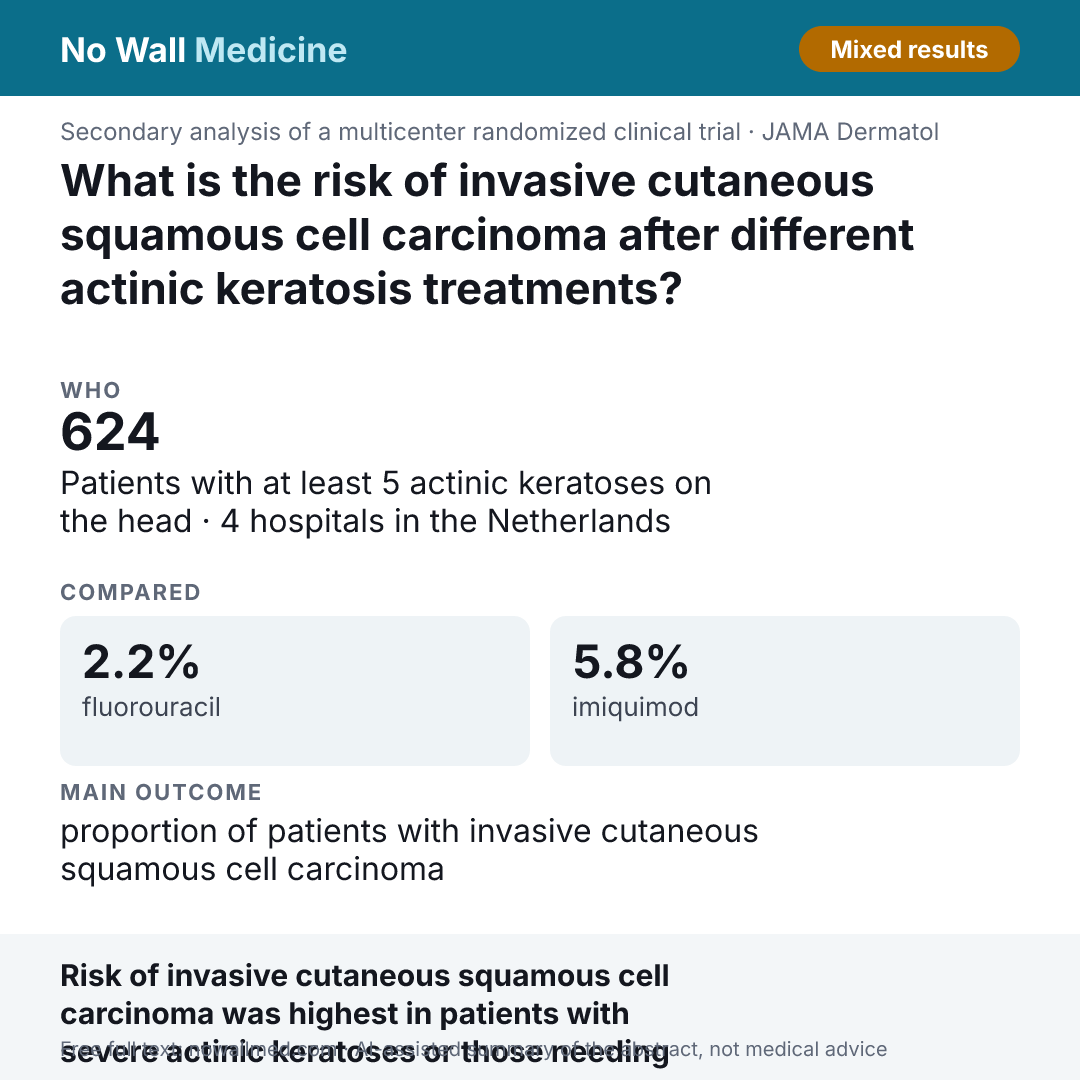
Clinical question: What is the risk of invasive cutaneous squamous cell carcinoma after different actinic keratosis treatments?
Why it matters: It is debated whether actinic keratosis progresses into invasive cutaneous squamous cell carcinoma and how different treatments affect this risk.
Key points
- Researchers analyzed 624 patients with at least 5 actinic keratosis lesions who were randomized to receive 5% fluorouracil, 5% imiquimod cream, methylaminolevulinate photodynamic therapy, or 0.015% ingenol mebutate gel.
- The total 4-year risk of developing invasive cutaneous squamous cell carcinoma was 3.7%, ranging from 2.2% in the fluorouracil group to 5.8% in the imiquimod group.
- Patients with severe actinic keratosis had a 20.9% risk, which increased to 33.5% for those with severe lesions who required additional treatment.
Headline and key points written with AI from the paper’s abstract, with every number checked against it. Read the paper before relying on them.
Was this summary helpful?
Subject terms
Headline, design, result, key points, caveat and citation as plain text.
Cite this article
Ahmady S, Jansen MHE, Nelemans PJ, et al. Risk of Invasive Cutaneous Squamous Cell Carcinoma After Different Treatments for Actinic Keratosis: A Secondary Analysis of a Randomized Clinical Trial. JAMA Dermatol. 2022;158(6):634-640. doi:10.1001/jamadermatol.2022.1034
Spotted a mistake? Suggest a correction