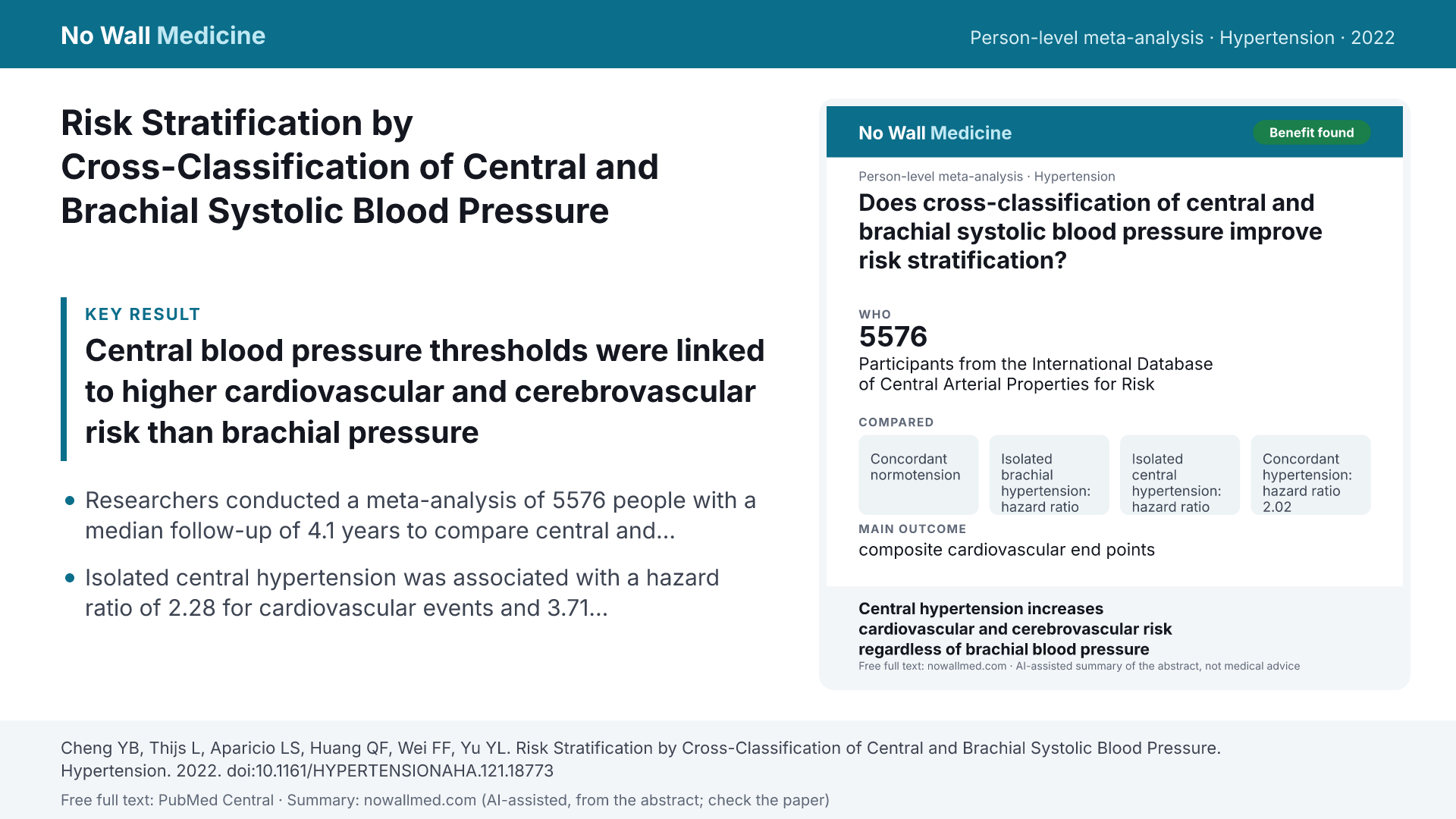
Central blood pressure thresholds were linked to higher cardiovascular and cerebrovascular risk than brachial pressure
Risk Stratification by Cross-Classification of Central and Brachial Systolic Blood Pressure
Person-level meta-analysisBenefit found
Does cross-classification of central and brachial systolic blood pressure improve risk stratification?
Who
5576
Participants from the International Database of Central Arterial Properties for Risk Stratification
Compared
Concordant normotension
Isolated brachial hypertension: hazard ratio 1.30 (95% CI, 0.58-2.94)
Isolated central hypertension: hazard ratio 2.28 (1.21-4.30)
Concordant hypertension: hazard ratio 2.02 (1.41-2.91)
Main outcome
composite cardiovascular end points
Result: hazard ratio 2.28 (95% CI, 1.21-4.30) for isolated central hypertension
Bottom line: Central hypertension increases cardiovascular and cerebrovascular risk regardless of brachial blood pressure status.
Hypertension · 2022-03-04Download image
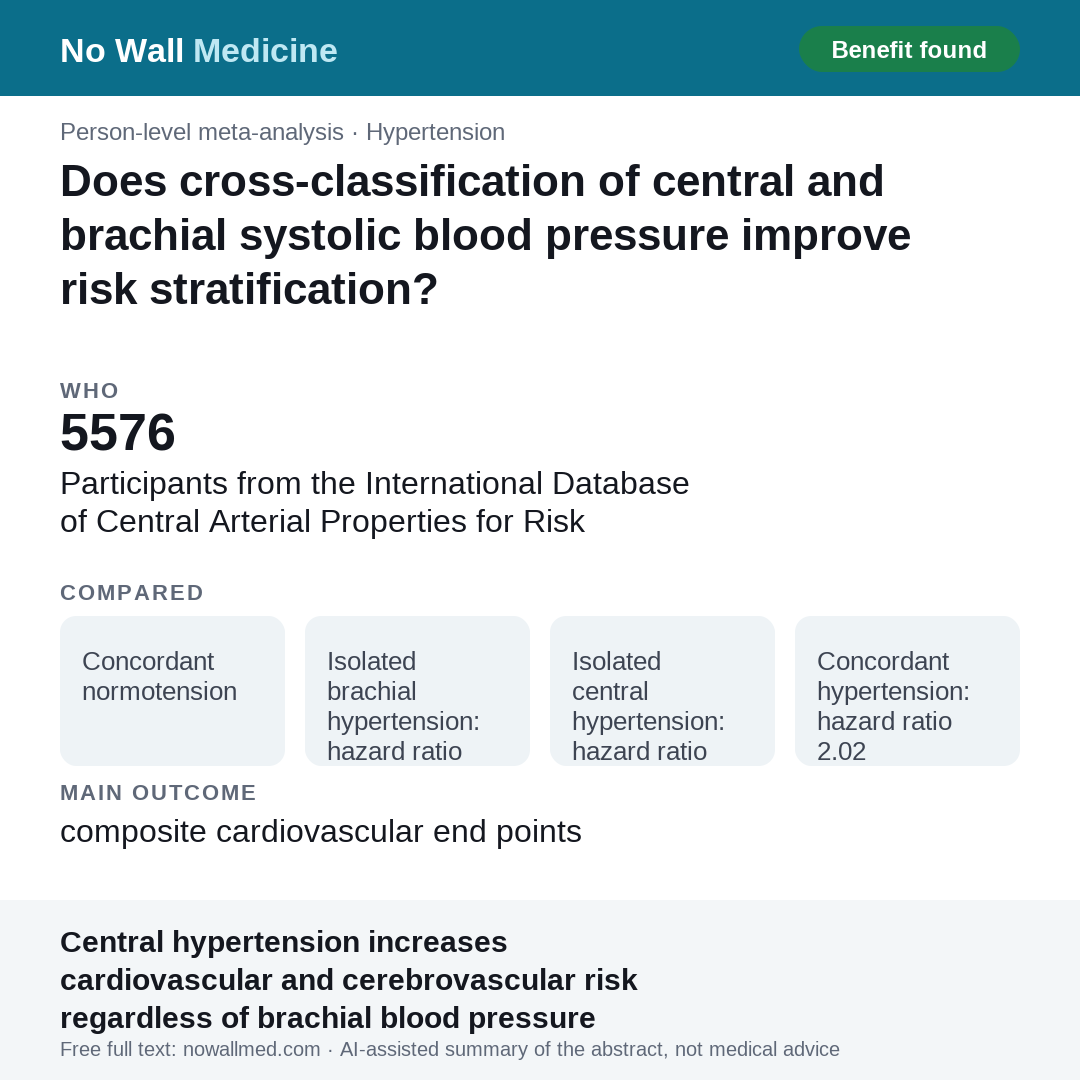
Clinical question: Does cross-classification of central and brachial systolic blood pressure improve risk stratification?
Why it matters: It is debated whether cardiovascular risk is more closely linked to central systolic blood pressure or brachial systolic blood pressure.
Key points
- Researchers conducted a meta-analysis of 5576 people with a median follow-up of 4.1 years to compare central and brachial systolic blood pressure.
- Isolated central hypertension was associated with a hazard ratio of 2.28 for cardiovascular events and 3.71 for cerebrovascular events compared to normotension.
- Concordant hypertension, where both central and brachial pressures are high, was associated with a cardiovascular hazard ratio of 2.02 and a cerebrovascular hazard ratio of 2.60.
Headline and key points written with AI from the paper’s abstract, with every number checked against it. Read the paper before relying on them.
Was this summary helpful?
Subject terms
Cite this article
Cheng YB, Thijs L, Aparicio LS, Huang QF, Wei FF, Yu YL. Risk Stratification by Cross-Classification of Central and Brachial Systolic Blood Pressure. Hypertension. 2022. doi:10.1161/HYPERTENSIONAHA.121.18773
Spotted a mistake? Suggest a correction
Top studies every Monday
The week’s key trials and guidelines in your specialties, plus any topics you follow. By email, free.
Get the weekly digest