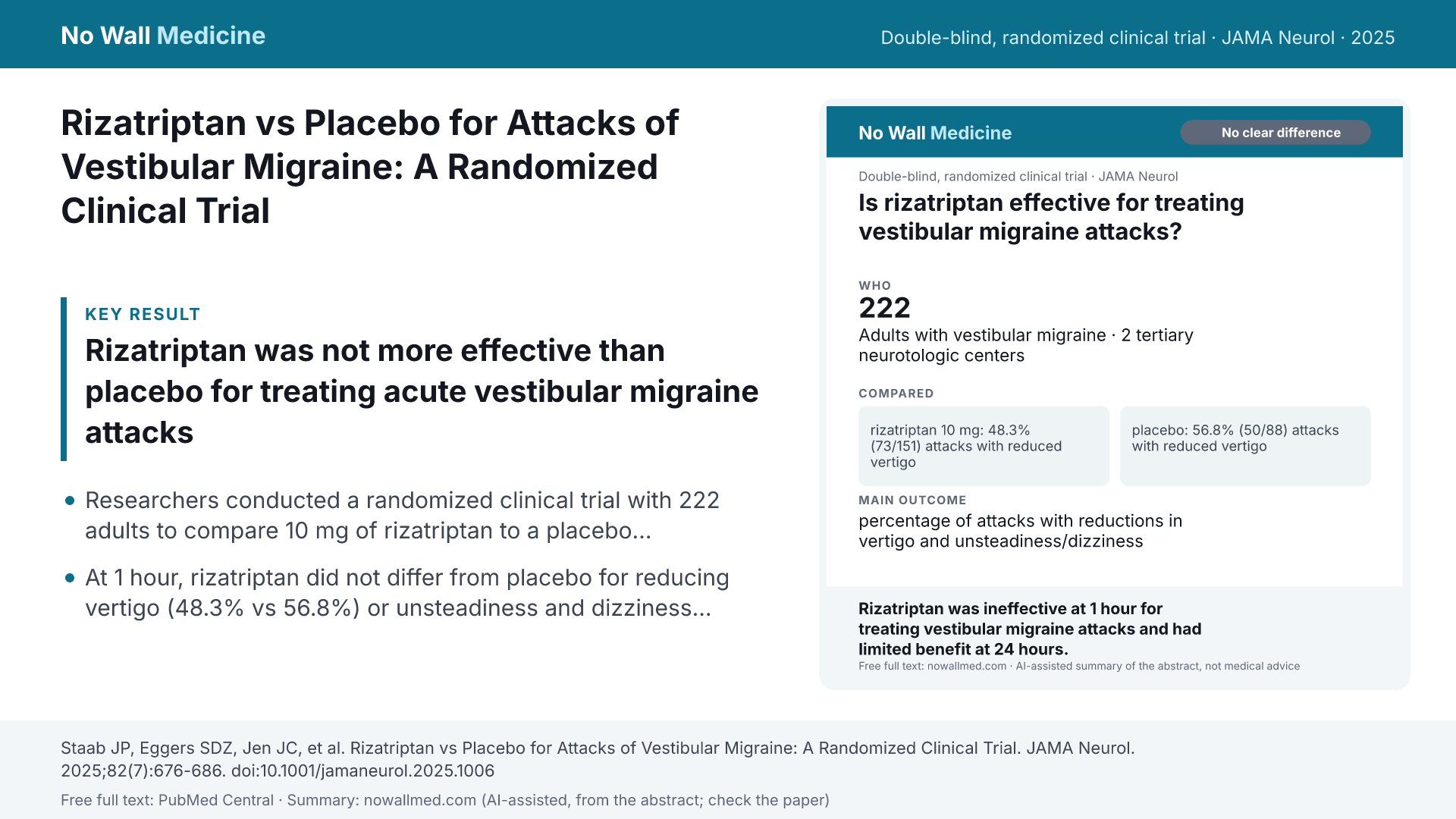
Rizatriptan was not more effective than placebo for treating acute vestibular migraine attacks
Rizatriptan vs Placebo for Attacks of Vestibular Migraine: A Randomized Clinical Trial
Double-blind, randomized clinical trialNo clear difference
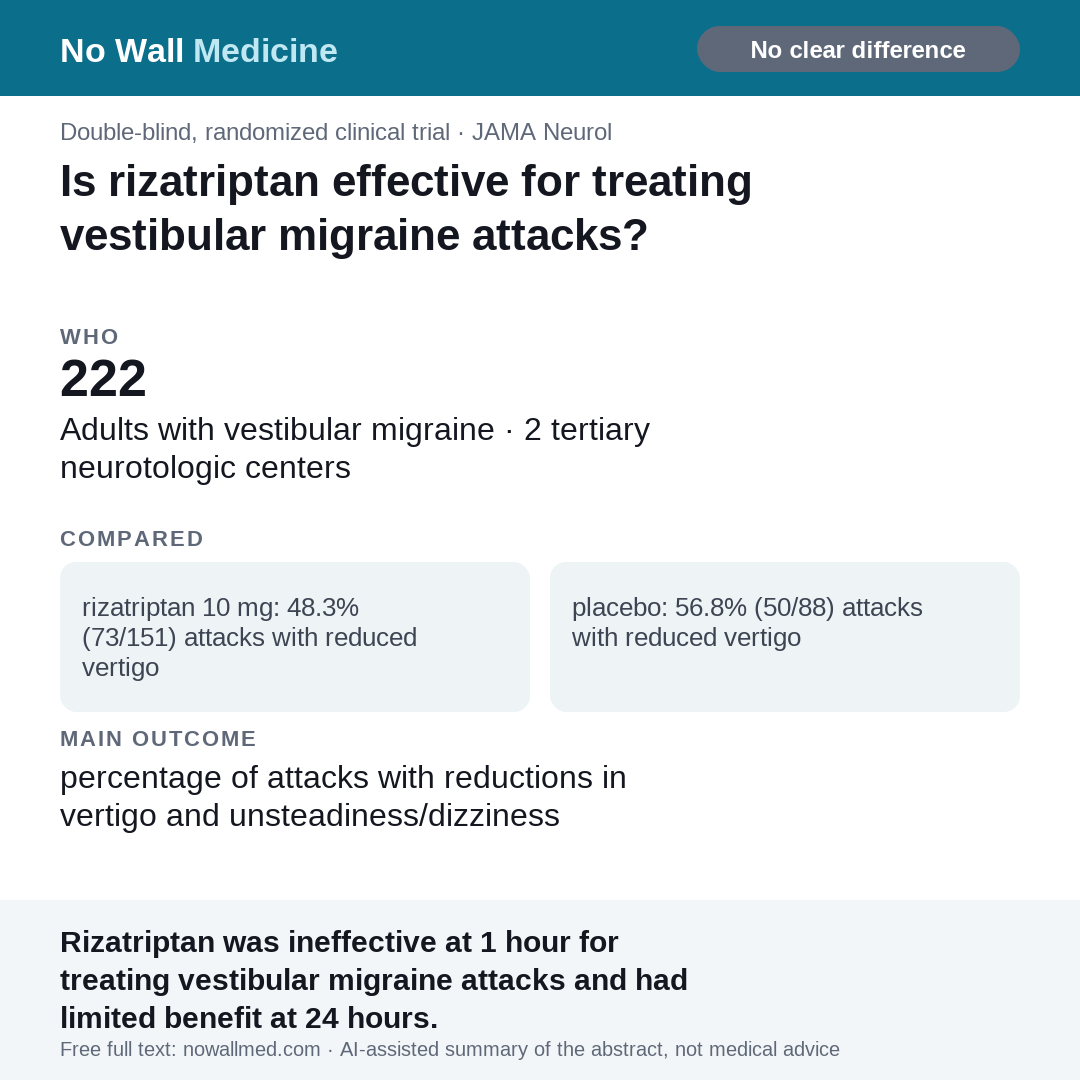
Is rizatriptan effective for treating vestibular migraine attacks?
Who
222
Adults with vestibular migraine · 2 tertiary neurotologic centers
Compared
rizatriptan 10 mg: 48.3% (73/151) attacks with reduced vertigo
placebo: 56.8% (50/88) attacks with reduced vertigo
Main outcome
percentage of attacks with reductions in vertigo and unsteadiness/dizziness
Result: odds ratio 0.71 (95% CI 0.42-1.21)
Bottom line: Rizatriptan was ineffective at 1 hour for treating vestibular migraine attacks and had limited benefit at 24 hours.
JAMA Neurol · 2025-05-12Download image
Clinical question: Is rizatriptan effective for treating vestibular migraine attacks?
Why it matters: Vestibular migraine, a type of migraine involving dizziness and balance issues, currently has no established treatments.
Key points
- Researchers conducted a randomized clinical trial with 222 adults to compare 10 mg of rizatriptan to a placebo for treating vestibular migraine attacks.
- At 1 hour, rizatriptan did not differ from placebo for reducing vertigo (48.3% vs 56.8%) or unsteadiness and dizziness (19.2% vs 12.4%).
- No participants experienced serious adverse effects or stopped the treatment due to adverse effects during the study.
Headline and key points written with AI from the paper’s abstract, with every number checked against it. Read the paper before relying on them.
Was this summary helpful?
Subject terms
Cite this article
Staab JP, Eggers SDZ, Jen JC, et al. Rizatriptan vs Placebo for Attacks of Vestibular Migraine: A Randomized Clinical Trial. JAMA Neurol. 2025. doi:10.1001/jamaneurol.2025.1006
Spotted a mistake? Suggest a correction