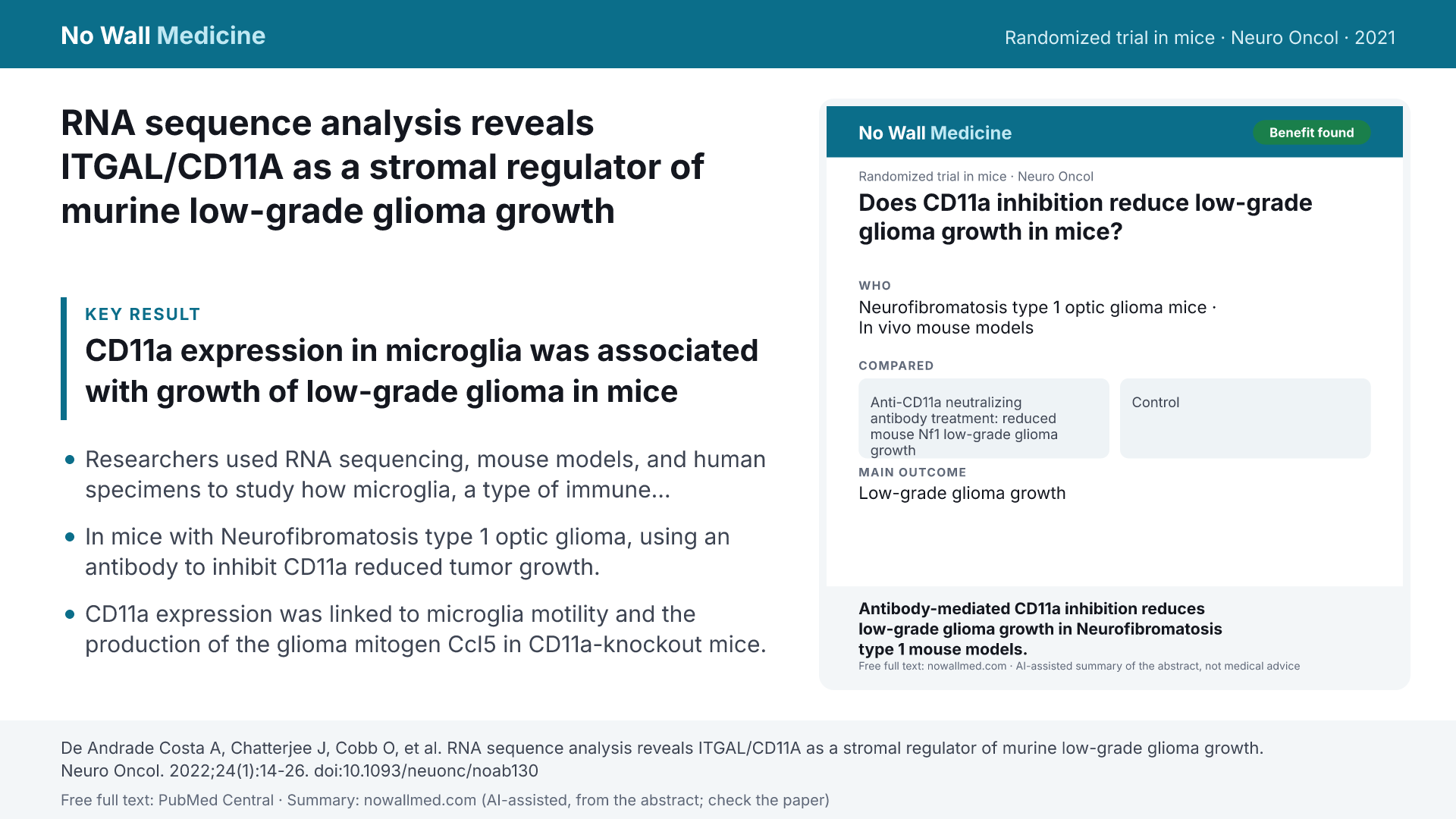
RNA sequence analysis reveals ITGAL/CD11A as a stromal regulator of murine low-grade glioma growth
Key result: CD11a expression in microglia was associated with growth of low-grade glioma in mice
Randomized trial in miceBenefit found
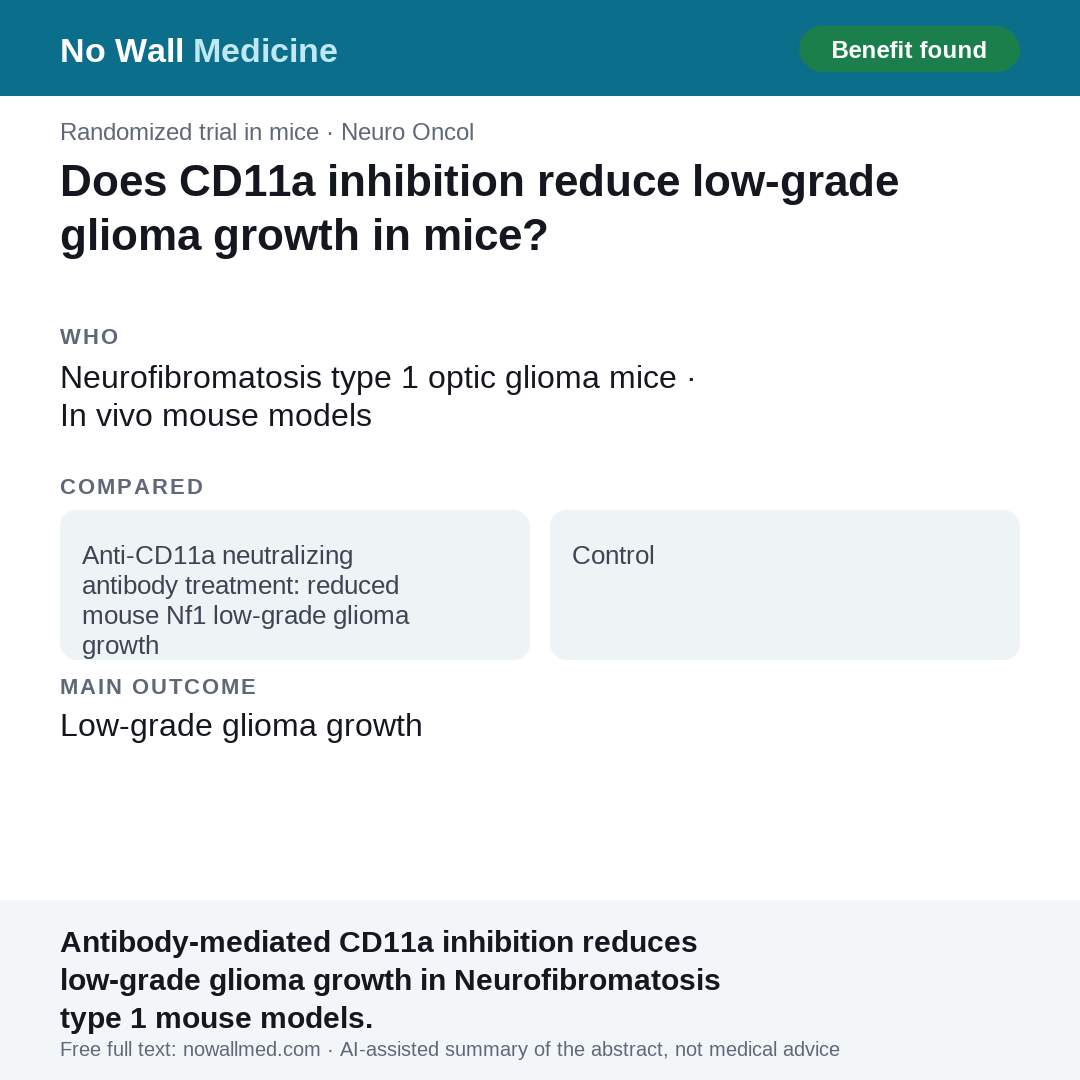
Does CD11a inhibition reduce low-grade glioma growth in mice?
Who
Neurofibromatosis type 1 optic glioma mice · In vivo mouse models
Compared
Anti-CD11a neutralizing antibody treatment: reduced mouse Nf1 low-grade glioma growth
Control
Main outcome
Low-grade glioma growth
Bottom line: Antibody-mediated CD11a inhibition reduces low-grade glioma growth in Neurofibromatosis type 1 mouse models.
Neuro Oncol · 2021-05-28Download image
Key points
- Researchers used RNA sequencing, mouse models, and human specimens to study how microglia, a type of immune cell, influence low-grade glioma growth.
- In mice with Neurofibromatosis type 1 optic glioma, using an antibody to inhibit CD11a reduced tumor growth.
- CD11a expression was linked to microglia motility and the production of the glioma mitogen Ccl5 in CD11a-knockout mice.
Discussion prompts
- Would these patients look like yours? Who was left out?
- Is the main outcome one that matters to patients?
- Is the difference large enough to change what you do?
Cite: De Andrade Costa A, Chatterjee J, Cobb O, et al. RNA sequence analysis reveals ITGAL/CD11A as a stromal regulator of murine low-grade glioma growth. Neuro Oncol. 2021. doi:10.1093/neuonc/noab130
Free full text: PubMed Central · Summary and visual abstract: nowallmed.com/a/rna-sequence-analysis-reveals-itgal-cd11a-as-a-stromal-regulator-of-1xtte3d/ (AI-assisted from the abstract; check the paper before relying on it).