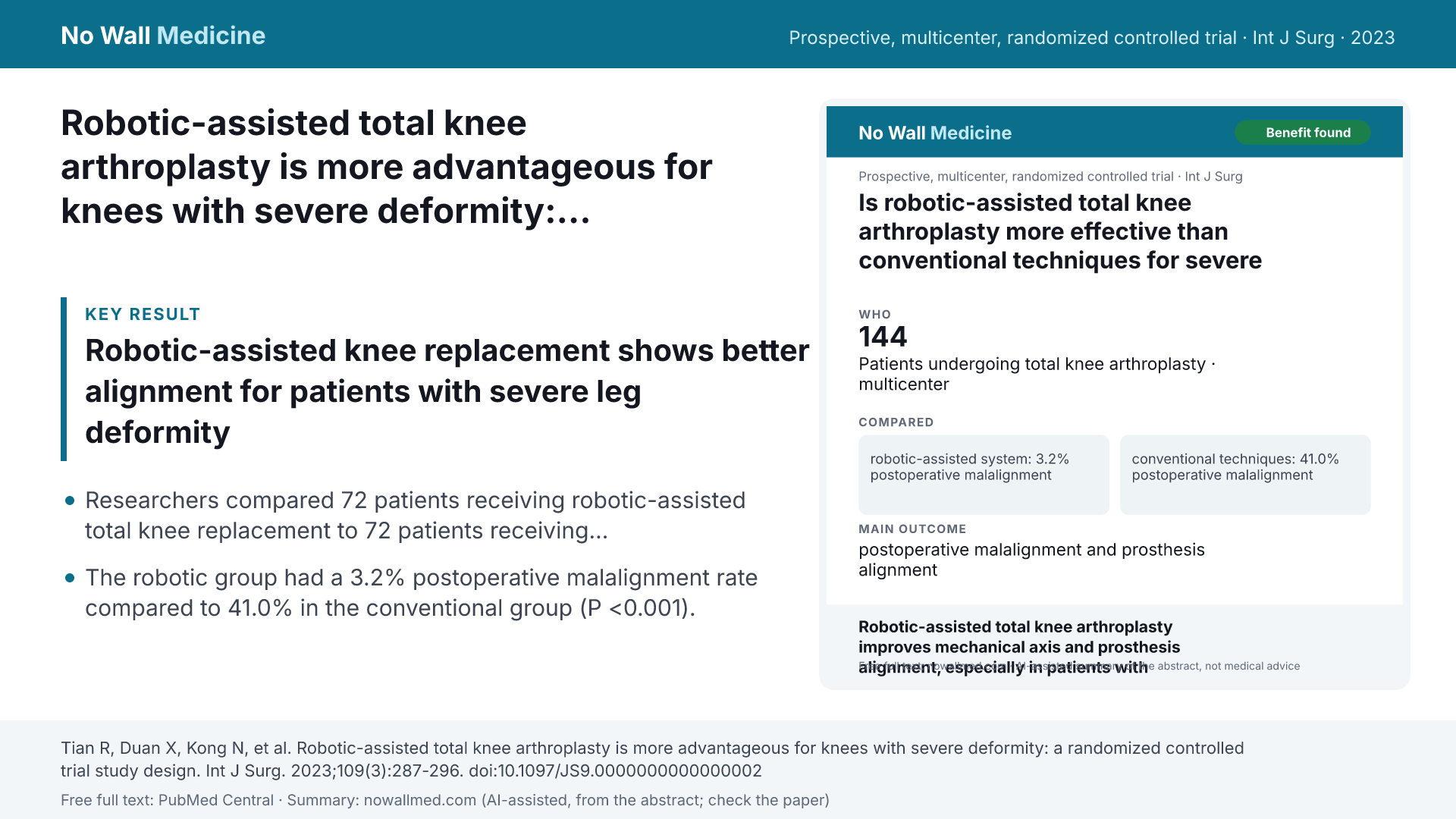
Robotic-assisted total knee arthroplasty is more advantageous for knees with severe deformity: a randomized controlled trial study design
Key result: Robotic-assisted knee replacement shows better alignment for patients with severe leg deformity
Key points
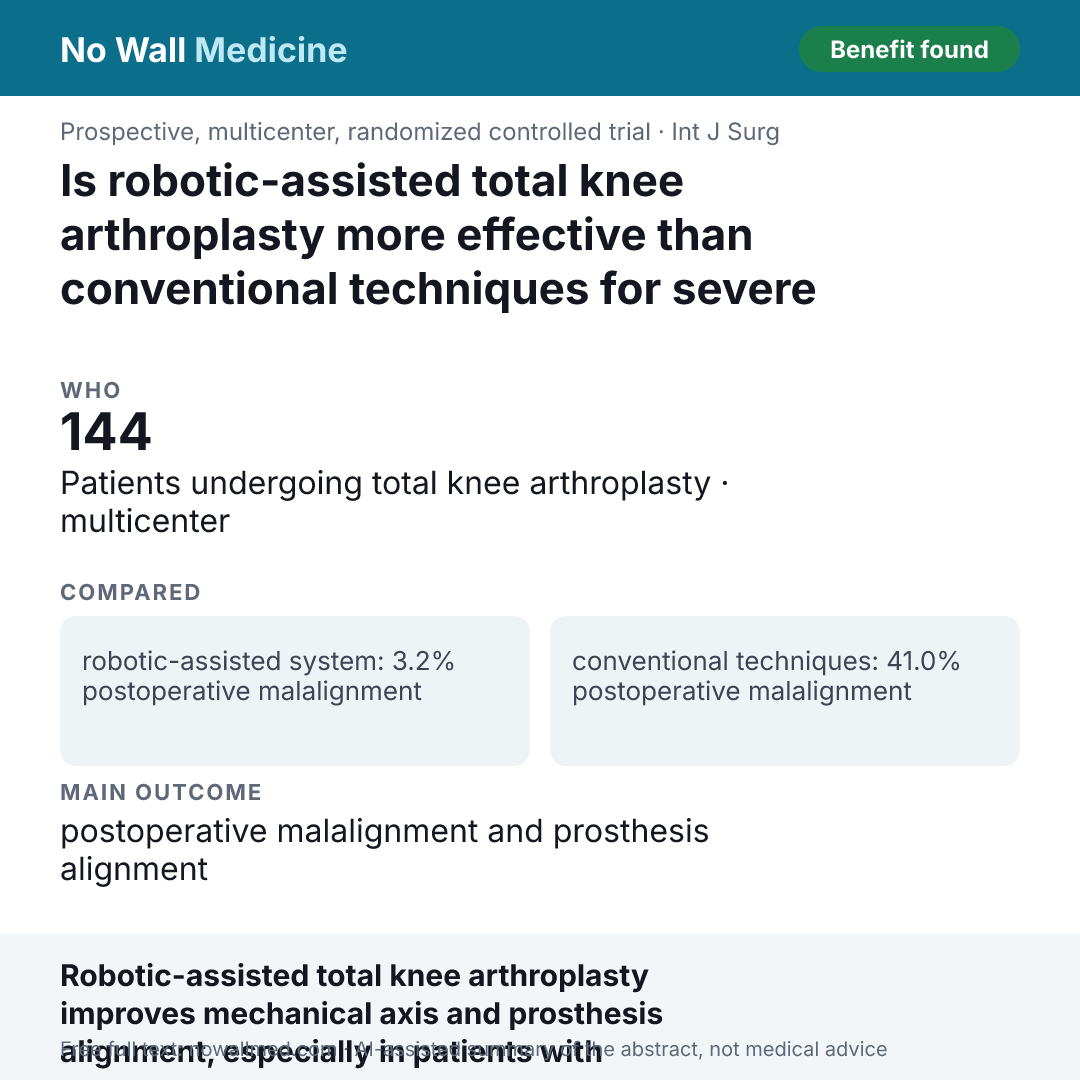
- Researchers compared 72 patients receiving robotic-assisted total knee replacement to 72 patients receiving conventional total knee replacement.
- The robotic group had a 3.2% postoperative malalignment rate compared to 41.0% in the conventional group (P <0.001).
- In patients with severe preoperative deformity, the robotic group had lower hip-knee-ankle angle and femoral component angle deviations (P <0.05).
In absolute numbers: robotic-assisted system 3.2% vs conventional techniques 41%, a difference of 37.8 percentage points (about 3 people treated for one more to benefit).
Limitation the authors note: A larger sample size and longer follow-up period are needed to determine long-term radiographic and clinical outcomes.
Discussion prompts
- Would these patients look like yours? Who was left out?
- Is the main outcome one that matters to patients?
- Is the difference large enough to change what you do?
Cite: Tian R, Duan X, Kong N, et al. Robotic-assisted total knee arthroplasty is more advantageous for knees with severe deformity: a randomized controlled trial study design. Int J Surg. 2023;109(3):287-296. doi:10.1097/JS9.0000000000000002
Free full text: PubMed Central · Summary and visual abstract: nowallmed.com/a/robotic-assisted-total-knee-arthroplasty-is-more-advantageous-for-16ivk8q/ (AI-assisted from the abstract; check the paper before relying on it).