Robotic surgery for rectal cancer and liver metastases resulted in fewer complications than open surgery
Robotic versus open surgery for simultaneous resection of rectal cancer and liver metastases: a randomized controlled trial
Randomized controlled trialBenefit found
Is robotic or open surgery better for simultaneous resection of rectal cancer and liver metastases?
Who
171
Patients aged 18 to 75 with resectable metastatic rectal cancer · A single hospital in China
Compared
31.4%Robotic surgery
57.6%Open surgery
Main outcome
Incidence rate of complications within 30 days after surgery
Bottom line: Robotic surgery resulted in fewer complications and faster recovery than open surgery for simultaneous resection.
Int J Surg · 2023-11-01Download image
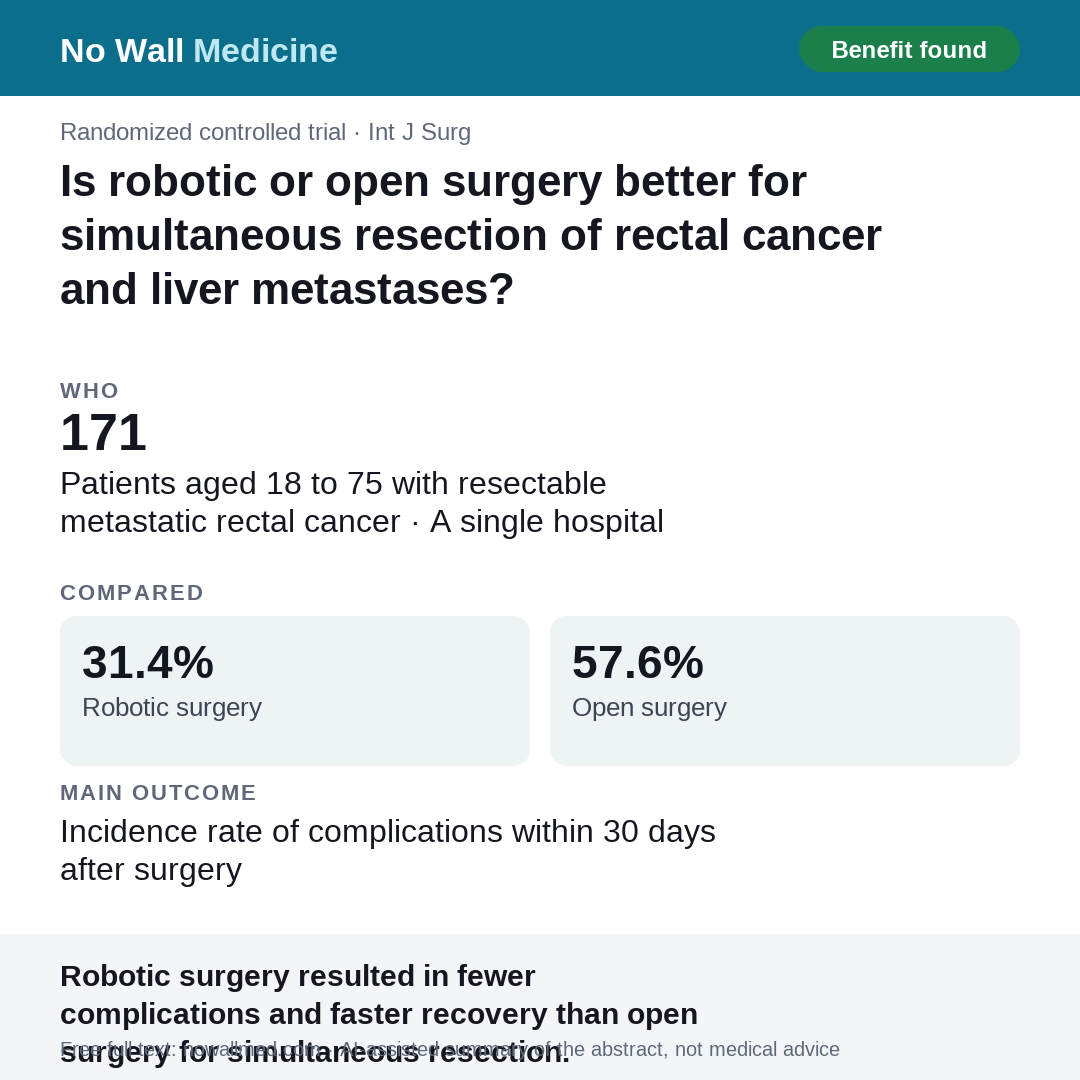
Clinical question: Is robotic or open surgery better for simultaneous resection of rectal cancer and liver metastases?
Why it matters: The feasibility of using robotic-assisted surgery for the simultaneous removal of primary rectal tumors and secondary liver lesions has not been established.
Key points
- Researchers compared 86 patients receiving robotic-assisted surgery to 85 patients receiving open surgery for simultaneous resection of rectal cancer and liver metastases.
- The robotic group had fewer 30-day complications (31.4% vs. 57.6%), less blood loss, faster bowel function recovery, and shorter hospital stays.
- There were no statistically significant differences in 3-year disease-free survival (39.5% vs. 35.3%) or 3-year overall survival (76.7% vs. 72.9%) between the groups.
Headline and key points written with AI from the paper’s abstract, with every number checked against it. Read the paper before relying on them.
Topics
Cite this article
Chang W, Ye Q, Xu D, Liu Y, Zhou S, Ren L. Robotic versus open surgery for simultaneous resection of rectal cancer and liver metastases: a randomized controlled trial. Int J Surg. 2023. doi:10.1097/JS9.0000000000000581
Spotted a mistake? Suggest a correction
Top studies every Monday
The week’s key trials and guidelines in your specialties, plus any topics you follow. By email, free.
Get the weekly digest