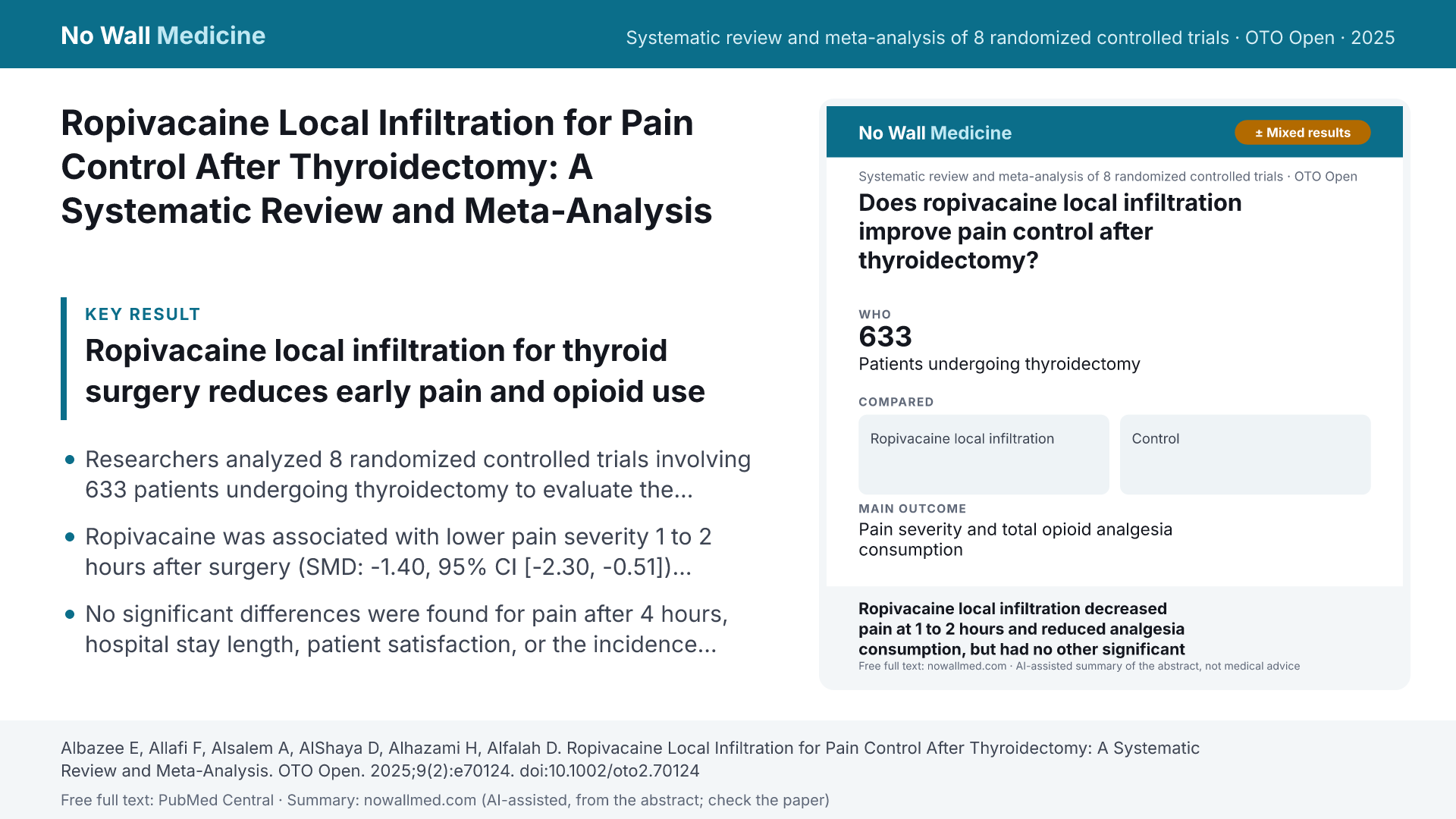
Ropivacaine local infiltration for thyroid surgery reduces early pain and opioid use
Ropivacaine Local Infiltration for Pain Control After Thyroidectomy: A Systematic Review and Meta-Analysis
Systematic review and meta-analysis of 8 randomized controlled trialsMixed results
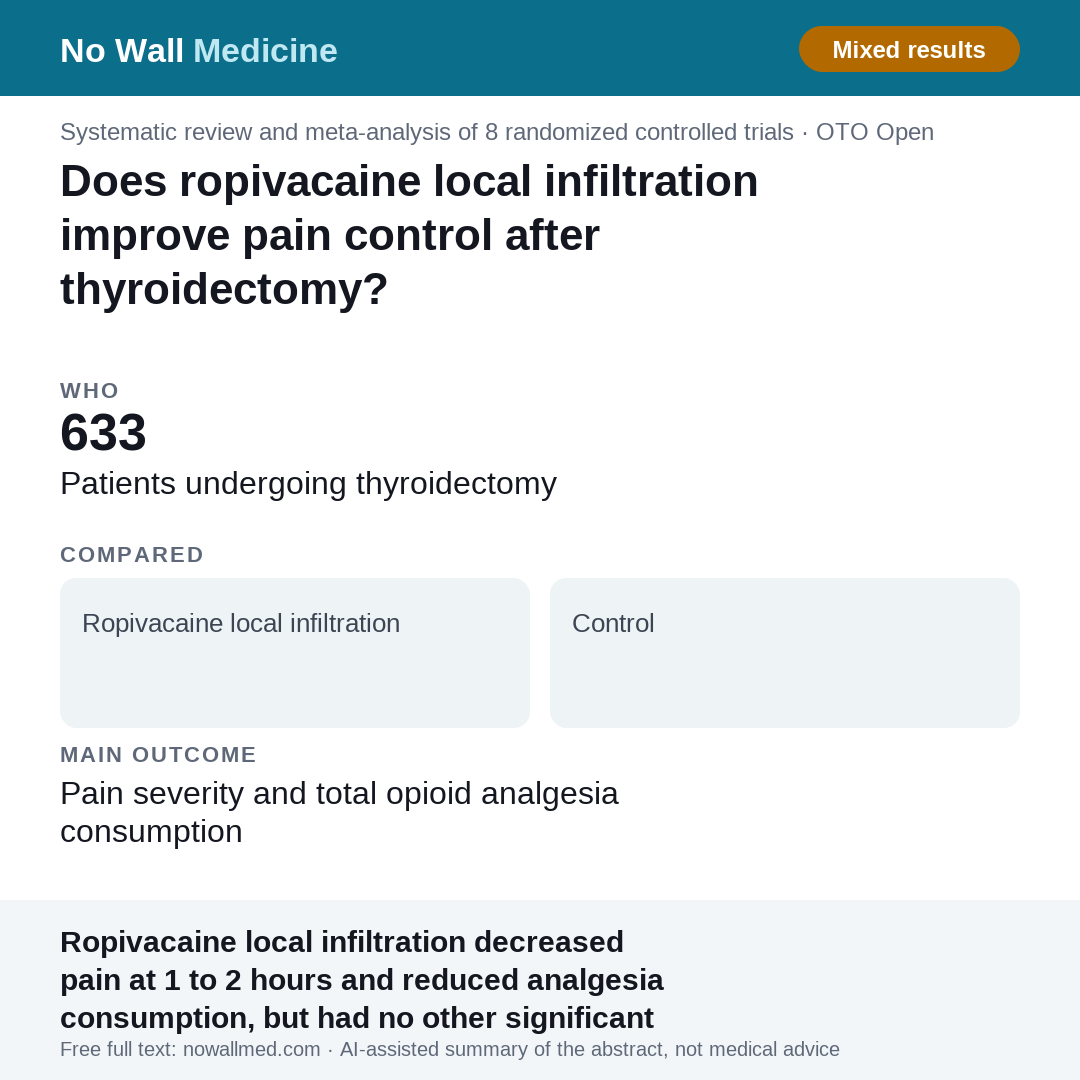
Does ropivacaine local infiltration improve pain control after thyroidectomy?
Who
633
Patients undergoing thyroidectomy
Compared
Ropivacaine local infiltration
Control
Main outcome
Pain severity and total opioid analgesia consumption
Result: SMD -1.40 (95% CI -2.30 to -0.51) for pain at 1 to 2 hours
Bottom line: Ropivacaine local infiltration decreased pain at 1 to 2 hours and reduced analgesia consumption, but had no other significant effects.
Limitation: uncertain evidence
OTO Open · 2025-05-05Download image
Clinical question: Does ropivacaine local infiltration improve pain control after thyroidectomy?
Why it matters: The effectiveness of using ropivacaine local infiltration for pain management following thyroid surgery remains uncertain.
Key points
- Researchers analyzed 8 randomized controlled trials involving 633 patients undergoing thyroidectomy to evaluate the effects of ropivacaine local infiltration.
- Ropivacaine was associated with lower pain severity 1 to 2 hours after surgery (SMD: -1.40, 95% CI [-2.30, -0.51]) and lower analgesia consumption (SMD: -0.75, 95% CI [-1.30, -0.20]).
- No significant differences were found for pain after 4 hours, hospital stay length, patient satisfaction, or the incidence of postoperative nausea and vomiting (RR: 1.01, 95% CI [0.70, 1.45]).
Headline and key points written with AI from the paper’s abstract, with every number checked against it. Read the paper before relying on them.
Was this summary helpful?
Cite this article
Albazee E, Allafi F, Alsalem A, AlShaya D, Alhazami H, Alfalah D. Ropivacaine Local Infiltration for Pain Control After Thyroidectomy: A Systematic Review and Meta-Analysis. OTO Open. 2025. doi:10.1002/oto2.70124
Spotted a mistake? Suggest a correction