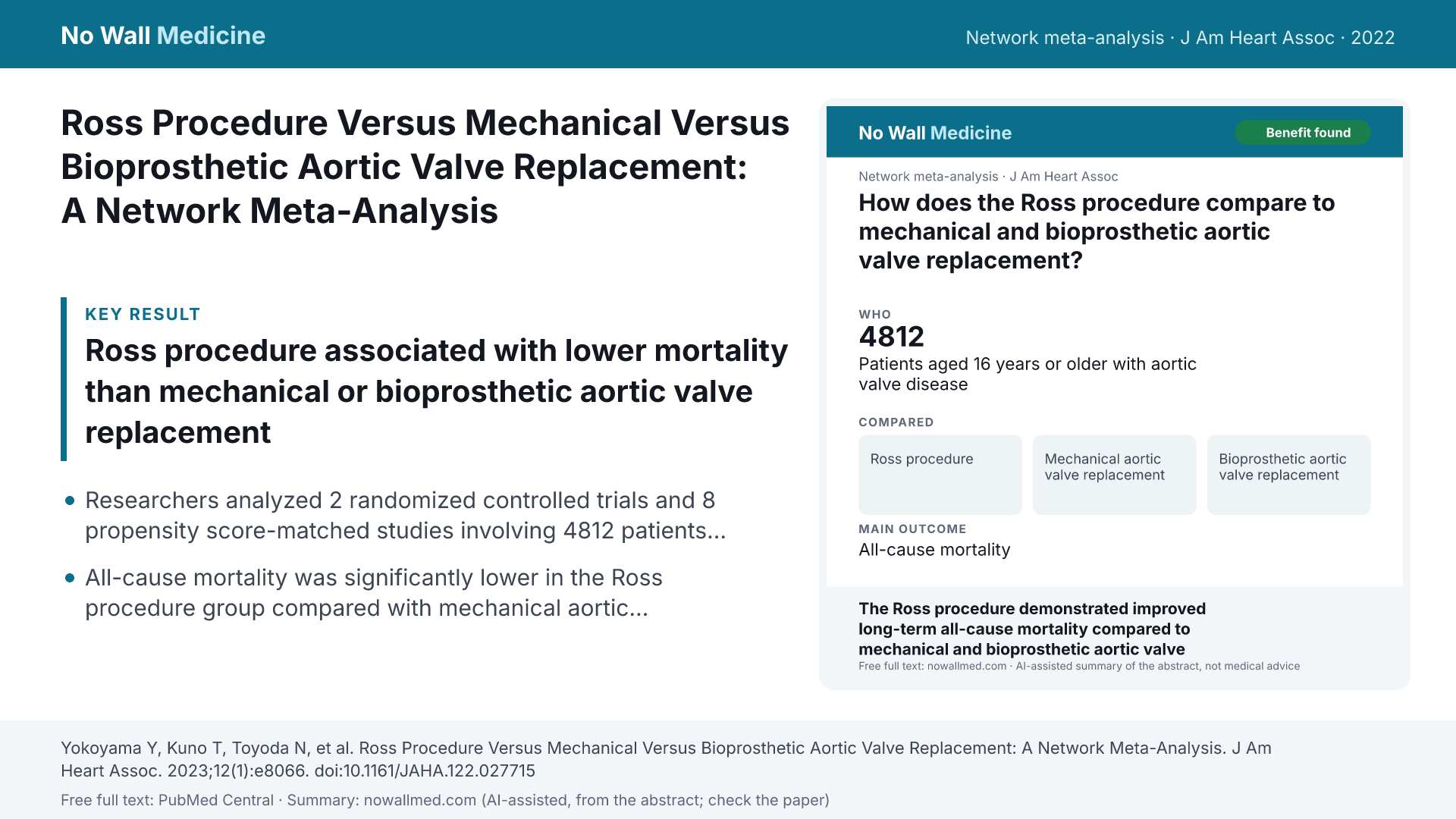
Ross procedure associated with lower mortality than mechanical or bioprosthetic aortic valve replacement
Ross Procedure Versus Mechanical Versus Bioprosthetic Aortic Valve Replacement: A Network Meta-Analysis
Network meta-analysisBenefit found
How does the Ross procedure compare to mechanical and bioprosthetic aortic valve replacement?
Who
4812
Patients aged 16 years or older with aortic valve disease
Compared
Ross procedure
Mechanical aortic valve replacement
Bioprosthetic aortic valve replacement
Main outcome
All-cause mortality
Result: hazard ratio 0.58 (95% CI 0.35-0.97) vs mechanical; hazard ratio 0.32 (95% CI 0.18-0.59) vs bioprosthetic
Bottom line: The Ross procedure demonstrated improved long-term all-cause mortality compared to mechanical and bioprosthetic aortic valve replacement.
J Am Heart Assoc · 2022-12-24Download image
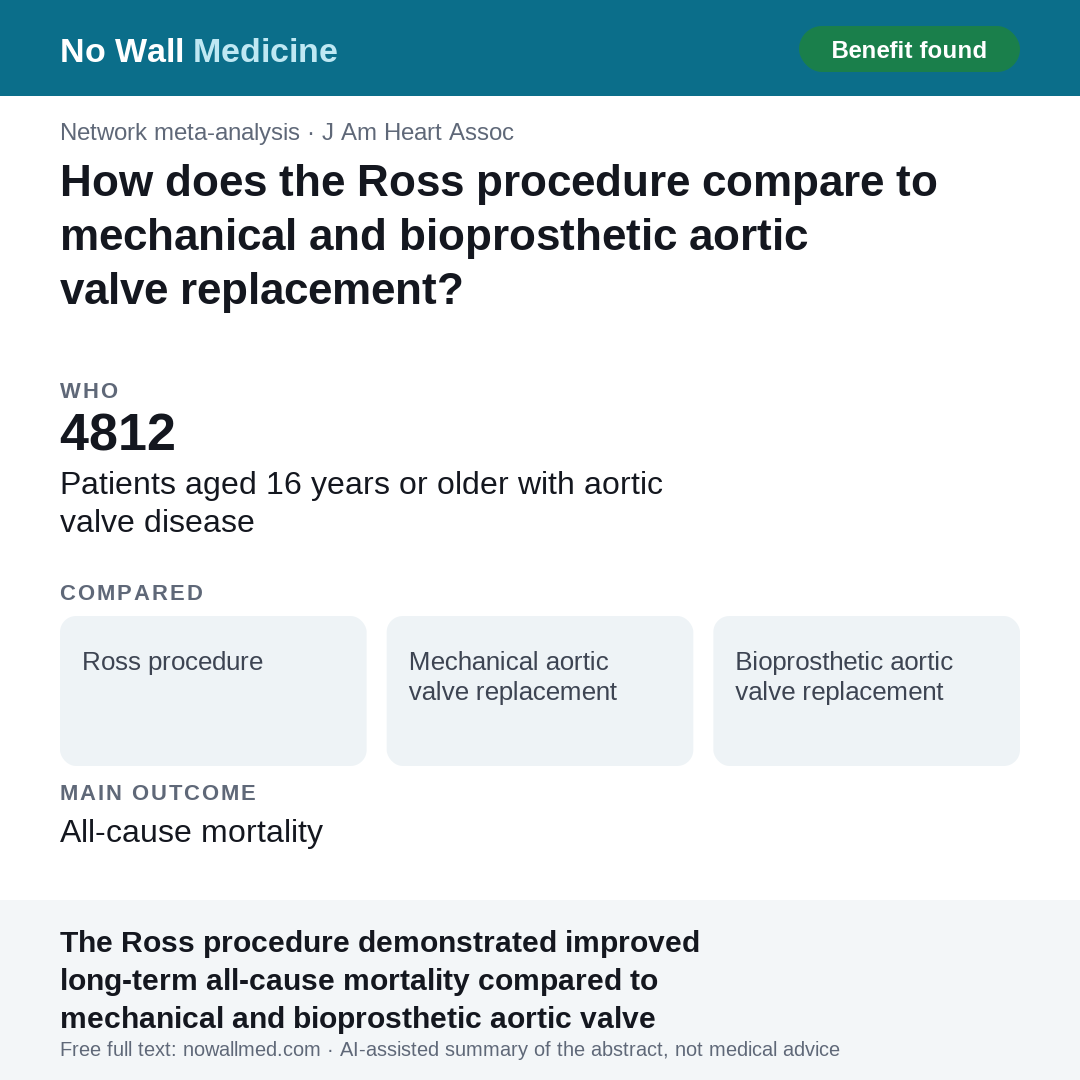
Clinical question: How does the Ross procedure compare to mechanical and bioprosthetic aortic valve replacement?
Why it matters: Data comparing the Ross procedure, which uses a patient's own valve, to conventional mechanical or bioprosthetic valve replacements are limited.
Key points
- Researchers analyzed 2 randomized controlled trials and 8 propensity score-matched studies involving 4812 patients aged 16 years or older.
- All-cause mortality was significantly lower in the Ross procedure group compared with mechanical aortic valve replacement (hazard ratio 0.58) and bioprosthetic aortic valve replacement (hazard ratio 0.32).
- The Ross procedure was associated with a lower major bleeding rate compared with mechanical aortic valve replacement and a lower long-term stroke rate compared with both options.
Headline and key points written with AI from the paper’s abstract, with every number checked against it. Read the paper before relying on them.
Was this summary helpful?
Subject terms
Cite this article
Yokoyama Y, Kuno T, Toyoda N, Fujisaki T, Takagi H, Itagaki S. Ross Procedure Versus Mechanical Versus Bioprosthetic Aortic Valve Replacement: A Network Meta-Analysis. J Am Heart Assoc. 2022. doi:10.1161/JAHA.122.027715
Spotted a mistake? Suggest a correction
Top studies every Monday
The week’s key trials and guidelines in your specialties, plus any topics you follow. By email, free.
Get the weekly digest