Non-electric infant warmer increased normal body temperature rates in rural Rwandan hospitals
Safety and effectiveness of a non-electric infant warmer for hypothermia in Rwanda: A cluster-randomized stepped-wedge trial
Cluster-randomized stepped-wedge trialBenefit found
Does a non-electric infant warmer increase euthermia rates and reduce mortality in Rwanda?
Who
3179
Hypothermic or at risk infants in rural Rwandan hospitals · Ten district hospitals in Rwanda
Compared
51%Pre-intervention (95% CI 50-52%)
67%Post-intervention (66-68%)
Main outcome
Overall euthermia rates
Bottom line: The non-electric warmer increased euthermia rates and reduced mortality among users in rural Rwandan hospitals.
Limitation: The warmer was used in only 18% of eligible encounters due to limited study nurse resources.
eClinicalMedicine · 2021-04-16 · Save PNG
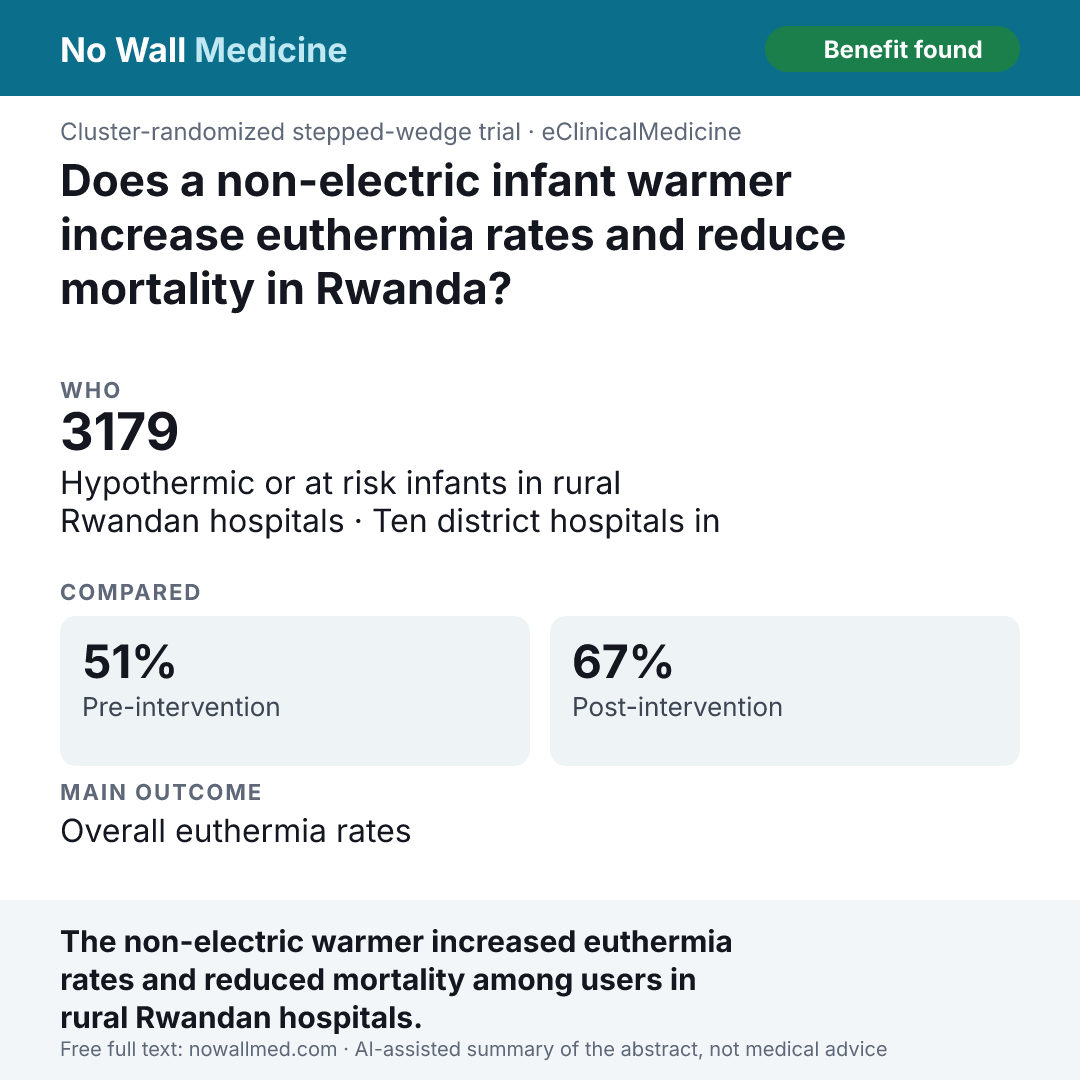
Clinical question: Does a non-electric infant warmer increase euthermia rates and reduce mortality in Rwanda?
Why it matters: Neonatal hypothermia, or low body temperature, is a common cause of illness and death in low resource settings.
Key points
- Researchers conducted a cluster-randomized stepped-wedge trial involving 3179 patients across ten neonatal wards in Rwanda.
- The rate of euthermia, or normal body temperature, rose from 51% pre-intervention to 67% post-intervention.
- Among infants using the warmer, mortality was 0.9% compared to 2.8% among those who did not use it.
Limitation the authors note: The warmer was used in only 18% of eligible encounters because of limited study nurse resources.
Headline and key points written with AI from the paper’s abstract, with every number checked against it. Read the paper before relying on them.
Was this summary helpful?
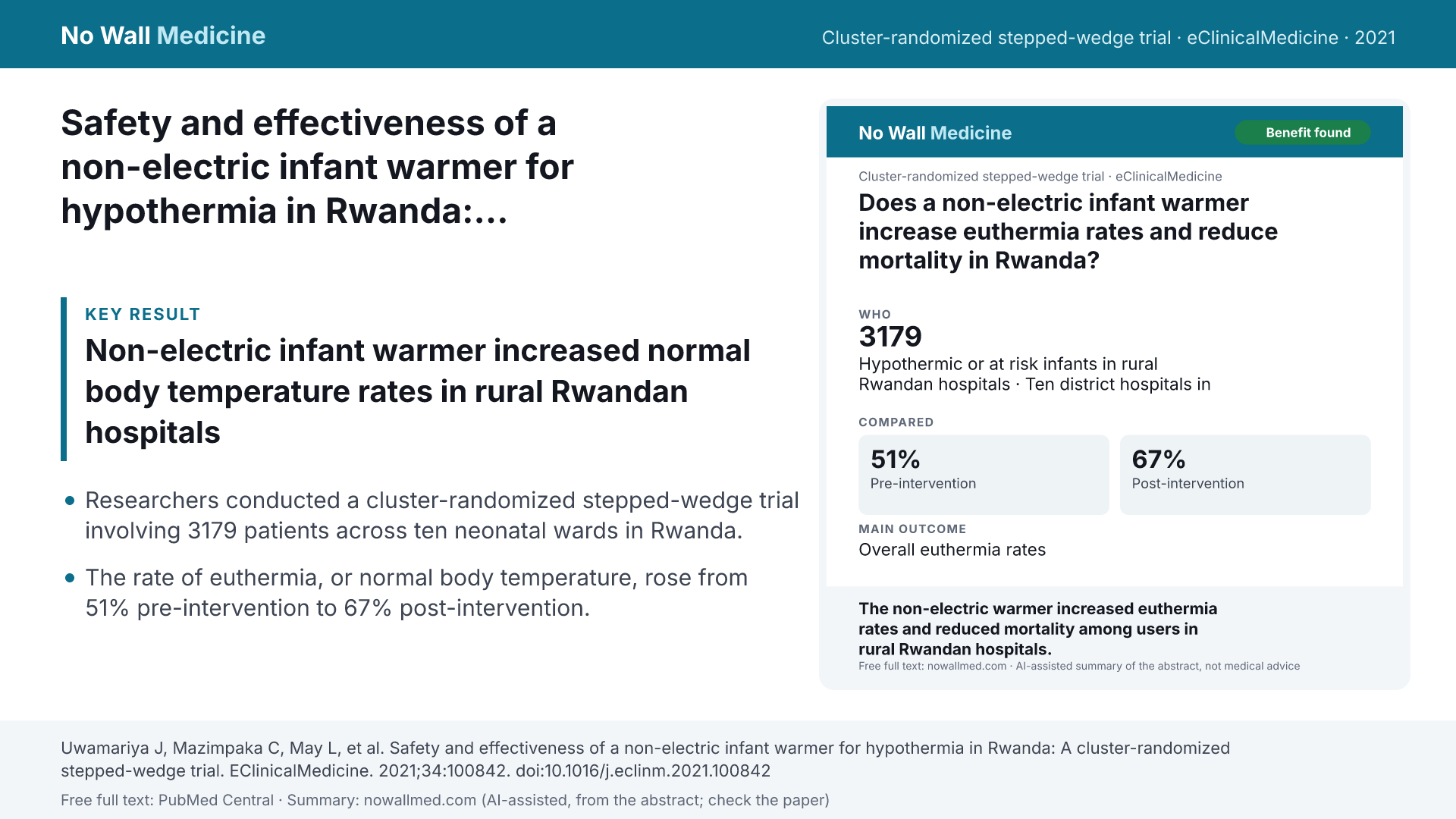
Headline, design, result, key points, caveat and citation as plain text.
Cite this article
Uwamariya J, Mazimpaka C, May L, et al. Safety and effectiveness of a non-electric infant warmer for hypothermia in Rwanda: A cluster-randomized stepped-wedge trial. EClinicalMedicine. 2021;34:100842. doi:10.1016/j.eclinm.2021.100842
Spotted a mistake? Suggest a correction