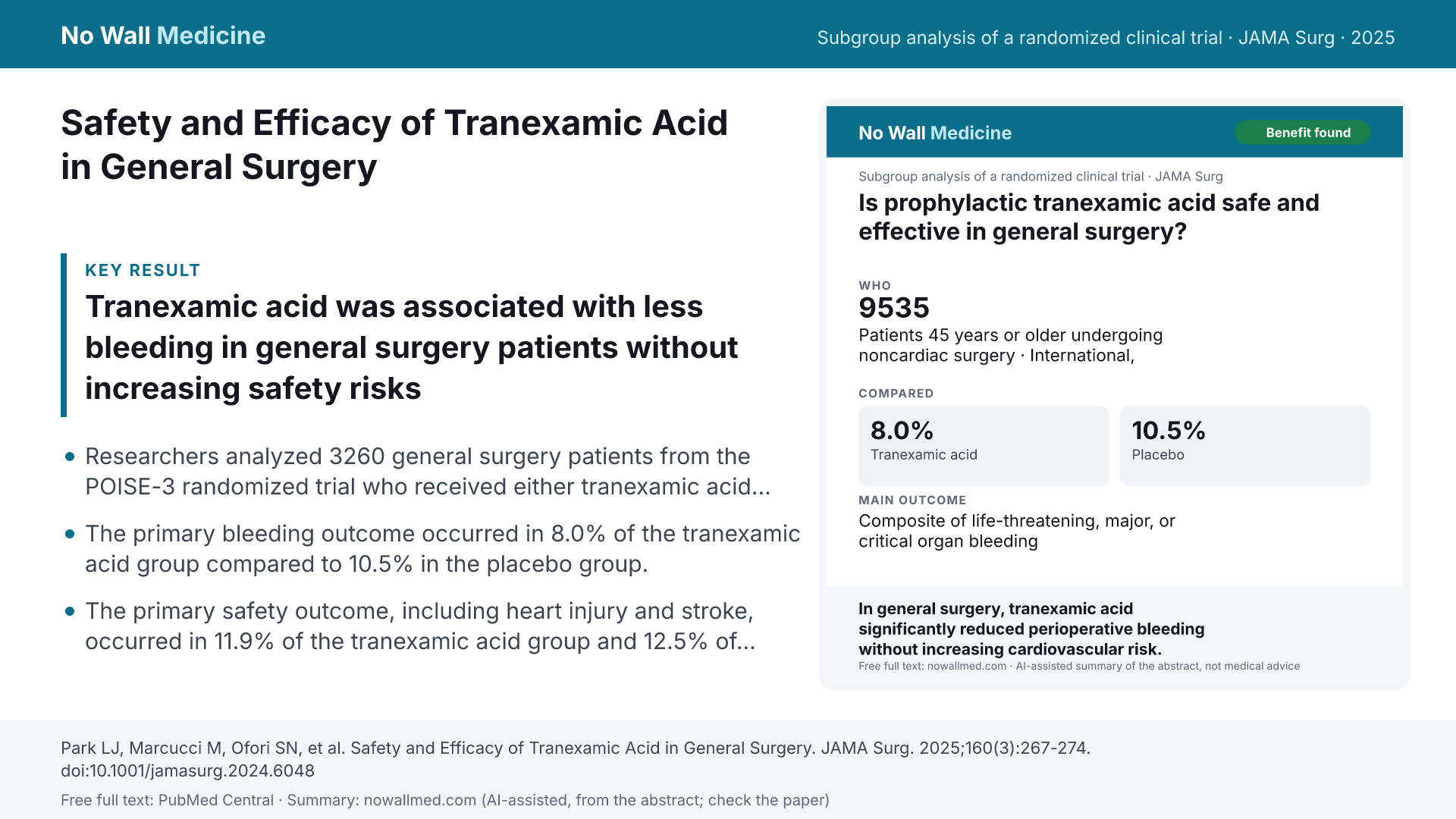
Tranexamic acid was associated with less bleeding in general surgery patients without increasing safety risks
Safety and Efficacy of Tranexamic Acid in General Surgery
Subgroup analysis of a randomized clinical trialBenefit found
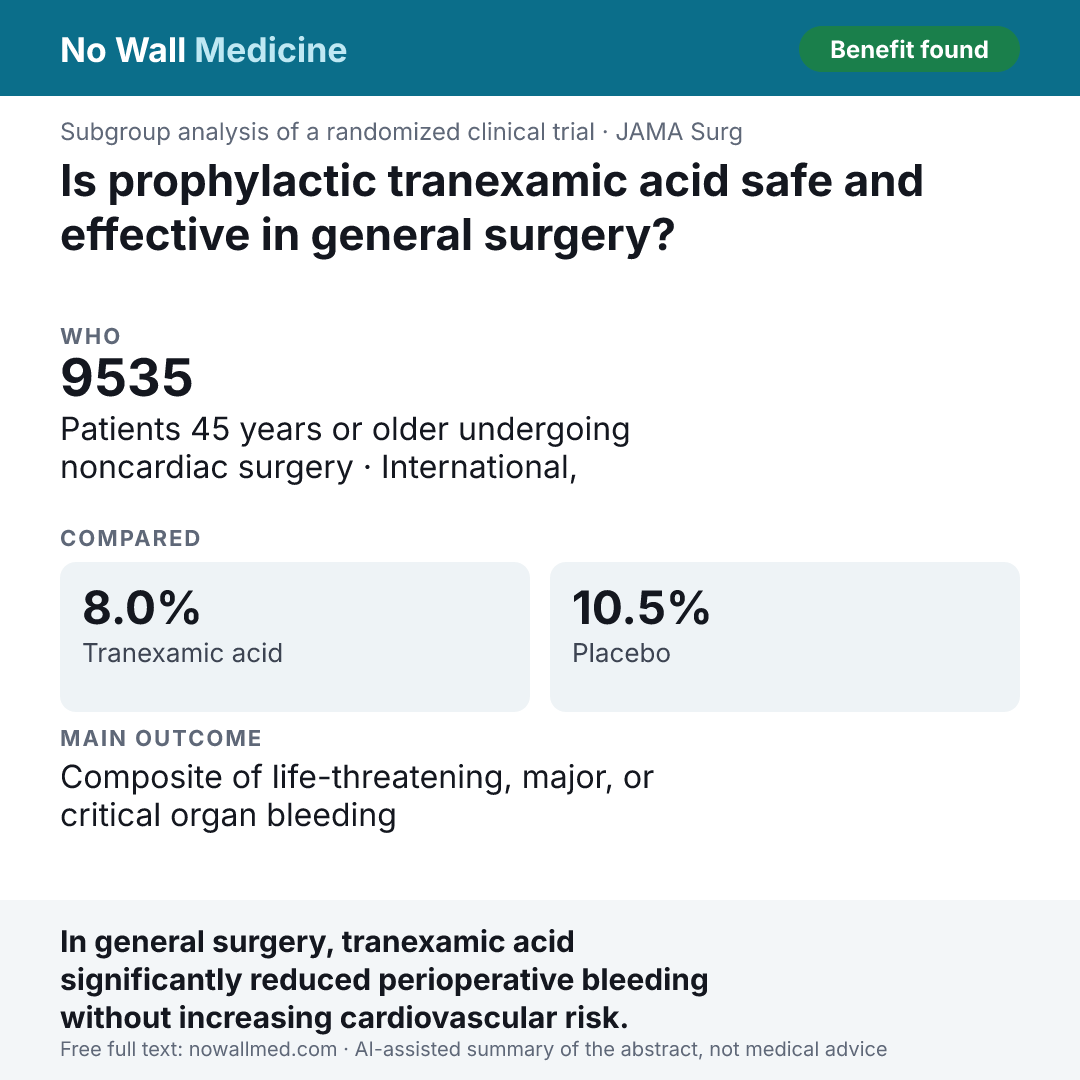
Is prophylactic tranexamic acid safe and effective in general surgery?
Who
9535
Patients 45 years or older undergoing noncardiac surgery · International, multicenter
Compared
8.0%Tranexamic acid
10.5%Placebo
Main outcome
Composite of life-threatening, major, or critical organ bleeding
Result: hazard ratio 0.74 (95% CI 0.59-0.93)
Bottom line: In general surgery, tranexamic acid significantly reduced perioperative bleeding without increasing cardiovascular risk.
JAMA Surg · 2025-01-15 · Save PNG
Same trial (NCT03505723)
Papers we list that report this registered trial, oldest first. Read a secondary analysis alongside the main results.
- Secondary analysis No clear difference
Avoiding low blood pressure during surgery did not change the risk of acute kidney injury Kidney Int 2024-10 - Secondary analysis Benefit found
This paper JAMA Surg 2025-01
Clinical question: Is prophylactic tranexamic acid safe and effective in general surgery?
In absolute numbers
Tranexamic acid: 8% · Placebo: 10.5% → a difference of 2.5 percentage points, so about 40 people would need the treatment for 1 more to benefit (number needed to treat) over the trial’s follow-up.
Worked out by us from the two group results above, not reported by the authors. Check the paper for the exact outcome and timing.
Key points
- Researchers analyzed 3260 general surgery patients from the POISE-3 randomized trial who received either tranexamic acid or a placebo.
- The primary bleeding outcome occurred in 8.0% of the tranexamic acid group compared to 10.5% in the placebo group.
- The primary safety outcome, including heart injury and stroke, occurred in 11.9% of the tranexamic acid group and 12.5% of the placebo group.
Headline and key points written with AI from the paper’s abstract, with every number checked against it. Read the paper before relying on them.
Was this summary helpful?
Subject terms
Headline, design, result, key points, caveat and citation as plain text.
Cite this article
Park LJ, Marcucci M, Ofori SN, et al. Safety and Efficacy of Tranexamic Acid in General Surgery. JAMA Surg. 2025;160(3):267-274. doi:10.1001/jamasurg.2024.6048
Spotted a mistake? Suggest a correction