Multivalent protein vaccines induced higher antibody responses than inactivated vaccine in a phase 3 trial
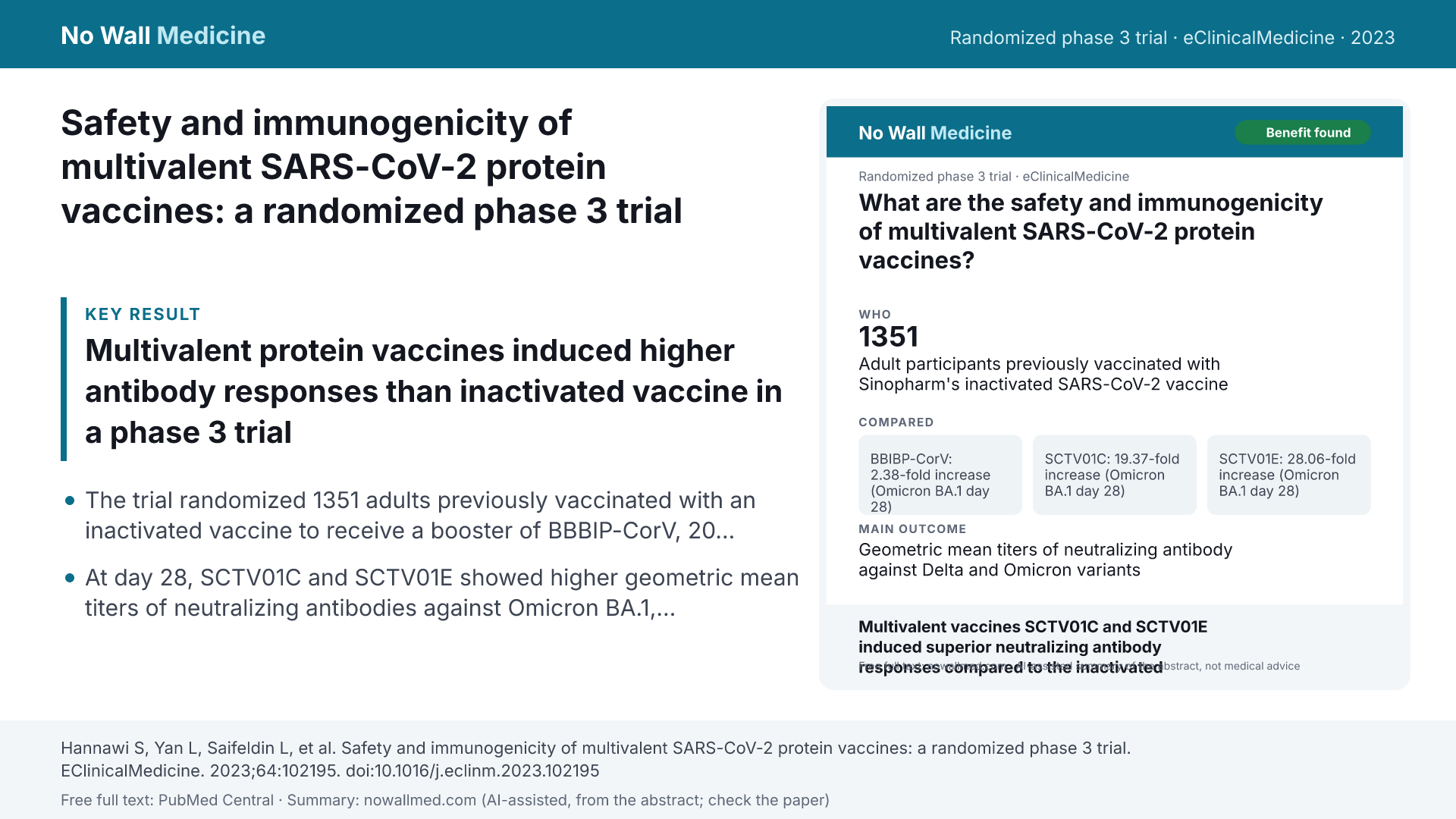
Safety and immunogenicity of multivalent SARS-CoV-2 protein vaccines: a randomized phase 3 trial
Randomized phase 3 trialBenefit found
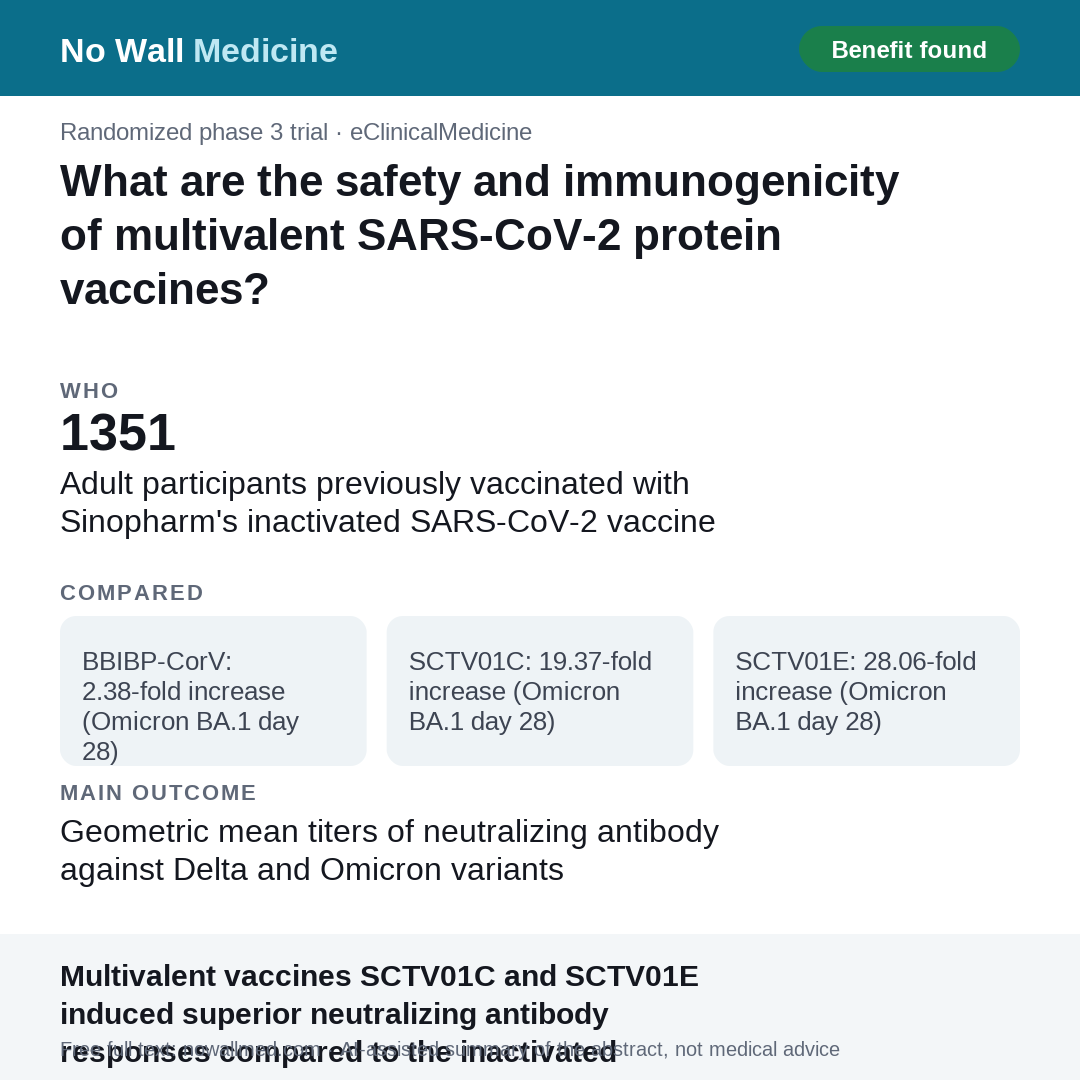
What are the safety and immunogenicity of multivalent SARS-CoV-2 protein vaccines?
Who
1351
Adult participants previously vaccinated with Sinopharm's inactivated SARS-CoV-2 vaccine
Compared
BBIBP-CorV: 2.38-fold increase (Omicron BA.1 day 28)
SCTV01C: 19.37-fold increase (Omicron BA.1 day 28)
SCTV01E: 28.06-fold increase (Omicron BA.1 day 28)
Main outcome
Geometric mean titers of neutralizing antibody against Delta and Omicron variants
Result: GMR of SCTV01E/BBIBP-CorV for Omicron BA.1 was 9.56 (95% CI: 6.85, 13.33)
Bottom line: Multivalent vaccines SCTV01C and SCTV01E induced superior neutralizing antibody responses compared to the inactivated vaccine booster.
eClinicalMedicine · 2023-09-08Download image
Clinical question: What are the safety and immunogenicity of multivalent SARS-CoV-2 protein vaccines?
Why it matters: Broad-spectrum protection is needed through vaccines that can effectively target multiple SARS-CoV-2 variants.
Key points
- The trial randomized 1351 adults previously vaccinated with an inactivated vaccine to receive a booster of BBBIP-CorV, 20 μg SCTV01C, or 30 μg SCTV01E.
- At day 28, SCTV01C and SCTV01E showed higher geometric mean titers of neutralizing antibodies against Omicron BA.1, BA.5, and Delta variants compared to the inactivated vaccine.
- Safety and reactogenicity were similar across the three groups, with 15 participants experiencing grade 3 or higher adverse events and no serious adverse events reported.
Headline and key points written with AI from the paper’s abstract, with every number checked against it. Read the paper before relying on them.
Was this summary helpful?
Cite this article
Hannawi S, Yan L, Saifeldin L, et al. Safety and immunogenicity of multivalent SARS-CoV-2 protein vaccines: a randomized phase 3 trial. eClinicalMedicine. 2023. doi:10.1016/j.eclinm.2023.102195
Spotted a mistake? Suggest a correction