Cognitive behavioural therapy and diabetes education showed feasibility for people with type 1 diabetes and eating disorders
Safety of a co-designed cognitive behavioural therapy intervention for people with type 1 diabetes and eating disorders (STEADY): a feasibility randomised controlled trial
Randomised, open-label, parallel-group controlled trialBenefit found
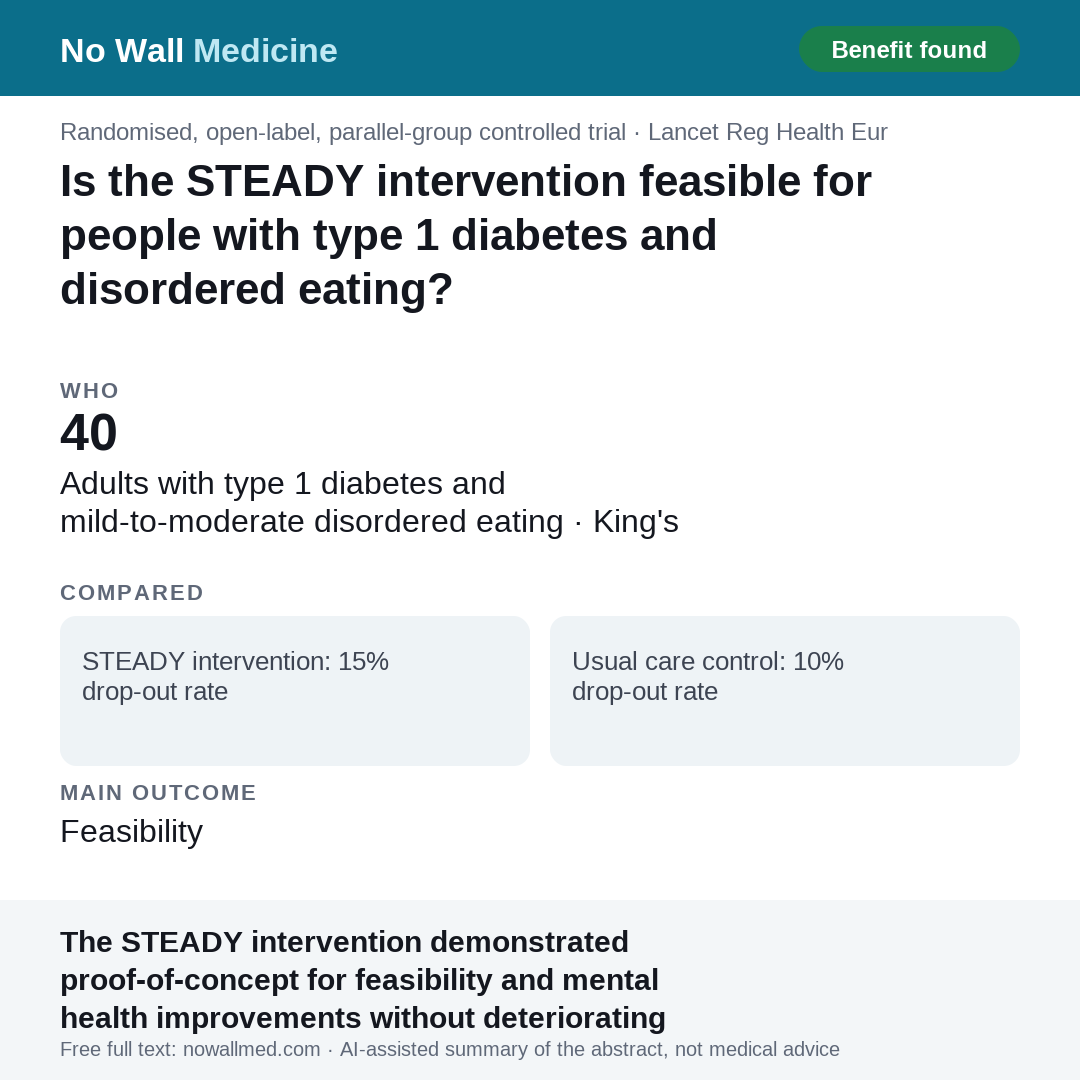
Is the STEADY intervention feasible for people with type 1 diabetes and disordered eating?
Who
40
Adults with type 1 diabetes and mild-to-moderate disordered eating · King's College London, UK
Compared
STEADY intervention: 15% drop-out rate
Usual care control: 10% drop-out rate
Main outcome
Feasibility
Bottom line: The STEADY intervention demonstrated proof-of-concept for feasibility and mental health improvements without deteriorating glycaemic control.
Funded by: National Institute for Health Research
Lancet Reg Health Eur · 2025-01-20Download image
Clinical question: Is the STEADY intervention feasible for people with type 1 diabetes and disordered eating?
Why it matters: It was unknown if a combined cognitive behavioural therapy and diabetes education intervention is feasible and safe for people with type 1 diabetes and disordered eating.
Key points
- Forty adults with type 1 diabetes and mild-to-moderate disordered eating were randomized to receive either the STEADY intervention or usual care.
- At 6 months, the STEADY group reported lower anxiety scores and higher diabetes-specific quality-of-life compared to the control group.
- The STEADY intervention was associated with improvements in eating problems, anxiety, depression, and diabetes distress compared to baseline measurements.
Headline and key points written with AI from the paper’s abstract, with every number checked against it. Read the paper before relying on them.
Cite this article
Stadler M, Zaremba N, Harrison A, Brown J, Pillay D, Allan J. Safety of a co-designed cognitive behavioural therapy intervention for people with type 1 diabetes and eating disorders (STEADY): a feasibility randomised controlled trial. Lancet Reg Health Eur. 2025. doi:10.1016/j.lanepe.2024.101205
Spotted a mistake? Suggest a correction
Top studies every Monday
The week’s key trials and guidelines in your specialties, plus any topics you follow. By email, free.
Get the weekly digest