Self-management education and support for type 2 diabetes in Thailand: a cluster randomized trial (2019-2021)
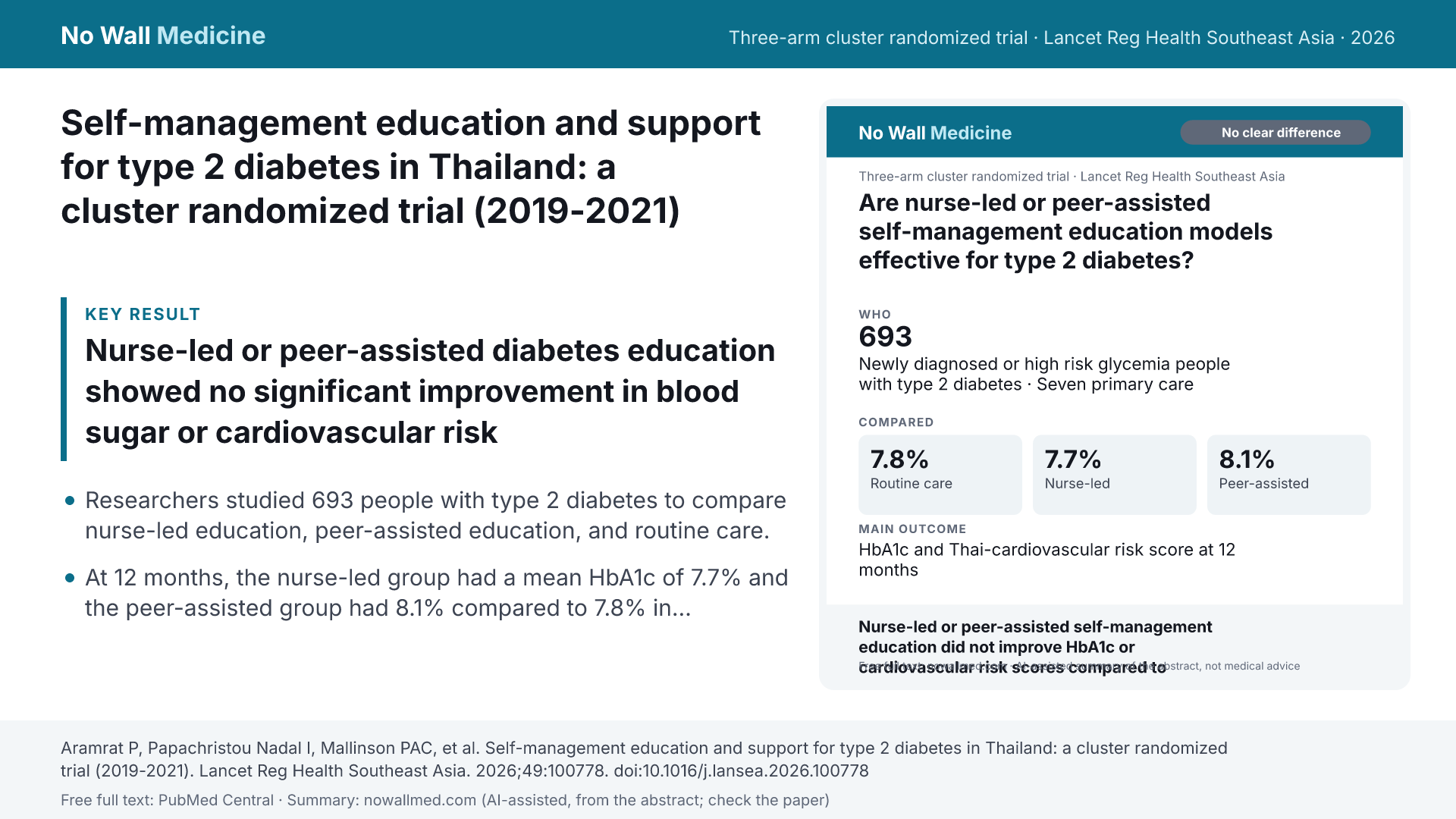
Key result: Nurse-led or peer-assisted diabetes education showed no significant improvement in blood sugar or cardiovascular risk
Key points
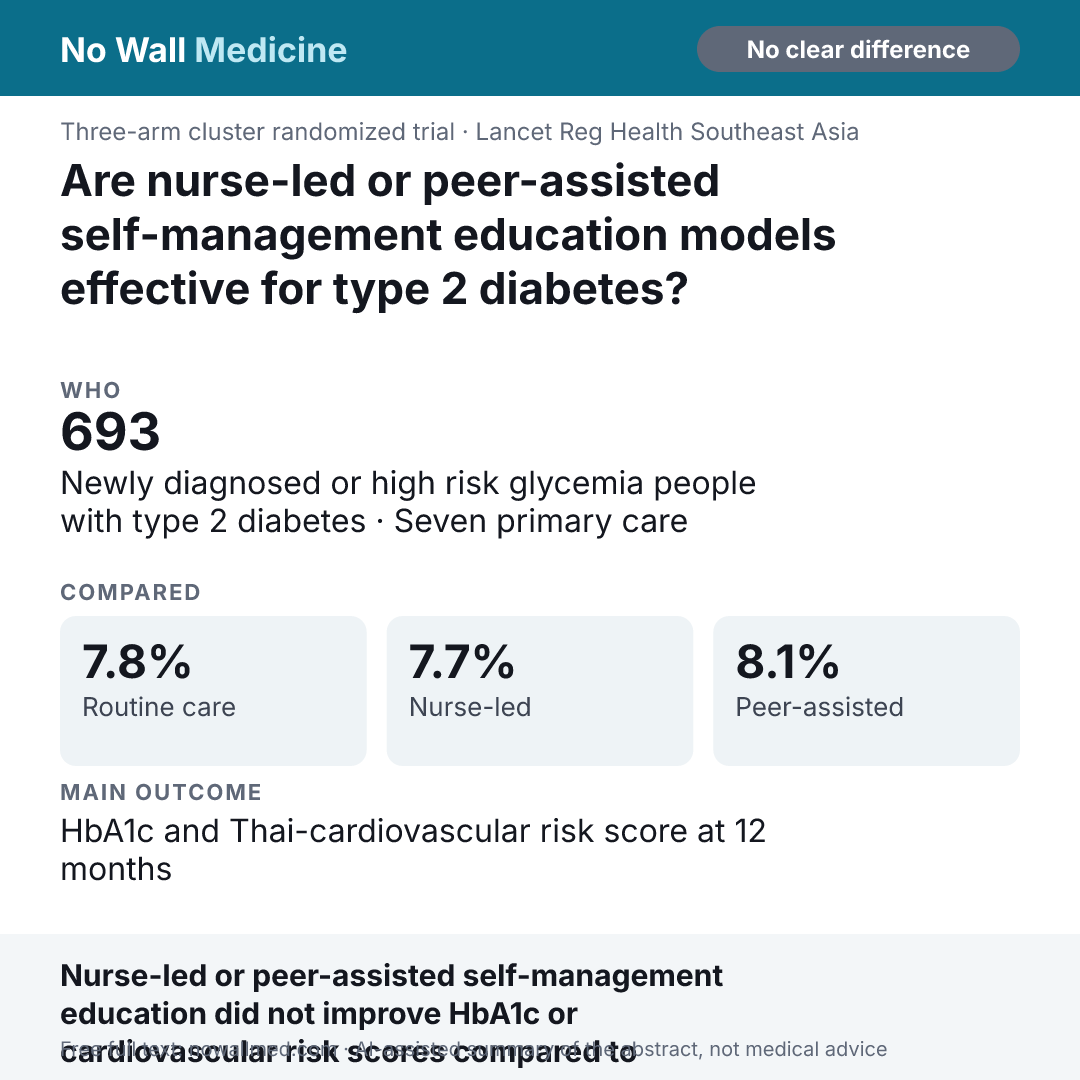
- Researchers studied 693 people with type 2 diabetes to compare nurse-led education, peer-assisted education, and routine care.
- At 12 months, the nurse-led group had a mean HbA1c of 7.7% and the peer-assisted group had 8.1% compared to 7.8% in routine care.
- There were no significant improvements in HbA1c or the Thai-CV risk score, which estimates ten-year risk of cardiovascular events.
Why it matters: Scalable models for delivering diabetes self-management education and support are lacking in low- and middle-income countries.
Discussion prompts
- Would these patients look like yours? Who was left out?
- Is the main outcome one that matters to patients?
- Is the difference large enough to change what you do?
Cite: Aramrat P, Papachristou Nadal I, Mallinson PAC, et al. Self-management education and support for type 2 diabetes in Thailand: a cluster randomized trial (2019-2021). Lancet Reg Health Southeast Asia. 2026;49:100778. doi:10.1016/j.lansea.2026.100778
Free full text: PubMed Central · Summary and visual abstract: nowallmed.com/a/self-management-education-and-support-for-type-2-diabetes-in-thailand-1ym7a1m/ (AI-assisted from the abstract; check the paper before relying on it).