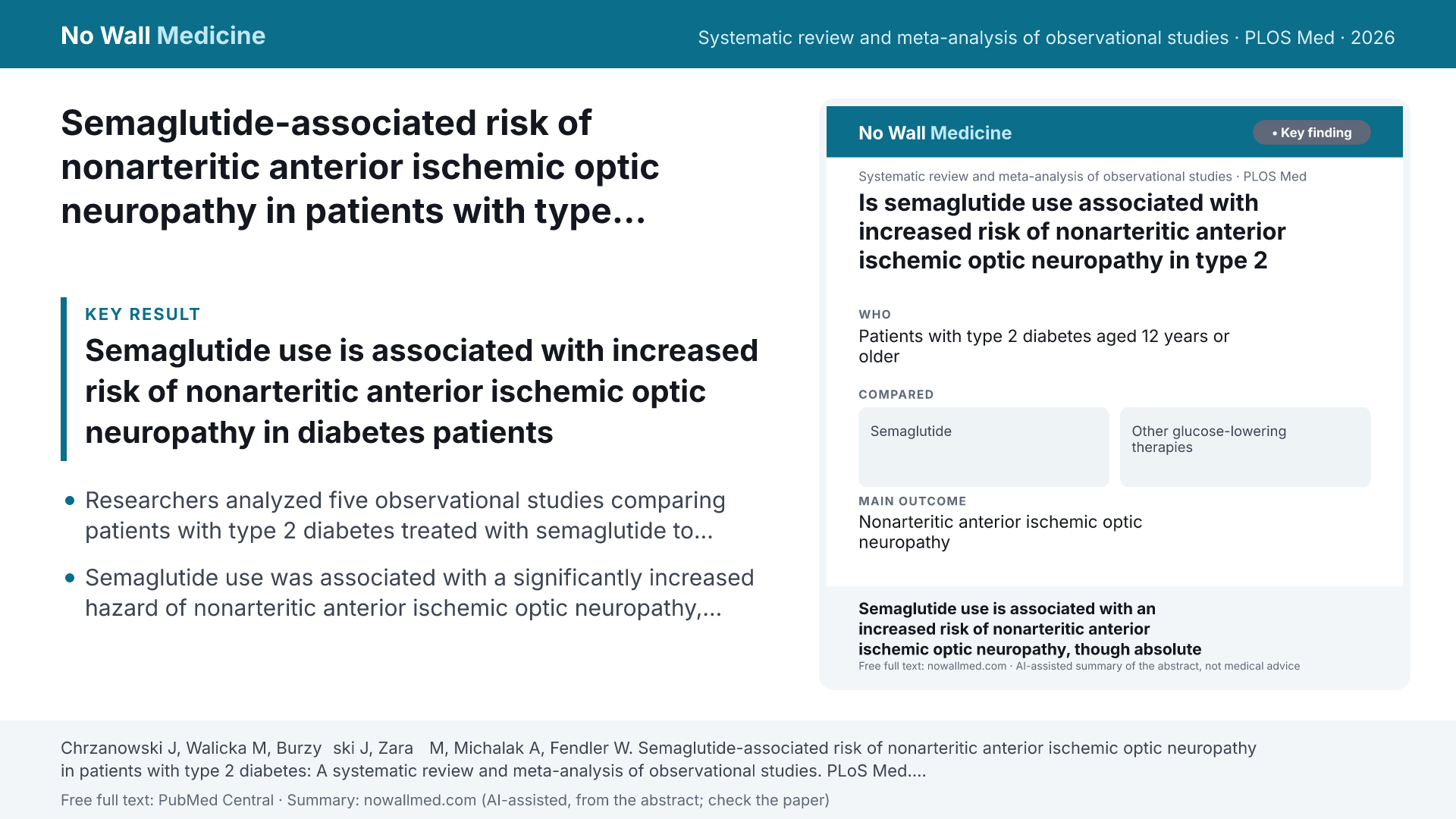
Semaglutide use is associated with increased risk of nonarteritic anterior ischemic optic neuropathy in diabetes patients
Semaglutide-associated risk of nonarteritic anterior ischemic optic neuropathy in patients with type 2 diabetes: A systematic review and meta-analysis of observational studies
Systematic review and meta-analysis of observational studiesKey finding
Is semaglutide use associated with increased risk of nonarteritic anterior ischemic optic neuropathy in type 2 diabetes?
Who
Patients with type 2 diabetes aged 12 years or older
Compared
Semaglutide
Other glucose-lowering therapies
Main outcome
Nonarteritic anterior ischemic optic neuropathy
Result: hazard ratio 2.17 (95% CI 1.73 to 2.74)
Bottom line: Semaglutide use is associated with an increased risk of nonarteritic anterior ischemic optic neuropathy, though absolute risk remains low.
Limitation: Limited by exclusive focus on retrospective, registry-based observational studies, potential outcome misclassification, and confounding.
PLOS Med · 2026-05-21 · Save PNG
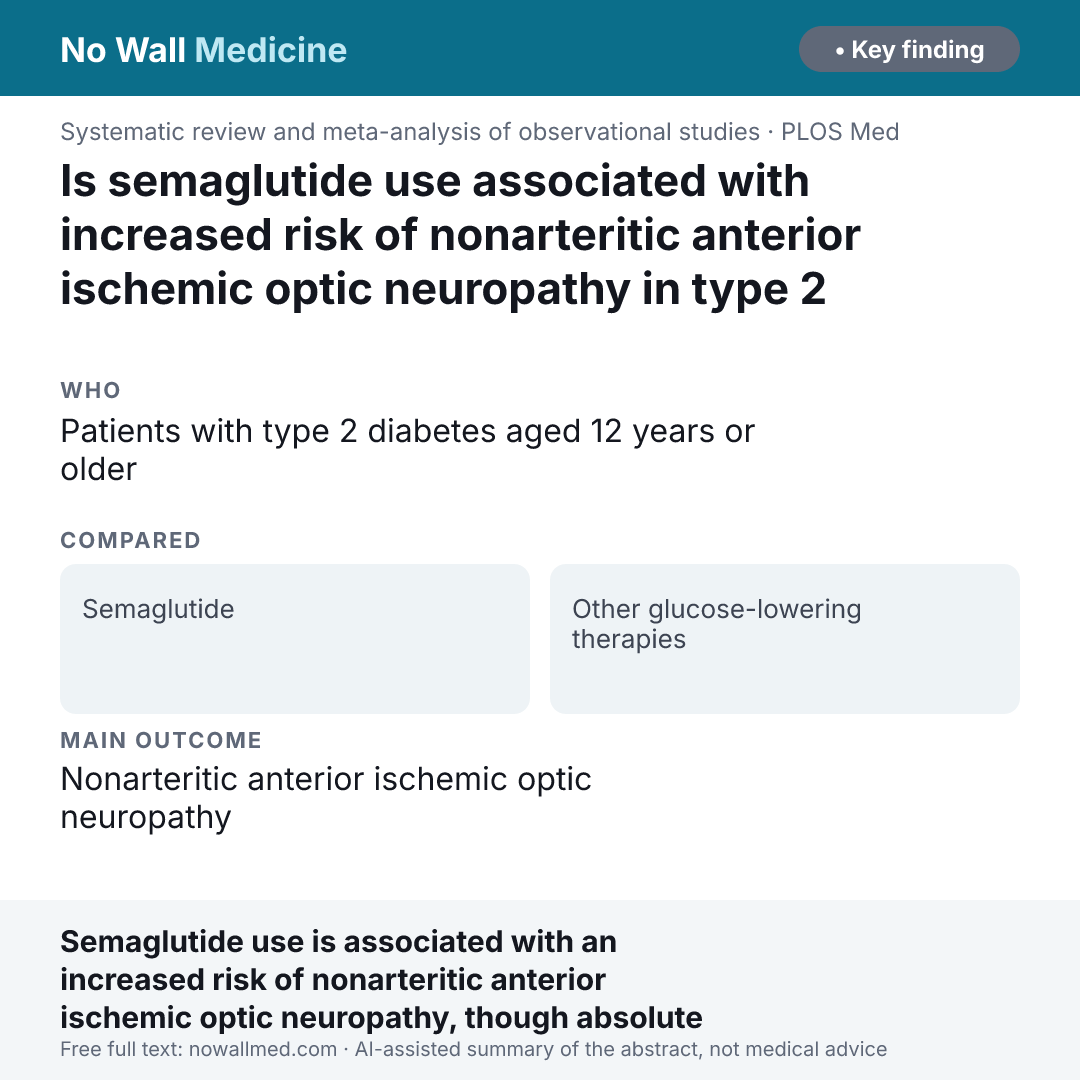
Clinical question: Is semaglutide use associated with increased risk of nonarteritic anterior ischemic optic neuropathy in type 2 diabetes?
Why it matters: Recent case reports have raised concerns about a potential association between semaglutide use and the development of nonarteritic anterior ischemic optic neuropathy.
Key points
- Researchers analyzed five observational studies comparing patients with type 2 diabetes treated with semaglutide to those receiving other glucose-lowering therapies.
- Semaglutide use was associated with a significantly increased hazard of nonarteritic anterior ischemic optic neuropathy, a vision-threatening condition, with a hazard ratio of 2.17.
- The absolute risk remained low at 0.014%, which corresponds to approximately 1 additional case of the condition per 7,000 semaglutide-treated patients annually.
Limitation the authors note: The evidence synthesis was limited by an exclusive focus on retrospective, registry-based observational studies, which may be biased by confounding and study-level outcome misclassification.
Headline and key points written with AI from the paper’s abstract, with every number checked against it. Read the paper before relying on them.
Was this summary helpful?
Subject terms
Headline, design, result, key points, caveat and citation as plain text.
Cite this article
Chrzanowski J, Walicka M, Burzyński J, Zaraś M, Michalak A, Fendler W. Semaglutide-associated risk of nonarteritic anterior ischemic optic neuropathy in patients with type 2 diabetes: A systematic review and meta-analysis of observational studies. PLoS Med. 2026;23(5):e1005064. doi:10.1371/journal.pmed.1005064
Spotted a mistake? Suggest a correction