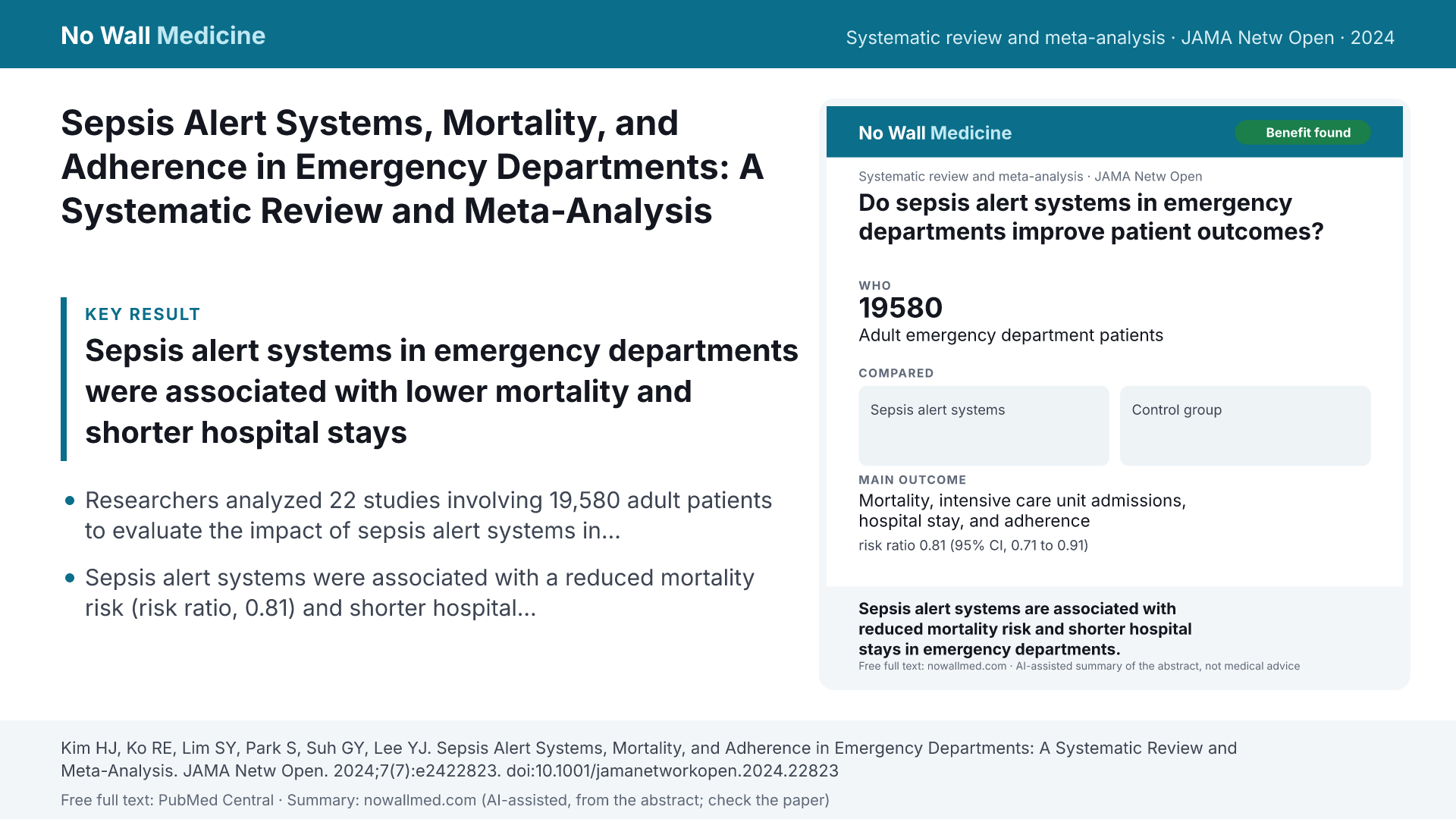
Sepsis alert systems in emergency departments were associated with lower mortality and shorter hospital stays
Sepsis Alert Systems, Mortality, and Adherence in Emergency Departments: A Systematic Review and Meta-Analysis
Systematic review and meta-analysisBenefit found
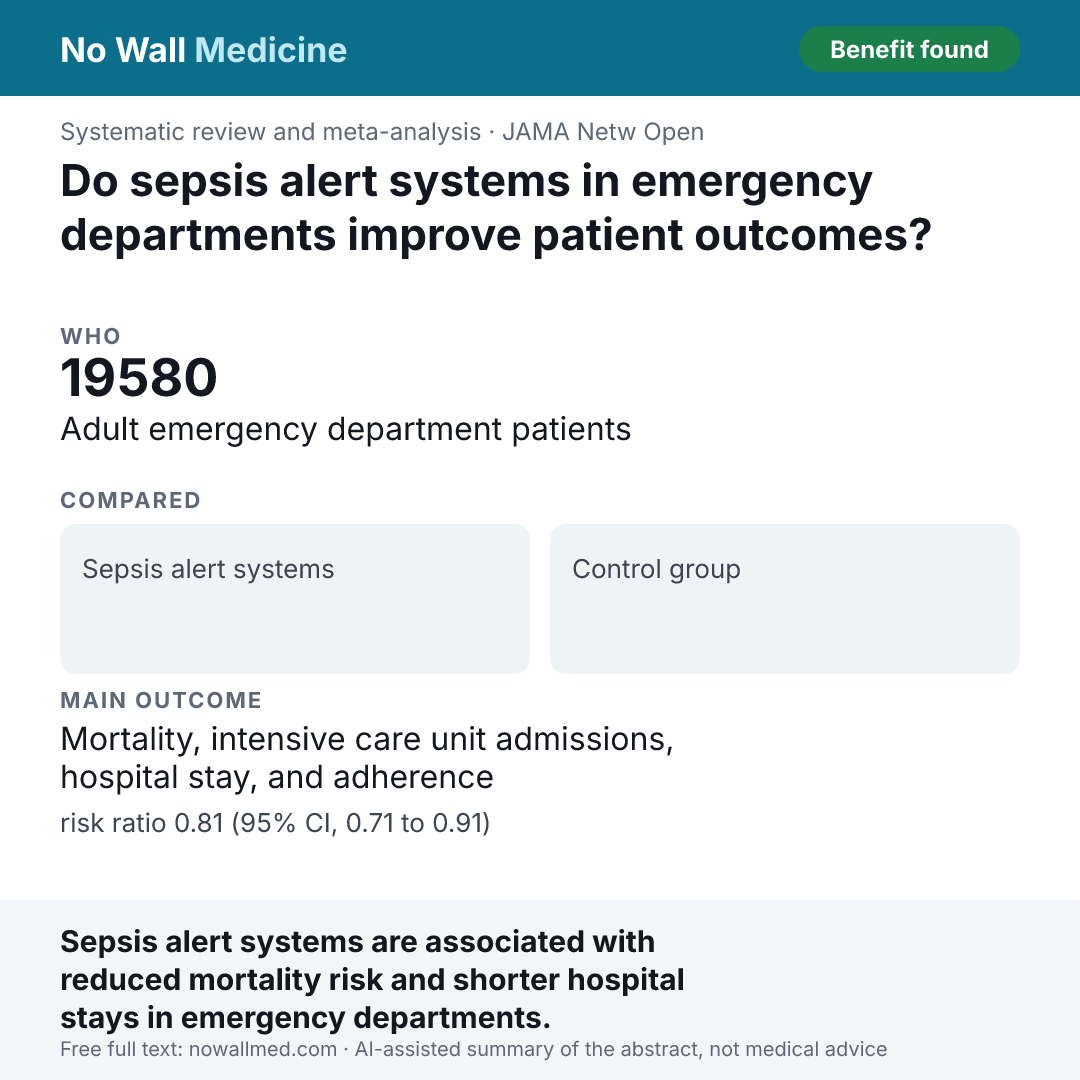
Do sepsis alert systems in emergency departments improve patient outcomes?
Who
19580
Adult emergency department patients
Compared
Sepsis alert systems
Control group
Main outcome
Mortality, intensive care unit admissions, hospital stay, and adherence
Result: risk ratio 0.81 (95% CI, 0.71 to 0.91)
Bottom line: Sepsis alert systems are associated with reduced mortality risk and shorter hospital stays in emergency departments.
JAMA Netw Open · 2024-07-01 · Save PNG
Clinical question: Do sepsis alert systems in emergency departments improve patient outcomes?
Key points
- Researchers analyzed 22 studies involving 19,580 adult patients to evaluate the impact of sepsis alert systems in emergency departments.
- Sepsis alert systems were associated with a reduced mortality risk (risk ratio, 0.81) and shorter hospital stays (standardized mean difference, -0.15).
- These systems were associated with better adherence to protocols, including faster fluid administration, blood cultures, antibiotic administration, and lactate measurement.
Headline and key points written with AI from the paper’s abstract, with every number checked against it. Read the paper before relying on them.
Was this summary helpful?
Subject terms
Headline, design, result, key points, caveat and citation as plain text.
Cite this article
Kim HJ, Ko RE, Lim SY, Park S, Suh GY, Lee YJ. Sepsis Alert Systems, Mortality, and Adherence in Emergency Departments: A Systematic Review and Meta-Analysis. JAMA Netw Open. 2024;7(7):e2422823. doi:10.1001/jamanetworkopen.2024.22823
Spotted a mistake? Suggest a correction