Recurrent genomic deletions are linked to a high burden of autosomal recessive disease traits
Sequencing individual genomes with recurrent genomic disorder deletions: an approach to characterize genes for autosomal recessive rare disease traits
Meta-analysis and retrospective analysisBenefit found
Can sequencing genomes with recurrent genomic deletions enhance recessive disease gene discovery?
Who
170
Literature-reported patients and individuals with recurrent deletions
Compared
Literature-reported patients: NAHR deletions are depleted from the ascertained pool
Genomic regions: 74% of loci within 30 segmental deletions
Main outcome
Recessive disease burden and gene discovery
Bottom line: Sequencing personal genomes with recurrent deletions can dramatically improve gene discovery and clinical molecular diagnosis for recessive diseases.
Genome Med · 2022-09-30Download image
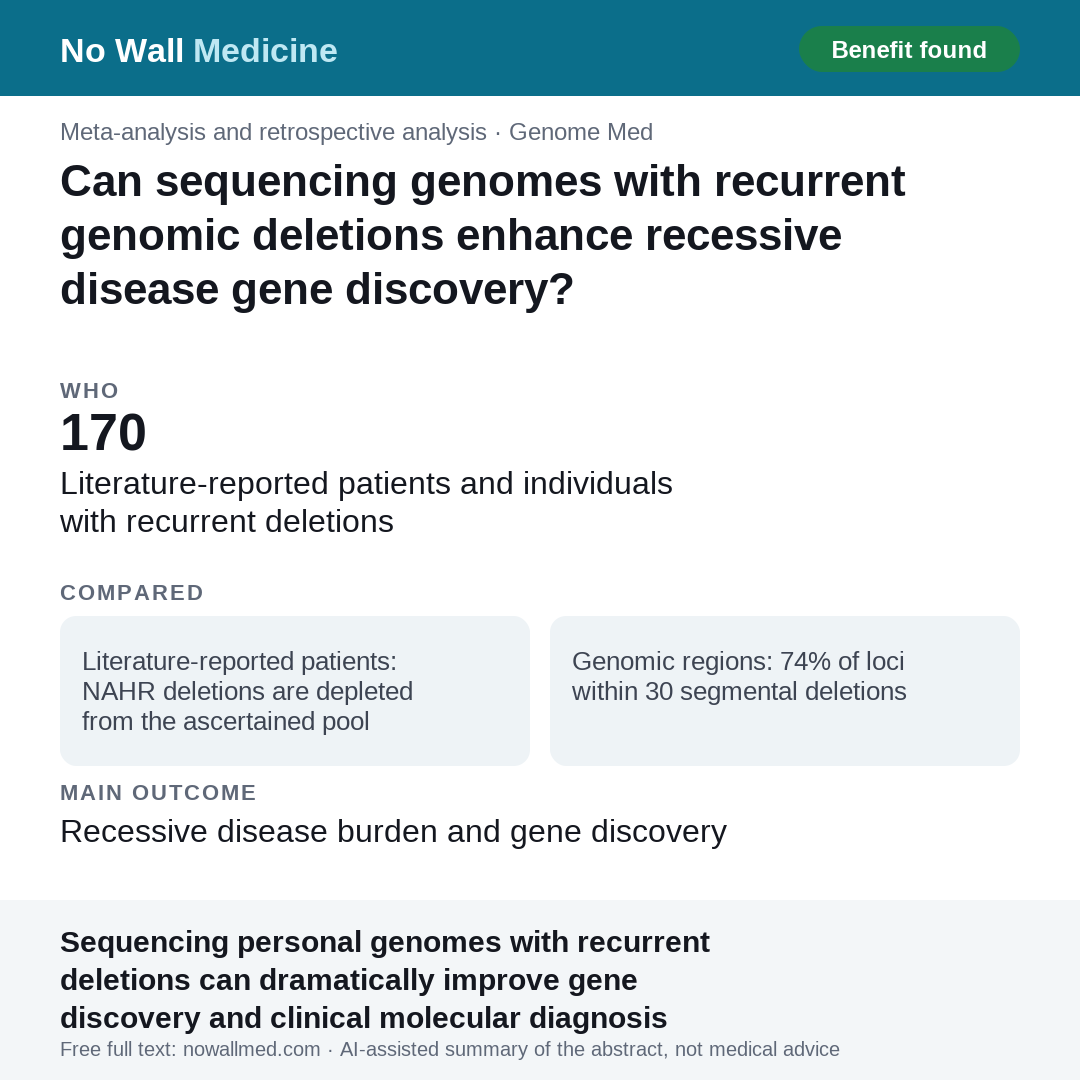
Clinical question: Can sequencing genomes with recurrent genomic deletions enhance recessive disease gene discovery?
Why it matters: It is unknown how much recurrent genomic deletions contribute to the overall burden of autosomal recessive diseases in human genomics.
Key points
- Researchers used a genome-wide map of nonallelic homologous recombination (recurrent deletions caused by errors during cell division) to estimate disease carrier burden.
- New mutations from these deletions likely drive recessive disease burden for over 74% of loci within the 30 identified genomic regions.
- A meta-analysis of 170 reported patients showed that these recurrent deletions are depleted from the current pool of known autosomal recessive trait alleles.
Headline and key points written with AI from the paper’s abstract, with every number checked against it. Read the paper before relying on them.
Topics
Cite this article
Yuan B, Schulze KV, Assia Batzir N, Sinson J, Dai H, Zhu W. Sequencing individual genomes with recurrent genomic disorder deletions: an approach to characterize genes for autosomal recessive rare disease traits. Genome Med. 2022. doi:10.1186/s13073-022-01113-y
Spotted a mistake? Suggest a correction
Top studies every Monday
The week’s key trials and guidelines in your specialties, plus any topics you follow. By email, free.
Get the weekly digest