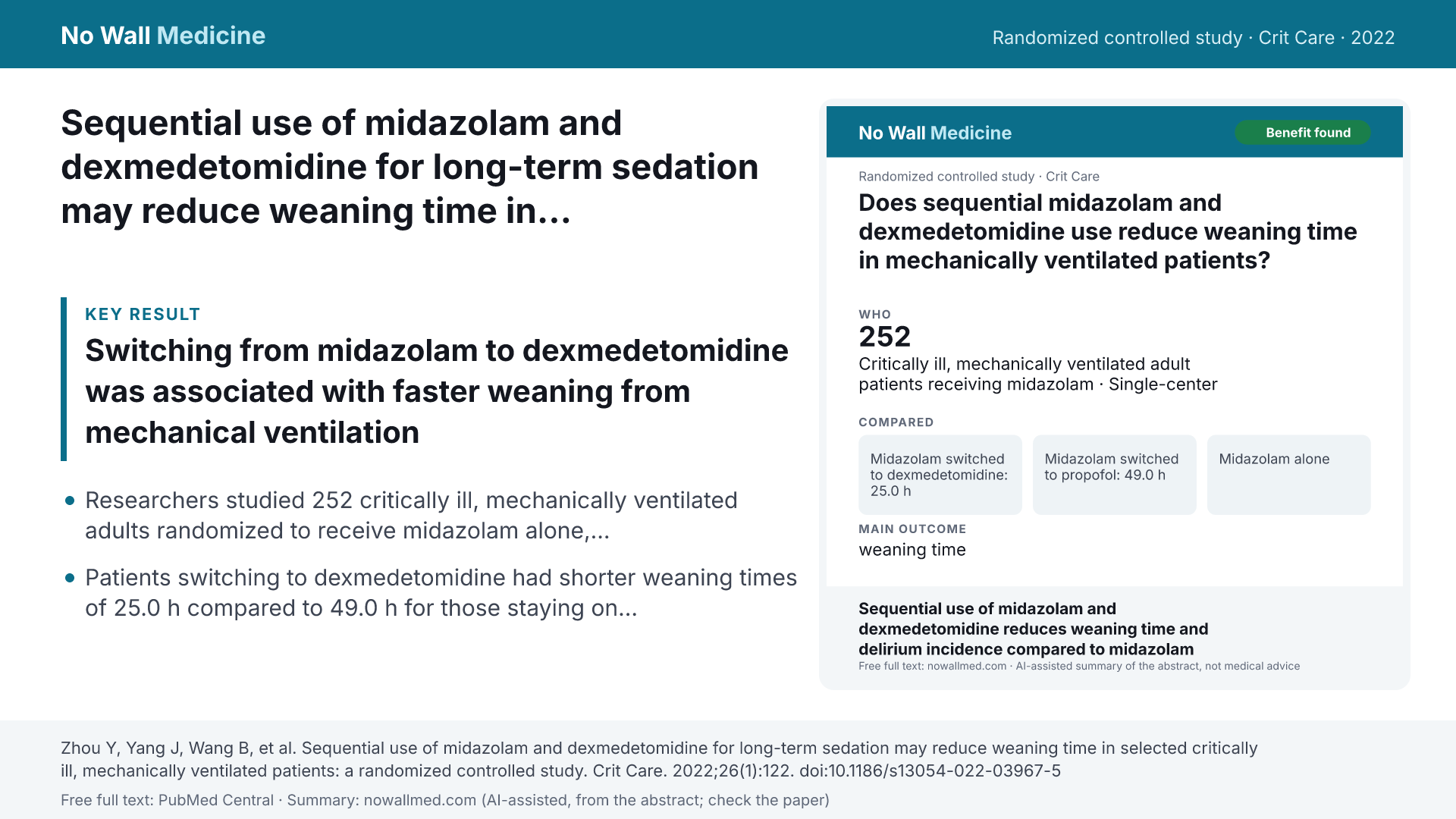
Switching from midazolam to dexmedetomidine was associated with faster weaning from mechanical ventilation
Sequential use of midazolam and dexmedetomidine for long-term sedation may reduce weaning time in selected critically ill, mechanically ventilated patients: a randomized controlled study
Randomized controlled studyBenefit found
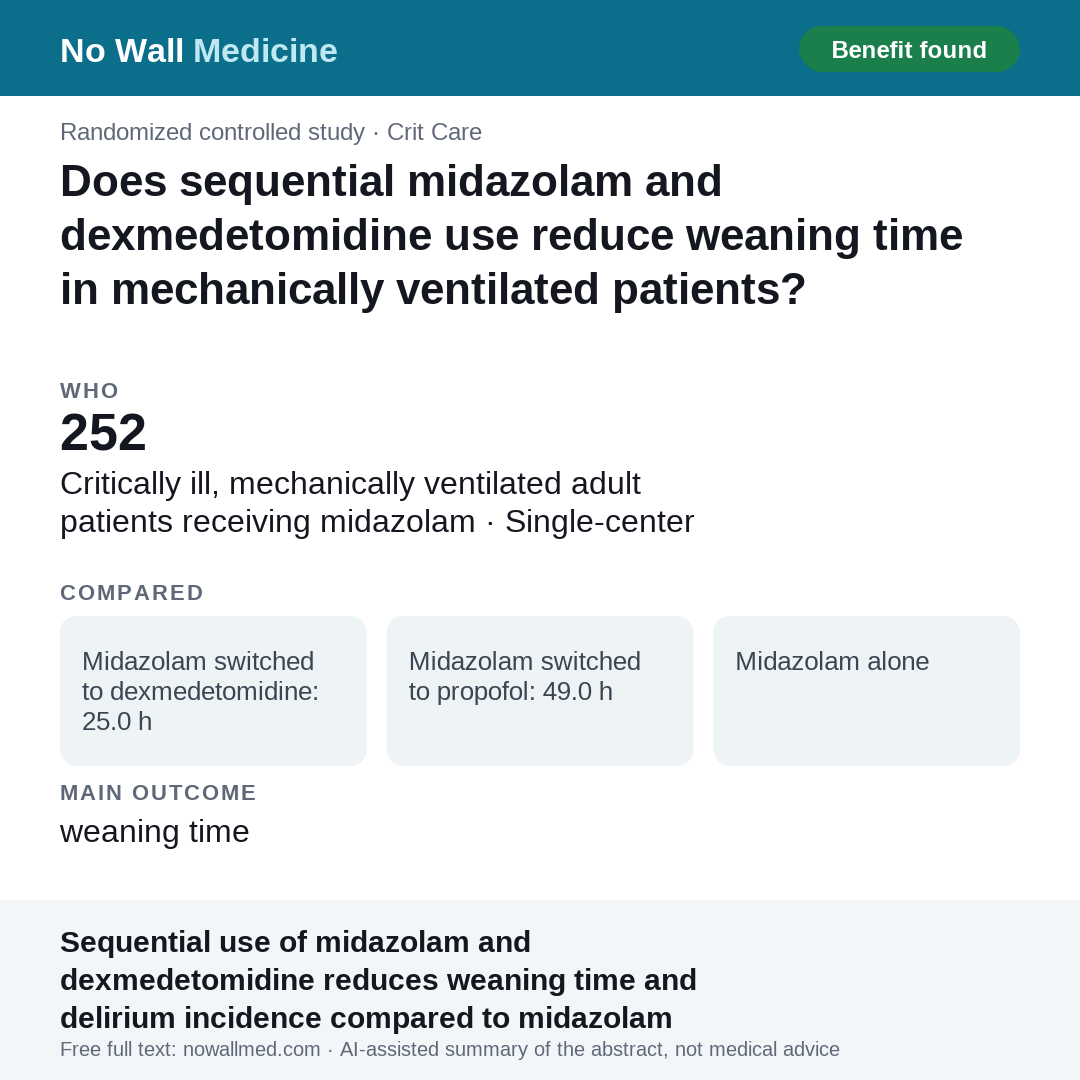
Does sequential midazolam and dexmedetomidine use reduce weaning time in mechanically ventilated patients?
Who
252
Critically ill, mechanically ventilated adult patients receiving midazolam · Single-center medical and surgical intensive care units
Compared
Midazolam switched to dexmedetomidine: 25.0 h
Midazolam switched to propofol: 49.0 h
Midazolam alone
Main outcome
weaning time
Result: hazard ratio 1.47 (95% CI 1.05 to 2.06)
Bottom line: Sequential use of midazolam and dexmedetomidine reduces weaning time and delirium incidence compared to midazolam alone.
Crit Care · 2022-05-03Download image
Clinical question: Does sequential midazolam and dexmedetomidine use reduce weaning time in mechanically ventilated patients?
Why it matters: It is unknown if switching from midazolam to dexmedetomidine or propofol offers advantages over using midazolam alone for long-term sedation in critically ill patients.
Key points
- Researchers studied 252 critically ill, mechanically ventilated adults randomized to receive midazolam alone, midazolam switched to dexmedetomidine, or midazolam switched to propofol.
- Patients switching to dexmedetomidine had shorter weaning times of 25.0 h compared to 49.0 h for those staying on midazolam alone.
- The dexmedetomidine group had a lower incidence of delirium at 19.5% compared to 43.8% in the midazolam group.
Limitation the authors note: This was a single-center study conducted in medical and surgical intensive care units.
Headline and key points written with AI from the paper’s abstract, with every number checked against it. Read the paper before relying on them.
Was this summary helpful?
Subject terms
Cite this article
Zhou Y, Yang J, Wang B, et al. Sequential use of midazolam and dexmedetomidine for long-term sedation may reduce weaning time in selected critically ill, mechanically ventilated patients: a randomized controlled study. Crit Care. 2022. doi:10.1186/s13054-022-03967-5
Spotted a mistake? Suggest a correction