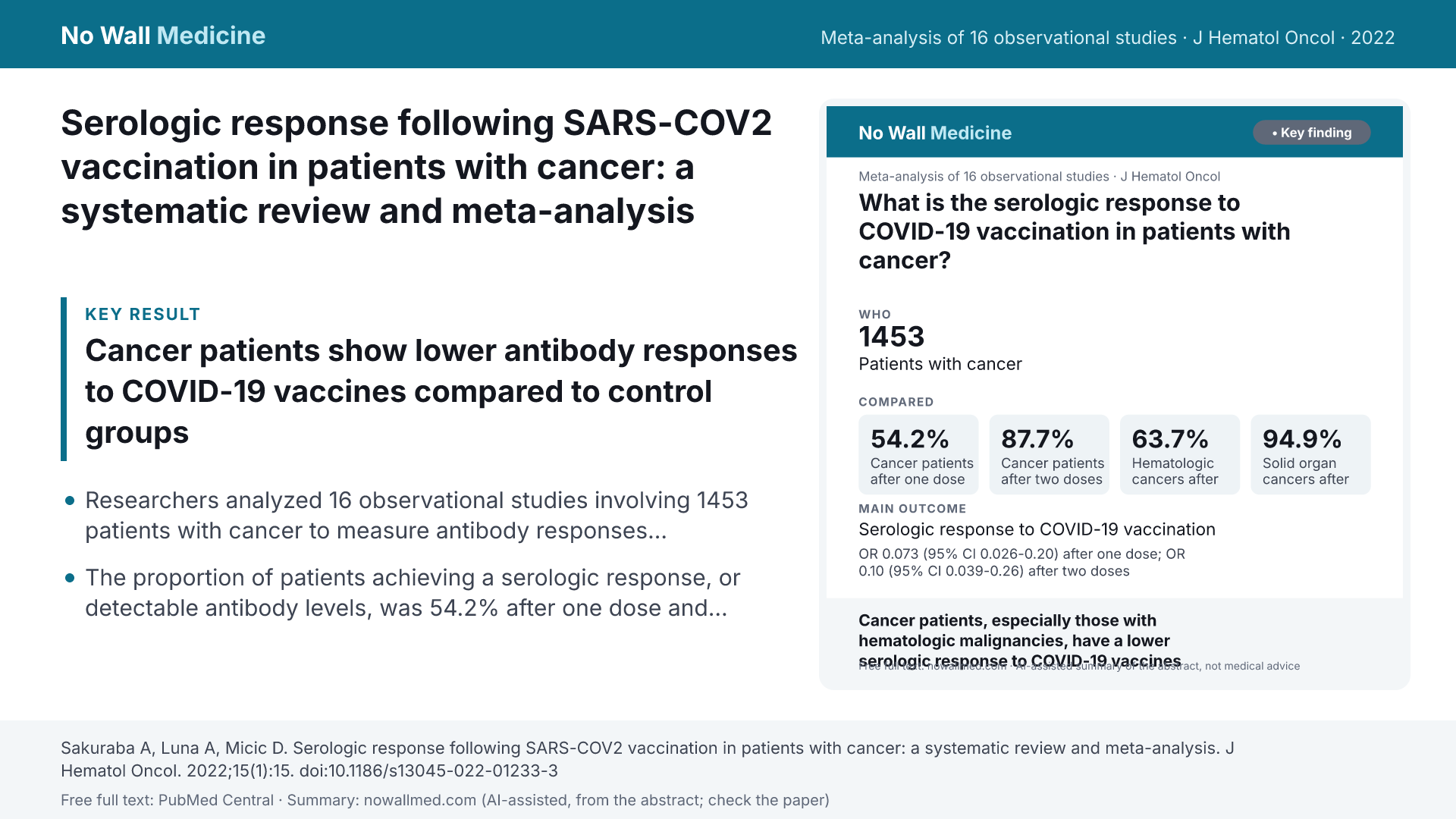
Serologic response following SARS-COV2 vaccination in patients with cancer: a systematic review and meta-analysis
Key result: Cancer patients show lower antibody responses to COVID-19 vaccines compared to control groups
Meta-analysis of 16 observational studiesKey finding
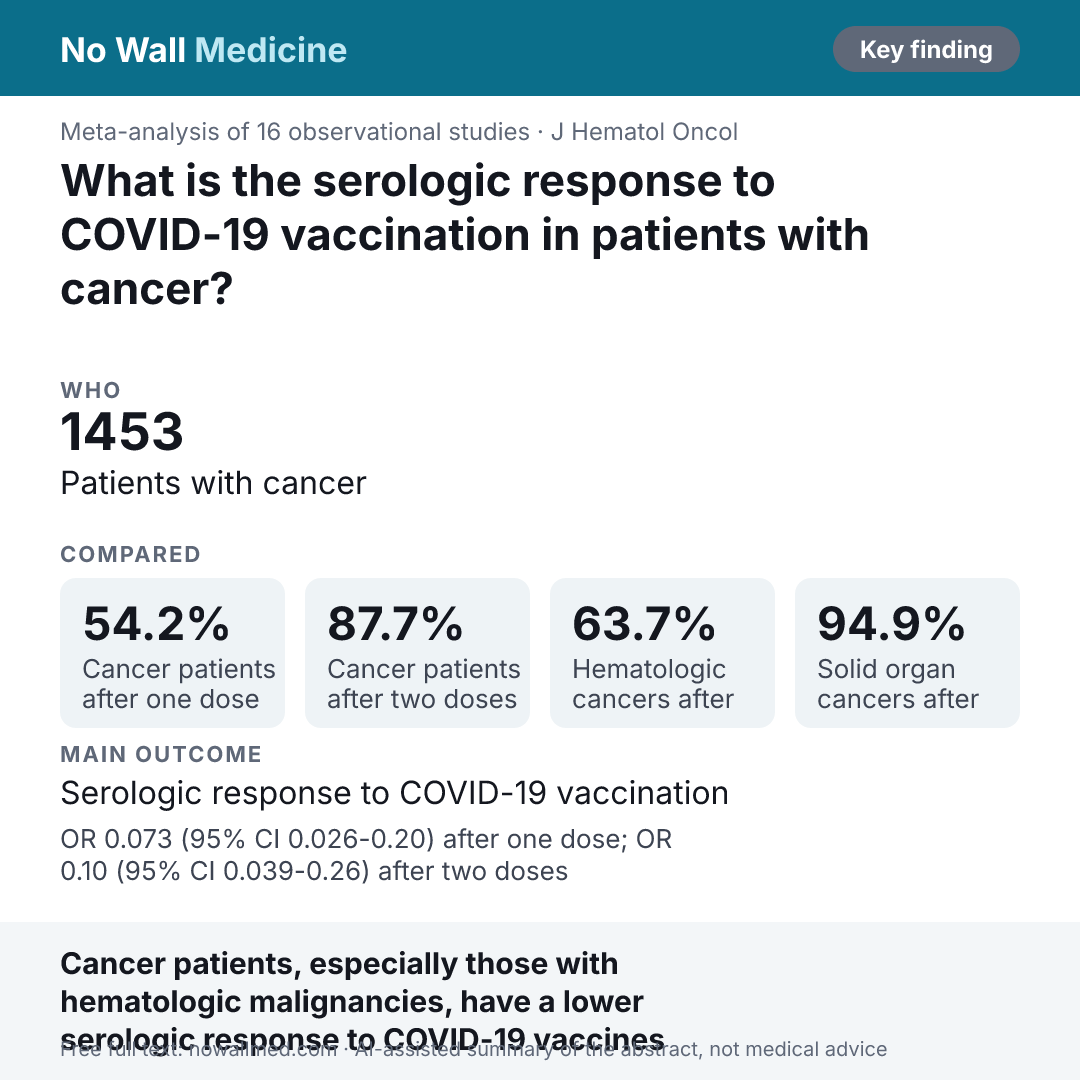
What is the serologic response to COVID-19 vaccination in patients with cancer?
Who
1453
Patients with cancer
Compared
54.2%Cancer patients after one dose (95% confidence interval 41.0-66.9)
87.7%Cancer patients after two doses (95% confidence interval 82.5-91.5)
63.7%Hematologic cancers after two doses
94.9%Solid organ cancers after two doses
Main outcome
Serologic response to COVID-19 vaccination
Result: OR 0.073 (95% CI 0.026-0.20) after one dose; OR 0.10 (95% CI 0.039-0.26) after two doses
Bottom line: Cancer patients, especially those with hematologic malignancies, have a lower serologic response to COVID-19 vaccines compared to controls.
J Hematol Oncol · 2022-02-05 · Save PNG
Key points
- Researchers analyzed 16 observational studies involving 1453 patients with cancer to measure antibody responses after vaccination.
- The proportion of patients achieving a serologic response, or detectable antibody levels, was 54.2% after one dose and 87.7% after two doses.
- Patients with blood cancers had a lower response rate after the second dose compared to those with solid organ cancers at 63.7% versus 94.9%.
Discussion prompts
- Would these patients look like yours? Who was left out?
- Is the main outcome one that matters to patients?
- Is the difference large enough to change what you do?
Cite: Sakuraba A, Luna A, Micic D. Serologic response following SARS-COV2 vaccination in patients with cancer: a systematic review and meta-analysis. J Hematol Oncol. 2022;15(1):15. doi:10.1186/s13045-022-01233-3
Free full text: PubMed Central · Summary and visual abstract: nowallmed.com/a/serologic-response-following-sars-cov2-vaccination-in-patients-with-1k0iq6/ (AI-assisted from the abstract; check the paper before relying on it).