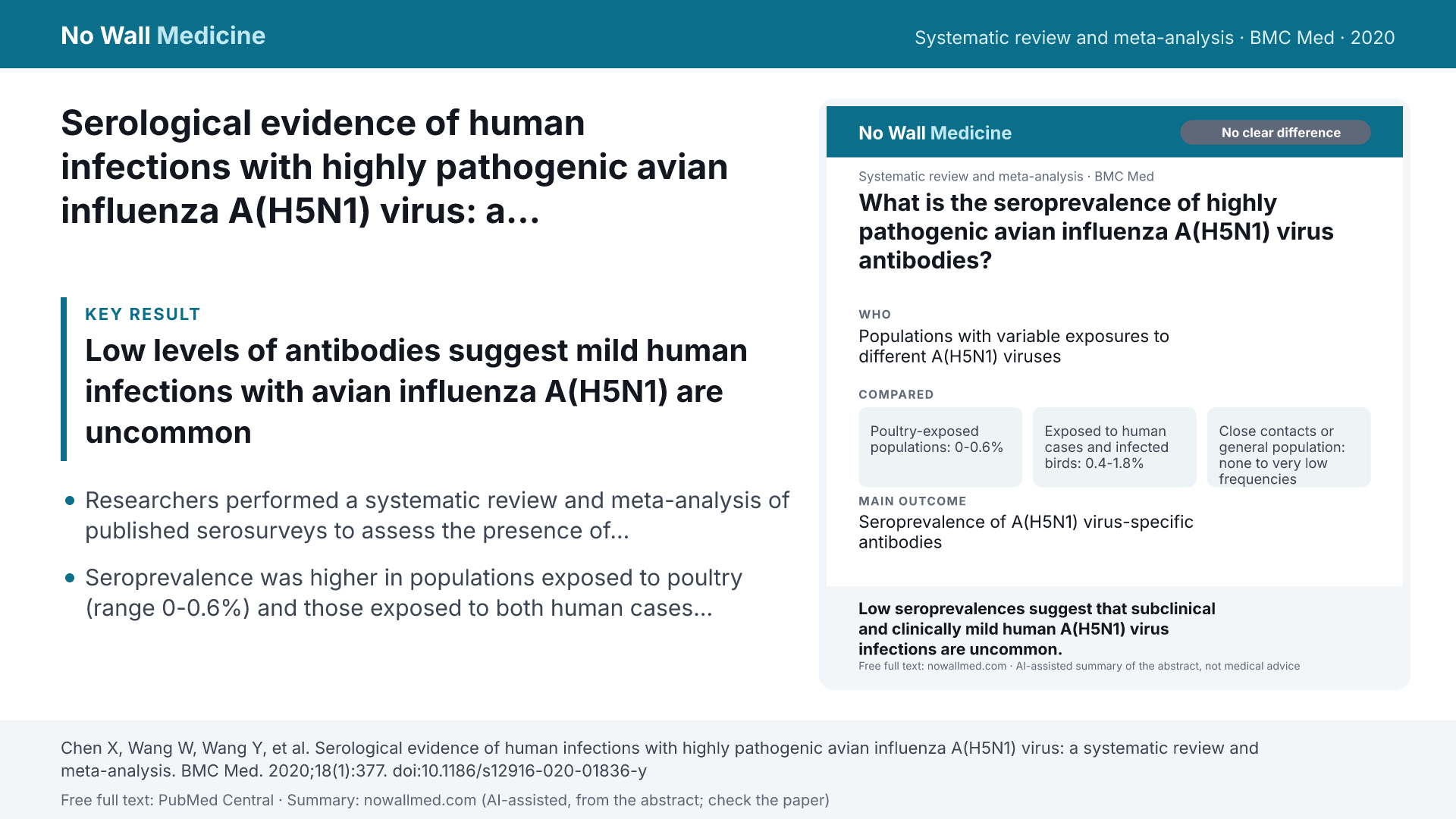
Low levels of antibodies suggest mild human infections with avian influenza A(H5N1) are uncommon
Serological evidence of human infections with highly pathogenic avian influenza A(H5N1) virus: a systematic review and meta-analysis
Systematic review and meta-analysisNo clear difference
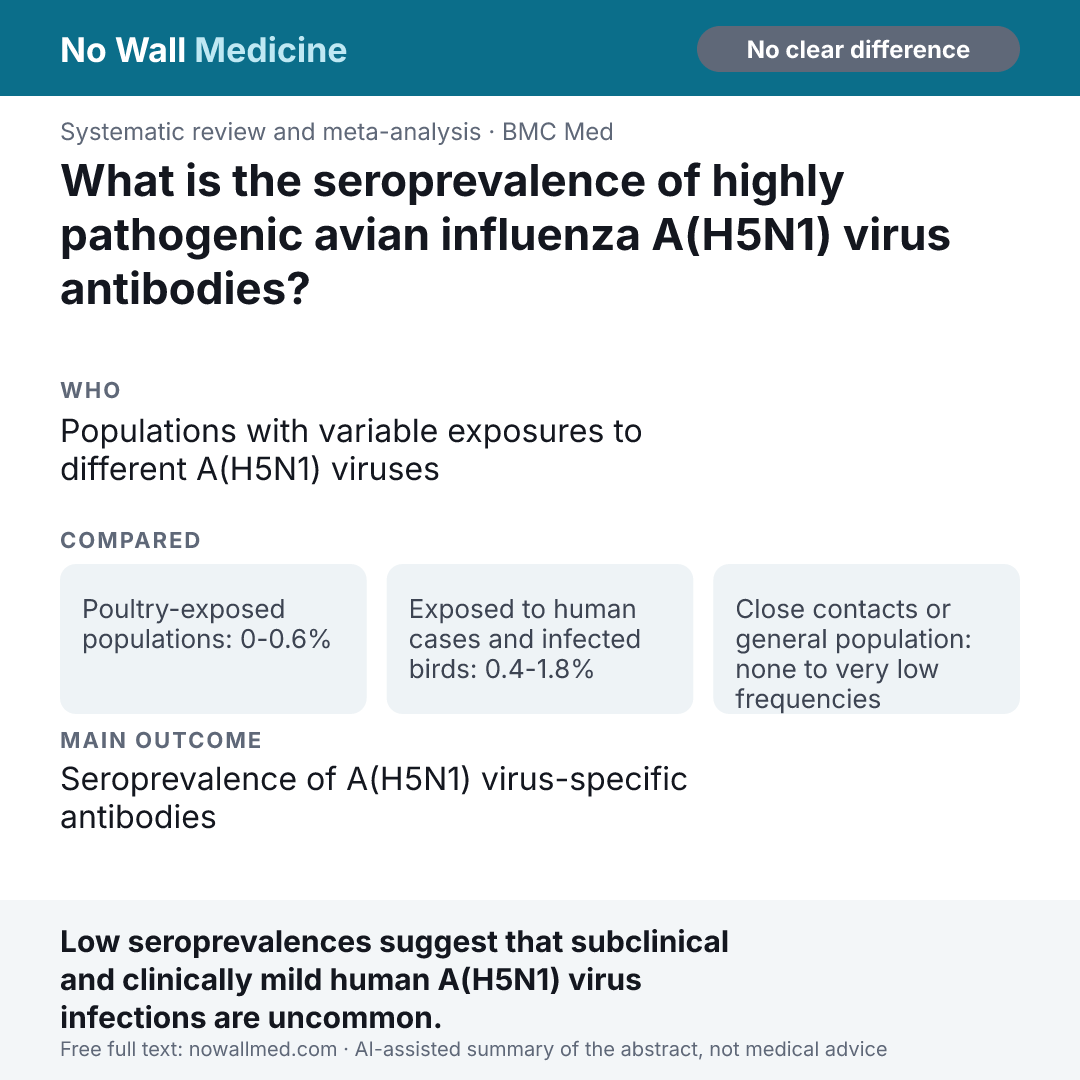
What is the seroprevalence of highly pathogenic avian influenza A(H5N1) virus antibodies?
Who
Populations with variable exposures to different A(H5N1) viruses
Compared
Poultry-exposed populations: 0-0.6%
Exposed to human cases and infected birds: 0.4-1.8%
Close contacts or general population: none to very low frequencies
Main outcome
Seroprevalence of A(H5N1) virus-specific antibodies
Bottom line: Low seroprevalences suggest that subclinical and clinically mild human A(H5N1) virus infections are uncommon.
BMC Med · 2020-12-02 · Save PNG
Clinical question: What is the seroprevalence of highly pathogenic avian influenza A(H5N1) virus antibodies?
Why it matters: The true risk of human infection remains unclear because a comprehensive assessment of the prevalence of antibodies against the A(H5N1) virus is missing.
Key points
- Researchers performed a systematic review and meta-analysis of published serosurveys to assess the presence of antibodies against the highly pathogenic avian influenza A(H5N1) virus.
- Seroprevalence was higher in populations exposed to poultry (range 0-0.6%) and those exposed to both human cases and infected birds (range 0.4-1.8%) than in the general population.
- Antibody levels were higher in people exposed to clade 0 virus (1.9%, range 0.7-3.2%) compared to exposure to other clades (range 0-0.5%).
Headline and key points written with AI from the paper’s abstract, with every number checked against it. Read the paper before relying on them.
Was this summary helpful?
Subject terms
Headline, design, result, key points, caveat and citation as plain text.
Cite this article
Chen X, Wang W, Wang Y, et al. Serological evidence of human infections with highly pathogenic avian influenza A(H5N1) virus: a systematic review and meta-analysis. BMC Med. 2020;18(1):377. doi:10.1186/s12916-020-01836-y
Spotted a mistake? Suggest a correction