Serum Insulin-like Factor 3, Testosterone, and LH in Experimental and Therapeutic Testicular Suppression
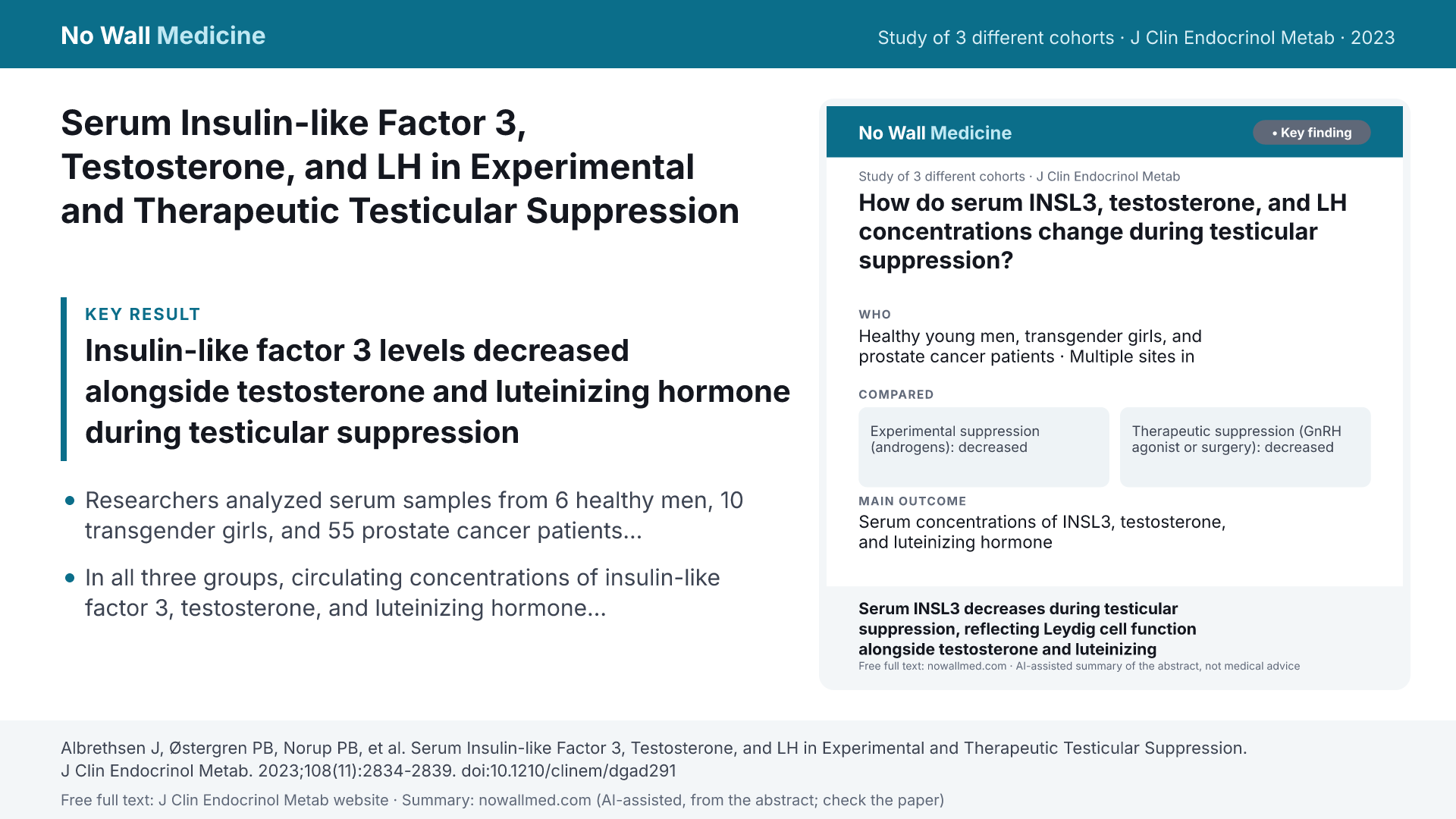
Key result: Insulin-like factor 3 levels decreased alongside testosterone and luteinizing hormone during testicular suppression
Study of 3 different cohortsKey finding
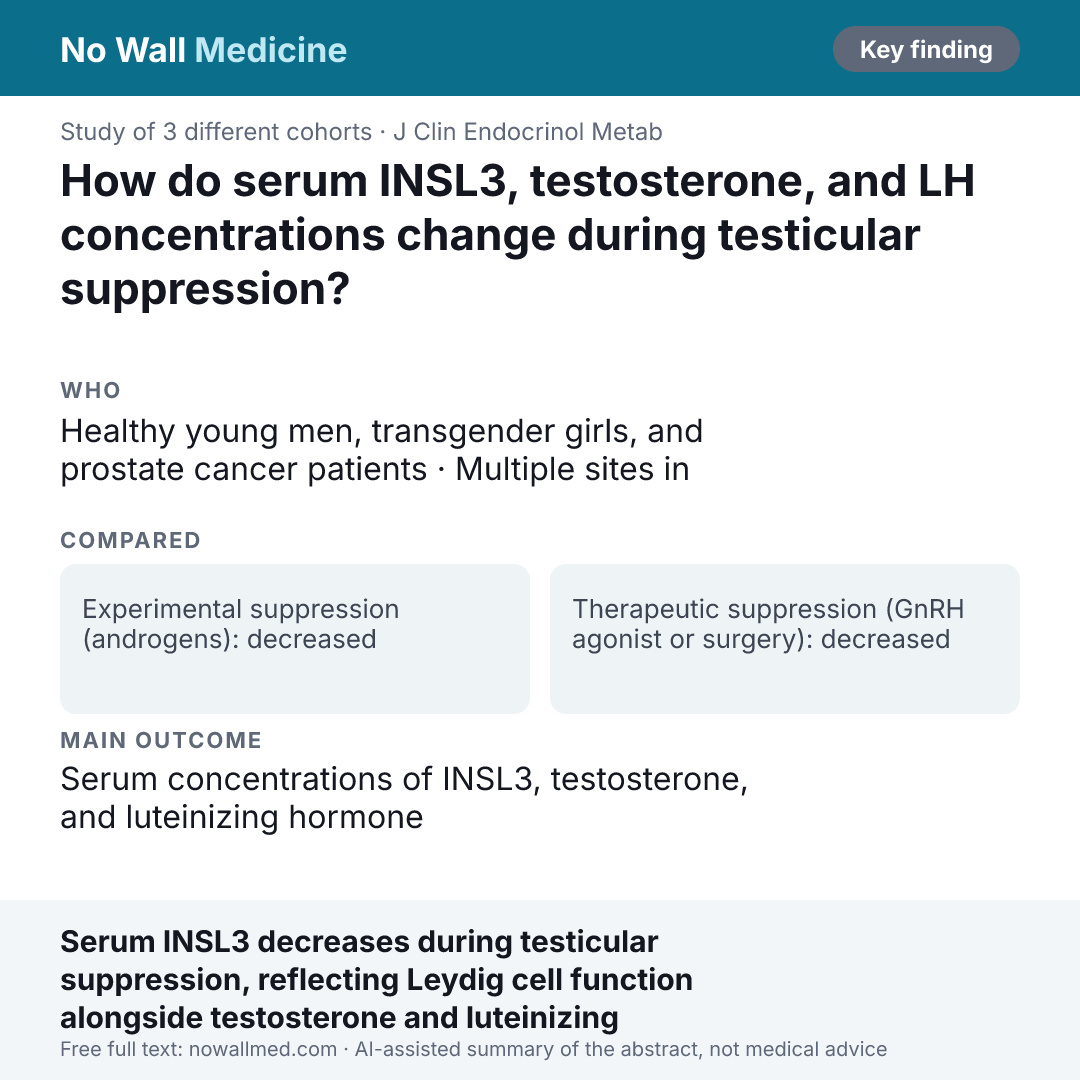
How do serum INSL3, testosterone, and LH concentrations change during testicular suppression?
Who
Healthy young men, transgender girls, and prostate cancer patients · Multiple sites in Ireland, Denmark, and Sweden
Compared
Experimental suppression (androgens): decreased
Therapeutic suppression (GnRH agonist or surgery): decreased
Main outcome
Serum concentrations of INSL3, testosterone, and luteinizing hormone
Bottom line: Serum INSL3 decreases during testicular suppression, reflecting Leydig cell function alongside testosterone and luteinizing hormone.
J Clin Endocrinol Metab · 2023-05-26 · Save PNG
Key points
- Researchers analyzed serum samples from 6 healthy men, 10 transgender girls, and 55 prostate cancer patients undergoing different forms of testicular suppression.
- In all three groups, circulating concentrations of insulin-like factor 3, testosterone, and luteinizing hormone decreased during suppression.
- In healthy men treated with androgens, insulin-like factor 3 levels returned to baseline after the suppression was released.
Discussion prompts
- Would these patients look like yours? Who was left out?
- Is the main outcome one that matters to patients?
- Is the difference large enough to change what you do?
Cite: Albrethsen J, Østergren PB, Norup PB, et al. Serum Insulin-like Factor 3, Testosterone, and LH in Experimental and Therapeutic Testicular Suppression. J Clin Endocrinol Metab. 2023;108(11):2834-2839. doi:10.1210/clinem/dgad291
Free full text: J Clin Endocrinol Metab website · Summary and visual abstract: nowallmed.com/a/serum-insulin-like-factor-3-testosterone-and-lh-in-experimental-and-1t2t29g/ (AI-assisted from the abstract; check the paper before relying on it).