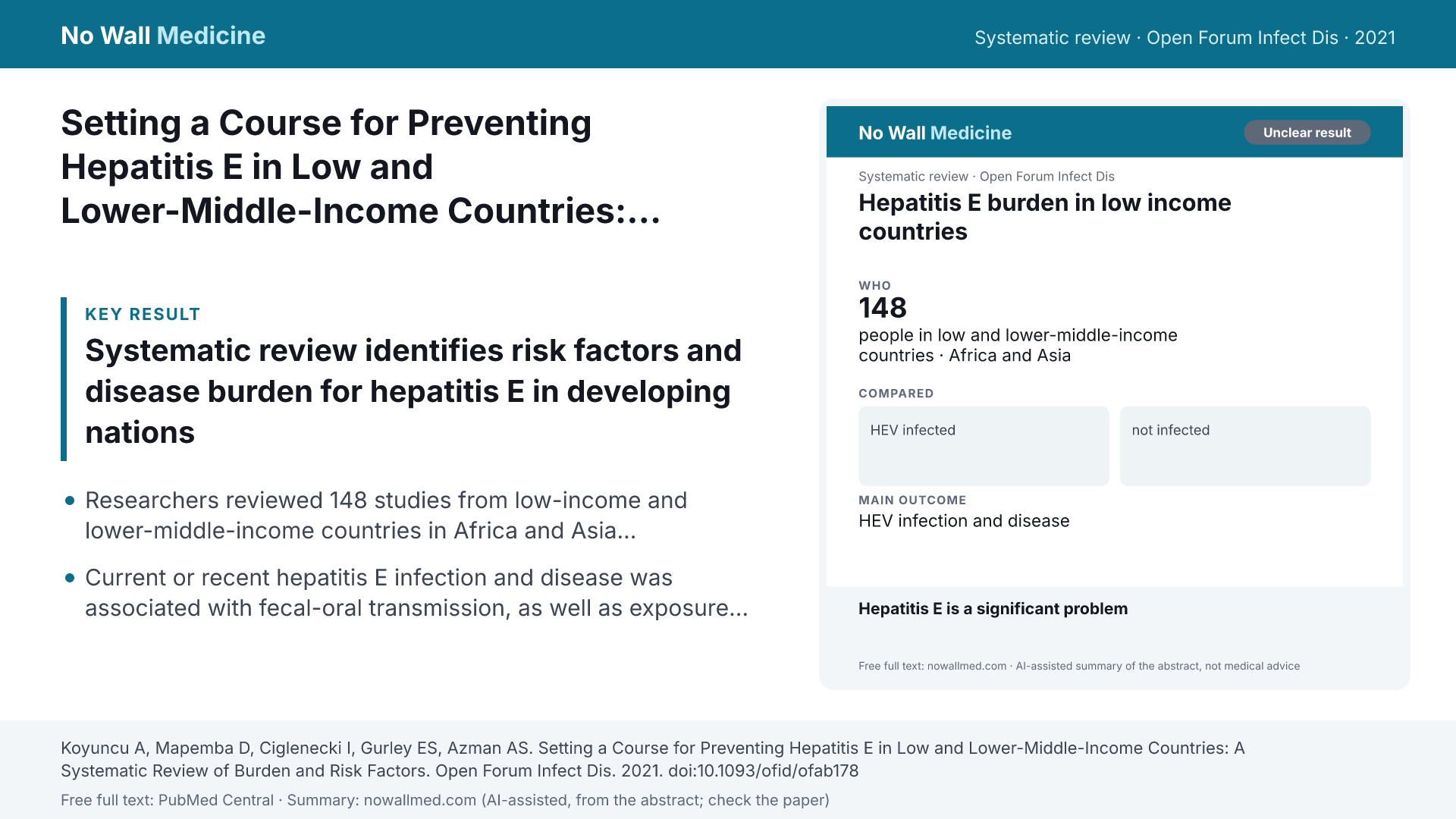
Setting a Course for Preventing Hepatitis E in Low and Lower-Middle-Income Countries: A Systematic Review of Burden and Risk Factors
Key result: Systematic review identifies risk factors and disease burden for hepatitis E in developing nations
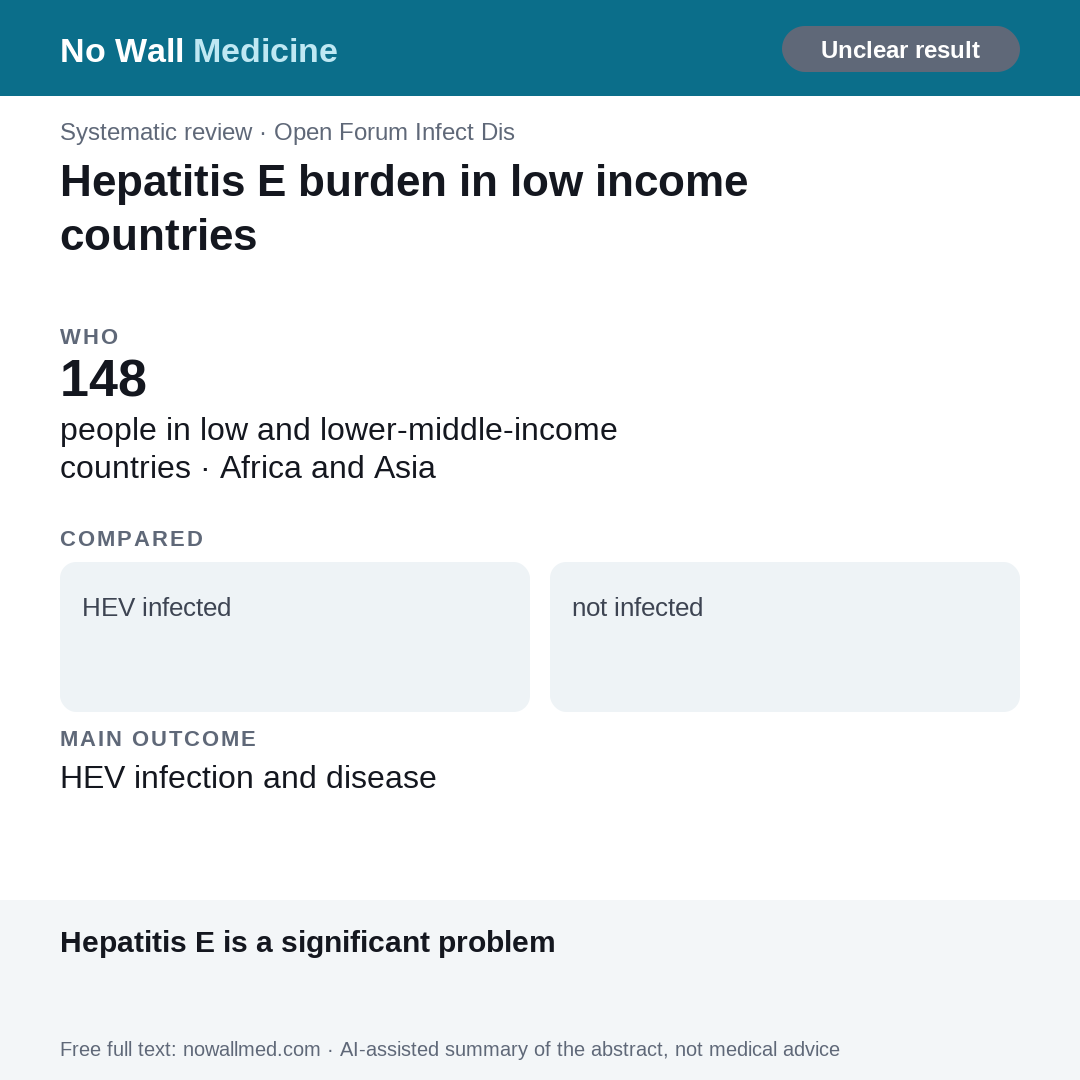
Systematic reviewUnclear result
Hepatitis E burden in low income countries
Who
148
people in low and lower-middle-income countries · Africa and Asia
Compared
HEV infected
not infected
Main outcome
HEV infection and disease
Bottom line: Hepatitis E is a significant problem
Open Forum Infect Dis · 2021-04-13Download image
Key points
- Researchers reviewed 148 studies from low-income and lower-middle-income countries in Africa and Asia regarding hepatitis E virus infection and outbreaks.
- Current or recent hepatitis E infection and disease was associated with fecal-oral transmission, as well as exposure to blood and animals.
- Most cases of hepatitis E during recorded outbreaks were not confirmed by laboratory testing.
Why it matters: Key epidemiologic data are lacking to understand how to best use available vaccines for hepatitis E control in endemic countries.
Discussion prompts
- Would these patients look like yours? Who was left out?
- Is the main outcome one that matters to patients?
- Is the difference large enough to change what you do?
Cite: Koyuncu A, Mapemba D, Ciglenecki I, Gurley ES, Azman AS. Setting a Course for Preventing Hepatitis E in Low and Lower-Middle-Income Countries: A Systematic Review of Burden and Risk Factors. Open Forum Infect Dis. 2021. doi:10.1093/ofid/ofab178
Free full text: PubMed Central · Summary and visual abstract: nowallmed.com/a/setting-a-course-for-preventing-hepatitis-e-in-low-and-lower-middle-1jjkgm1/ (AI-assisted from the abstract; check the paper before relying on it).