Severe α1-antitrypsin deficiency associated with lower blood pressure and reduced risk of ischemic heart disease: a cohort study of 91,540 individuals and a meta-analysis
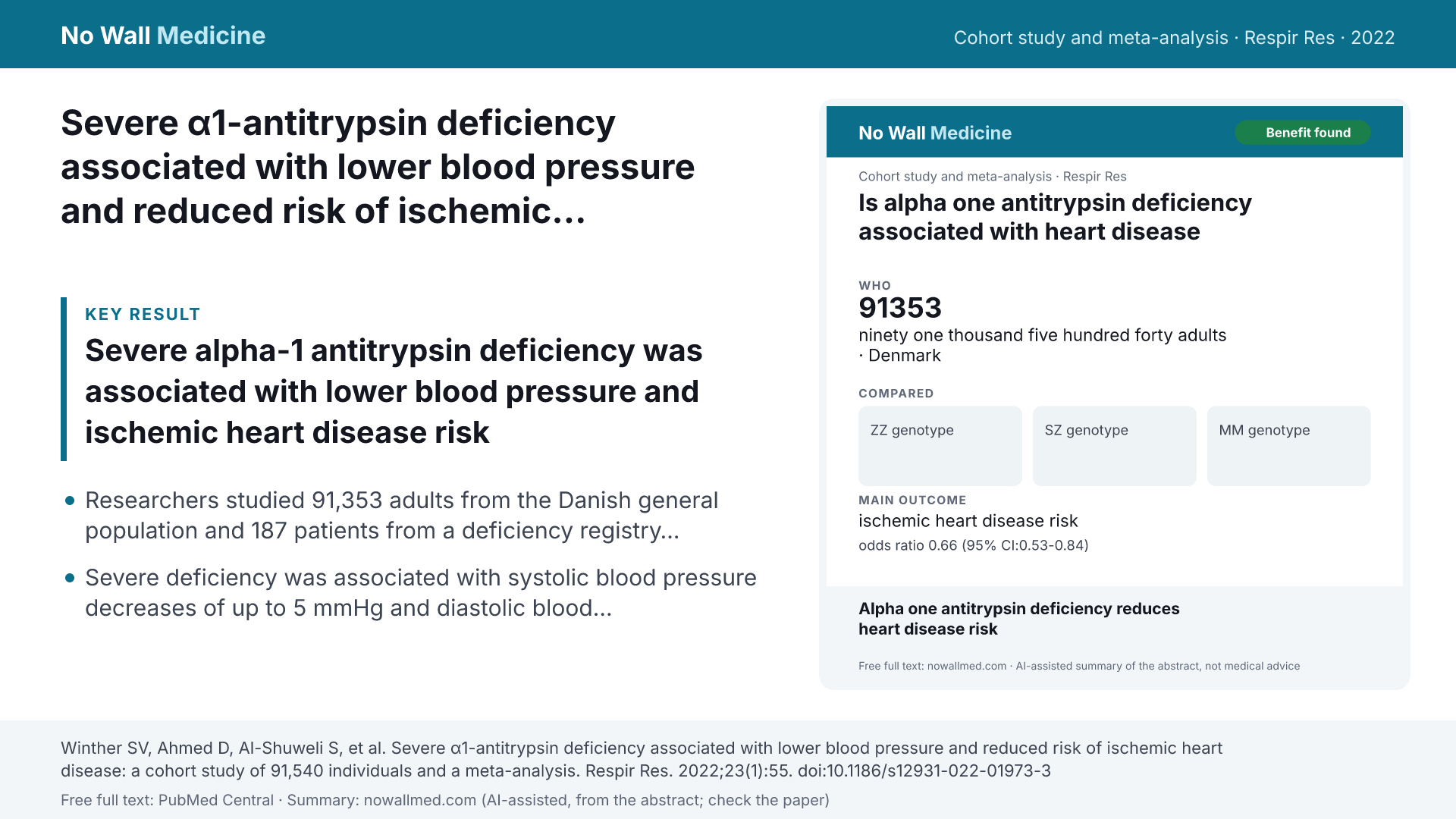
Key result: Severe alpha-1 antitrypsin deficiency was associated with lower blood pressure and ischemic heart disease risk
Cohort study and meta-analysisBenefit found
Is alpha one antitrypsin deficiency associated with heart disease
Who
91353
ninety one thousand five hundred forty adults · Denmark
Compared
ZZ genotype
SZ genotype
MM genotype
Main outcome
ischemic heart disease risk
Result: odds ratio 0.66 (95% CI:0.53-0.84)
Bottom line: Alpha one antitrypsin deficiency reduces heart disease risk
Respir Res · 2022-03-09
Key points
- Researchers studied 91,353 adults from the Danish general population and 187 patients from a deficiency registry to compare blood pressure and cardiovascular events.
- Severe deficiency was associated with systolic blood pressure decreases of up to 5 mmHg and diastolic blood pressure decreases of up to 2 mmHg.
- A meta-analysis of this cohort and four previous studies showed an odds ratio for ischemic heart disease of 0.66 for those with the deficiency.
Discussion prompts
- Would these patients look like yours? Who was left out?
- Is the main outcome one that matters to patients?
- Is the difference large enough to change what you do?
Cite: Winther SV, Ahmed D, Al-Shuweli S, et al. Severe α1-antitrypsin deficiency associated with lower blood pressure and reduced risk of ischemic heart disease: a cohort study of 91,540 individuals and a meta-analysis. Respir Res. 2022;23(1):55. doi:10.1186/s12931-022-01973-3
Free full text: PubMed Central · Summary and visual abstract: nowallmed.com/a/severe-1-antitrypsin-deficiency-associated-with-lower-blood-pressure-11sl3sa/ (AI-assisted from the abstract; check the paper before relying on it).