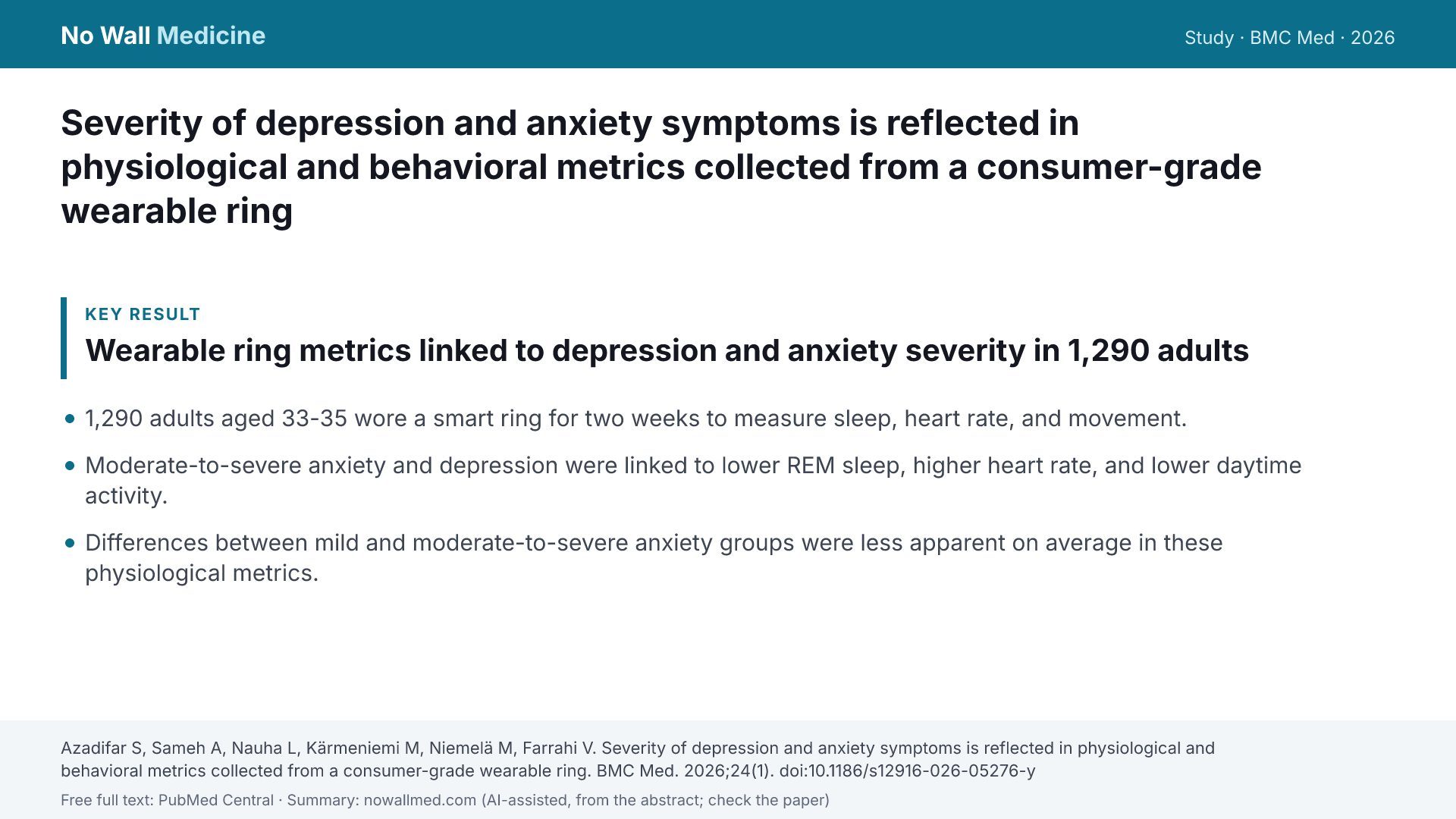
Severity of depression and anxiety symptoms is reflected in physiological and behavioral metrics collected from a consumer-grade wearable ring
Key result: Wearable ring metrics linked to depression and anxiety severity in 1,290 adults
Key points
- 1,290 adults aged 33-35 wore a smart ring for two weeks to measure sleep, heart rate, and movement.
- Moderate-to-severe anxiety and depression were linked to lower REM sleep, higher heart rate, and lower daytime activity.
- Differences between mild and moderate-to-severe anxiety groups were less apparent on average in these physiological metrics.
Limitation the authors note: The study used cross-sectional data, so it can only show links between symptoms and metrics, not cause or effect.
Discussion prompts
- Would these patients look like yours? Who was left out?
- Is the main outcome one that matters to patients?
- Is the difference large enough to change what you do?
Cite: Azadifar S, Sameh A, Nauha L, Kärmeniemi M, Niemelä M, Farrahi V. Severity of depression and anxiety symptoms is reflected in physiological and behavioral metrics collected from a consumer-grade wearable ring. BMC Med. 2026;24(1). doi:10.1186/s12916-026-05276-y
Free full text: PubMed Central · Summary and visual abstract: nowallmed.com/a/severity-of-depression-and-anxiety-symptoms-is-reflected-in-cmy2e9/ (AI-assisted from the abstract; check the paper before relying on it).