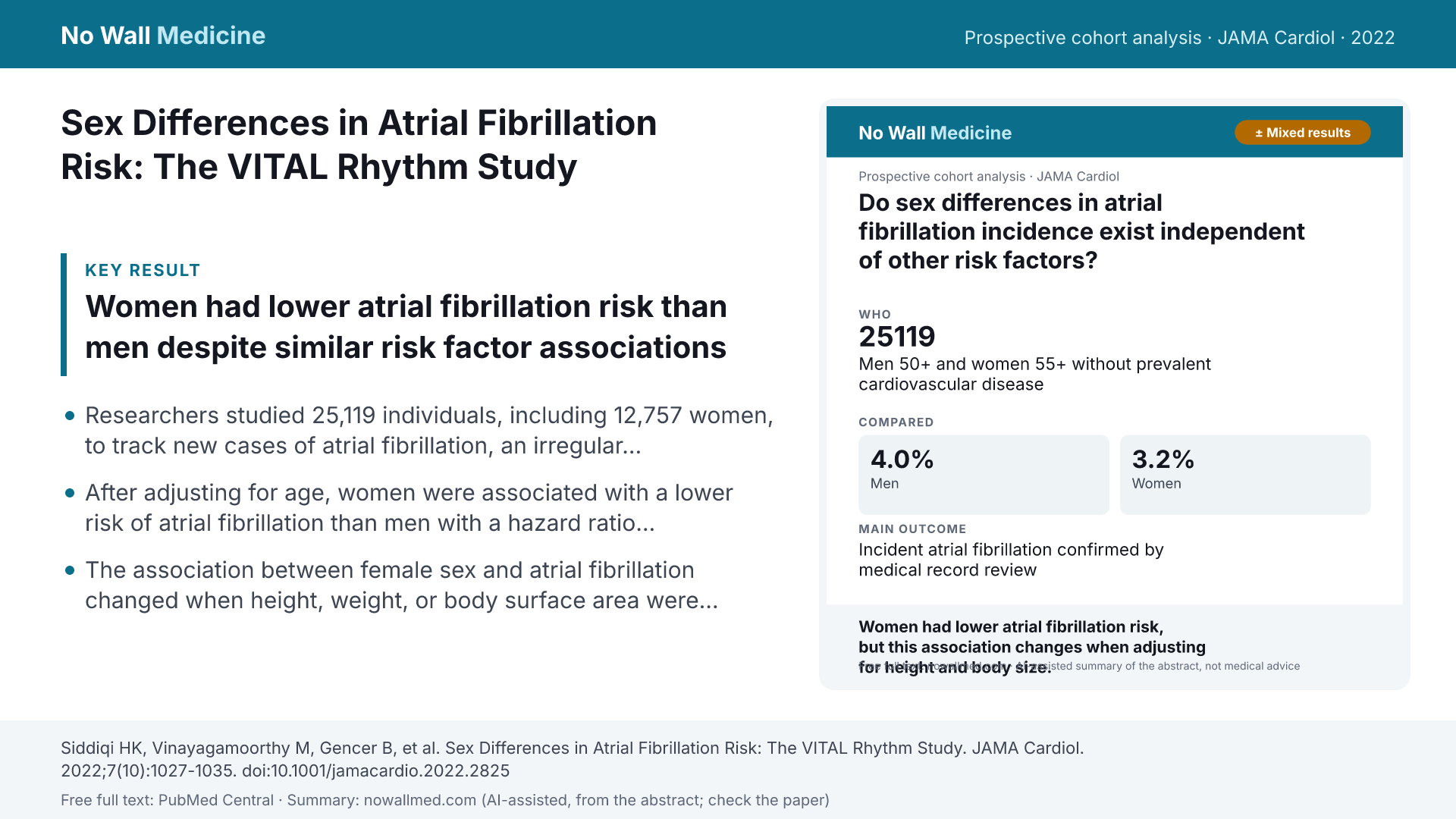
Women had lower atrial fibrillation risk than men despite similar risk factor associations
Sex Differences in Atrial Fibrillation Risk: The VITAL Rhythm Study
Prospective cohort analysisMixed results
Do sex differences in atrial fibrillation incidence exist independent of other risk factors?
Who
25119
Men 50+ and women 55+ without prevalent cardiovascular disease
Compared
4.0%Men
3.2%Women
Main outcome
Incident atrial fibrillation confirmed by medical record review
Result: hazard ratio 0.68 (95% CI, 0.59-0.77)
Bottom line: Women had lower atrial fibrillation risk, but this association changes when adjusting for height and body size.
JAMA Cardiol · 2022-09-01 · Save PNG
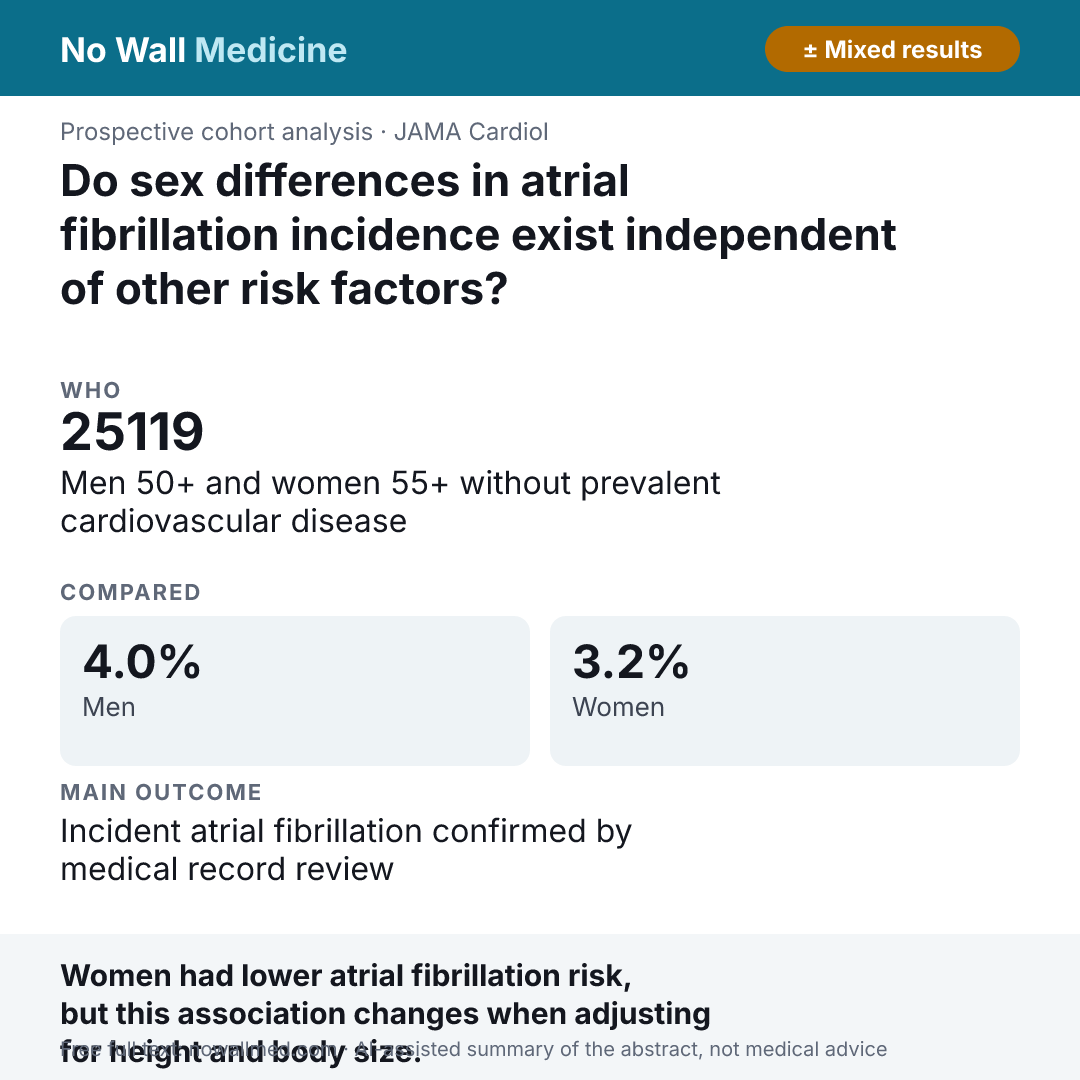
Clinical question: Do sex differences in atrial fibrillation incidence exist independent of other risk factors?
Key points
- Researchers studied 25,119 individuals, including 12,757 women, to track new cases of atrial fibrillation, an irregular heart rhythm, over a median of 5.3 years.
- After adjusting for age, women were associated with a lower risk of atrial fibrillation than men with a hazard ratio of 0.68.
- The association between female sex and atrial fibrillation changed when height, weight, or body surface area were used instead of body mass index.
Headline and key points written with AI from the paper’s abstract, with every number checked against it. Read the paper before relying on them.
Was this summary helpful?
Subject terms
Headline, design, result, key points, caveat and citation as plain text.
Cite this article
Siddiqi HK, Vinayagamoorthy M, Gencer B, et al. Sex Differences in Atrial Fibrillation Risk: The VITAL Rhythm Study. JAMA Cardiol. 2022;7(10):1027-1035. doi:10.1001/jamacardio.2022.2825
Spotted a mistake? Suggest a correction