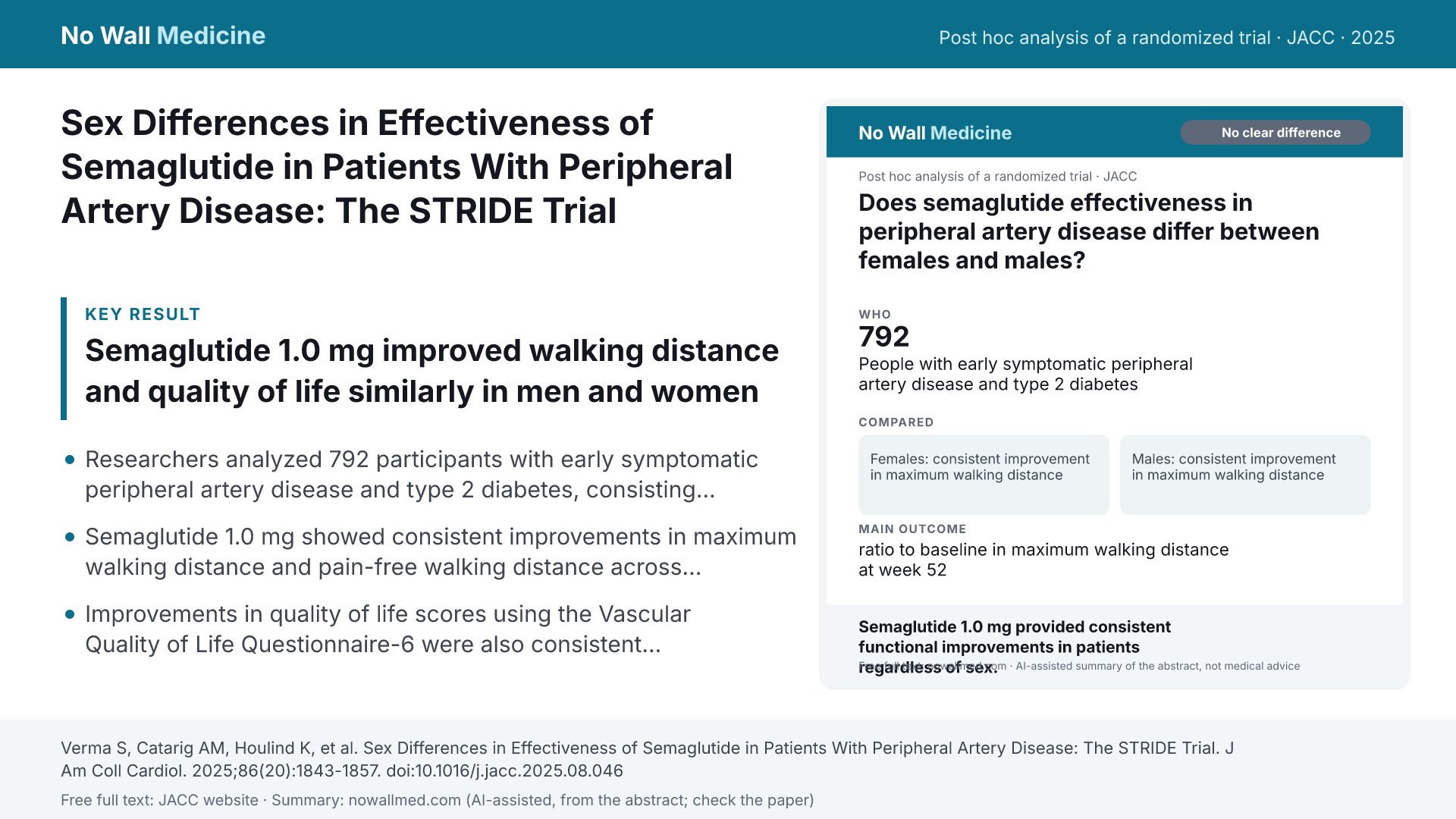
Semaglutide 1.0 mg improved walking distance and quality of life similarly in men and women
Sex Differences in Effectiveness of Semaglutide in Patients With Peripheral Artery Disease: The STRIDE Trial
Post hoc analysis of a randomized trialNo clear difference
Does semaglutide effectiveness in peripheral artery disease differ between females and males?
Who
792
People with early symptomatic peripheral artery disease and type 2 diabetes
Compared
Females: consistent improvement in maximum walking distance
Males: consistent improvement in maximum walking distance
Main outcome
ratio to baseline in maximum walking distance at week 52
Result: P-interaction value = 0.65
Bottom line: Semaglutide 1.0 mg provided consistent functional improvements in patients regardless of sex.
JACC · 2025-08-31 · Save PNG
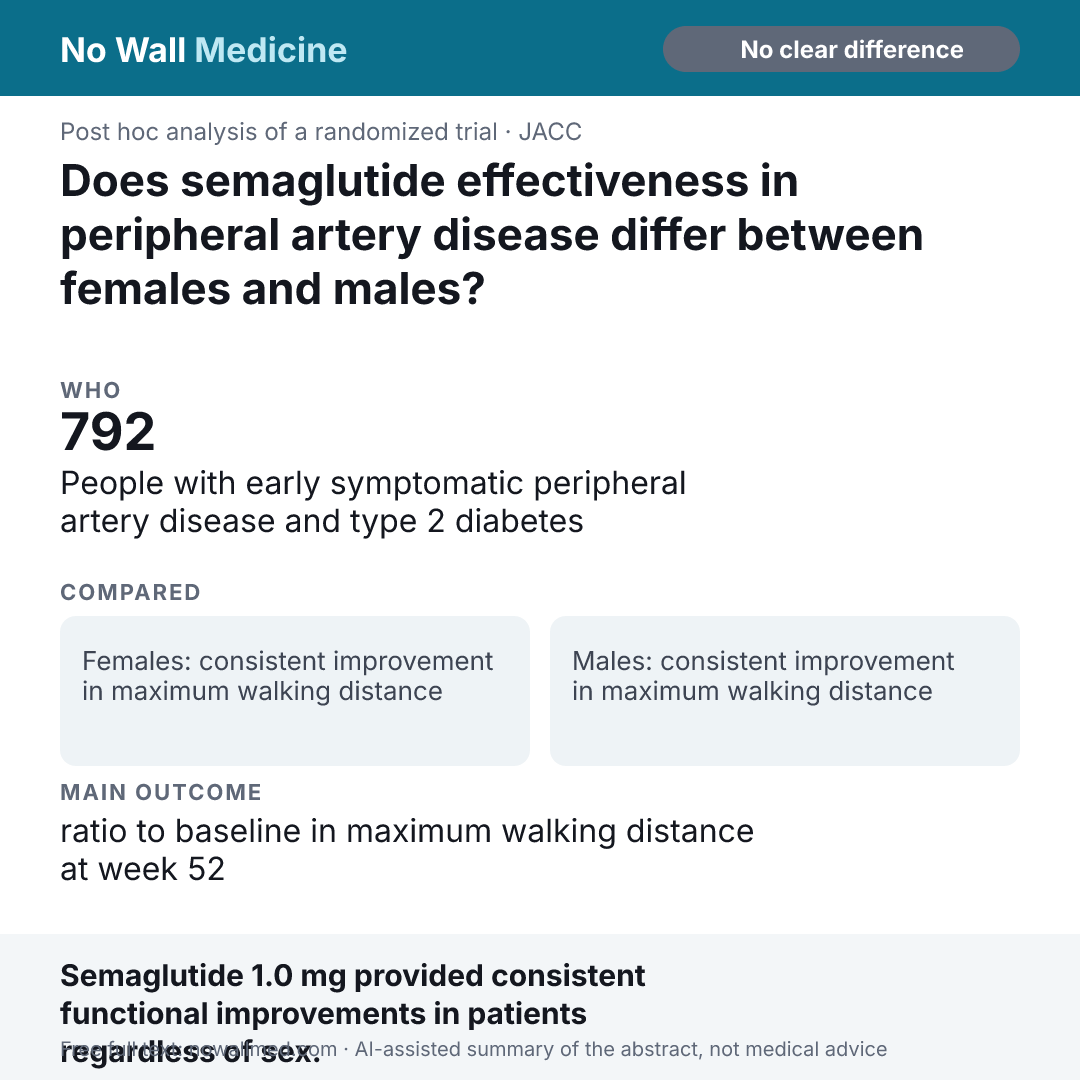
Clinical question: Does semaglutide effectiveness in peripheral artery disease differ between females and males?
Key points
- Researchers analyzed 792 participants with early symptomatic peripheral artery disease and type 2 diabetes, consisting of 195 (24.6%) females and 597 (75.4%) males.
- Semaglutide 1.0 mg showed consistent improvements in maximum walking distance and pain-free walking distance across both sexes through week 52.
- Improvements in quality of life scores using the Vascular Quality of Life Questionnaire-6 were also consistent between males and females.
Headline and key points written with AI from the paper’s abstract, with every number checked against it. Read the paper before relying on them.
Was this summary helpful?
Subject terms
Headline, design, result, key points, caveat and citation as plain text.
Cite this article
Verma S, Catarig AM, Houlind K, et al. Sex Differences in Effectiveness of Semaglutide in Patients With Peripheral Artery Disease: The STRIDE Trial. J Am Coll Cardiol. 2025;86(20):1843-1857. doi:10.1016/j.jacc.2025.08.046
Spotted a mistake? Suggest a correction