Short- versus long-term Dual AntiPlatelet Therapy for Stent-Assisted treatment of CErebral aneurysm (DAPTS ACE): a multicenter, open-label, randomized clinical trial
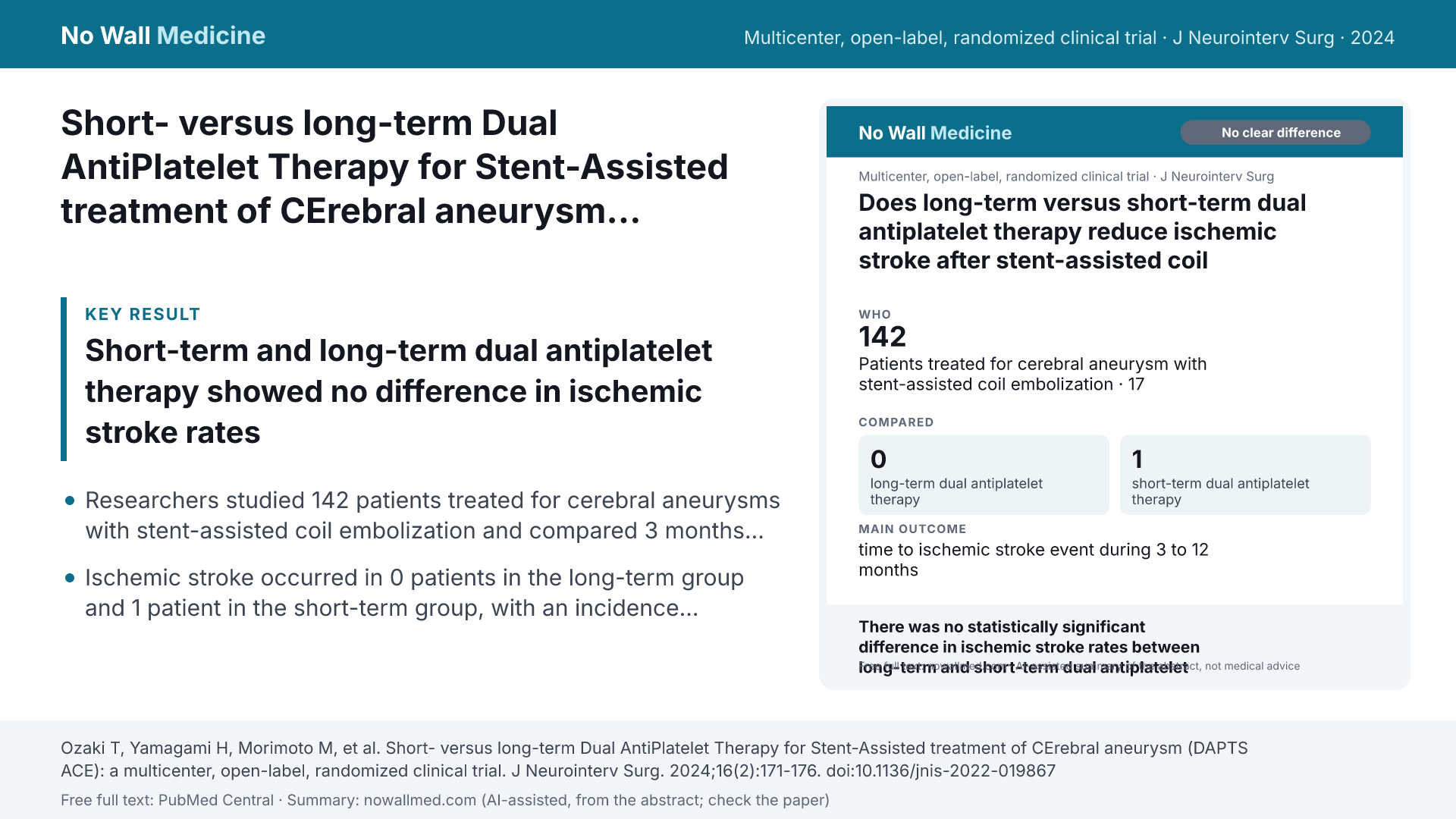
Key result: Short-term and long-term dual antiplatelet therapy showed no difference in ischemic stroke rates
Key points
- Researchers studied 142 patients treated for cerebral aneurysms with stent-assisted coil embolization and compared 3 months of dual antiplatelet therapy to 12 months.
- Ischemic stroke occurred in 0 patients in the long-term group and 1 patient in the short-term group, with an incidence rate of 0.0 vs 2.1/100 person-years.
- The difference in stroke rates between the two treatment durations was not statistically significant (P=0.33).
Why it matters: The optimal duration of dual antiplatelet therapy, which involves taking two types of blood-thinning medications, remains uncertain after stent-assisted coil embolization for cerebral aneurysms.
Discussion prompts
- Would these patients look like yours? Who was left out?
- Is the main outcome one that matters to patients?
- Is the difference large enough to change what you do?
Cite: Ozaki T, Yamagami H, Morimoto M, et al. Short- versus long-term Dual AntiPlatelet Therapy for Stent-Assisted treatment of CErebral aneurysm (DAPTS ACE): a multicenter, open-label, randomized clinical trial. J Neurointerv Surg. 2024;16(2):171-176. doi:10.1136/jnis-2022-019867
Free full text: PubMed Central · Summary and visual abstract: nowallmed.com/a/short-versus-long-term-dual-antiplatelet-therapy-for-stent-assisted-jikh0j/ (AI-assisted from the abstract; check the paper before relying on it).