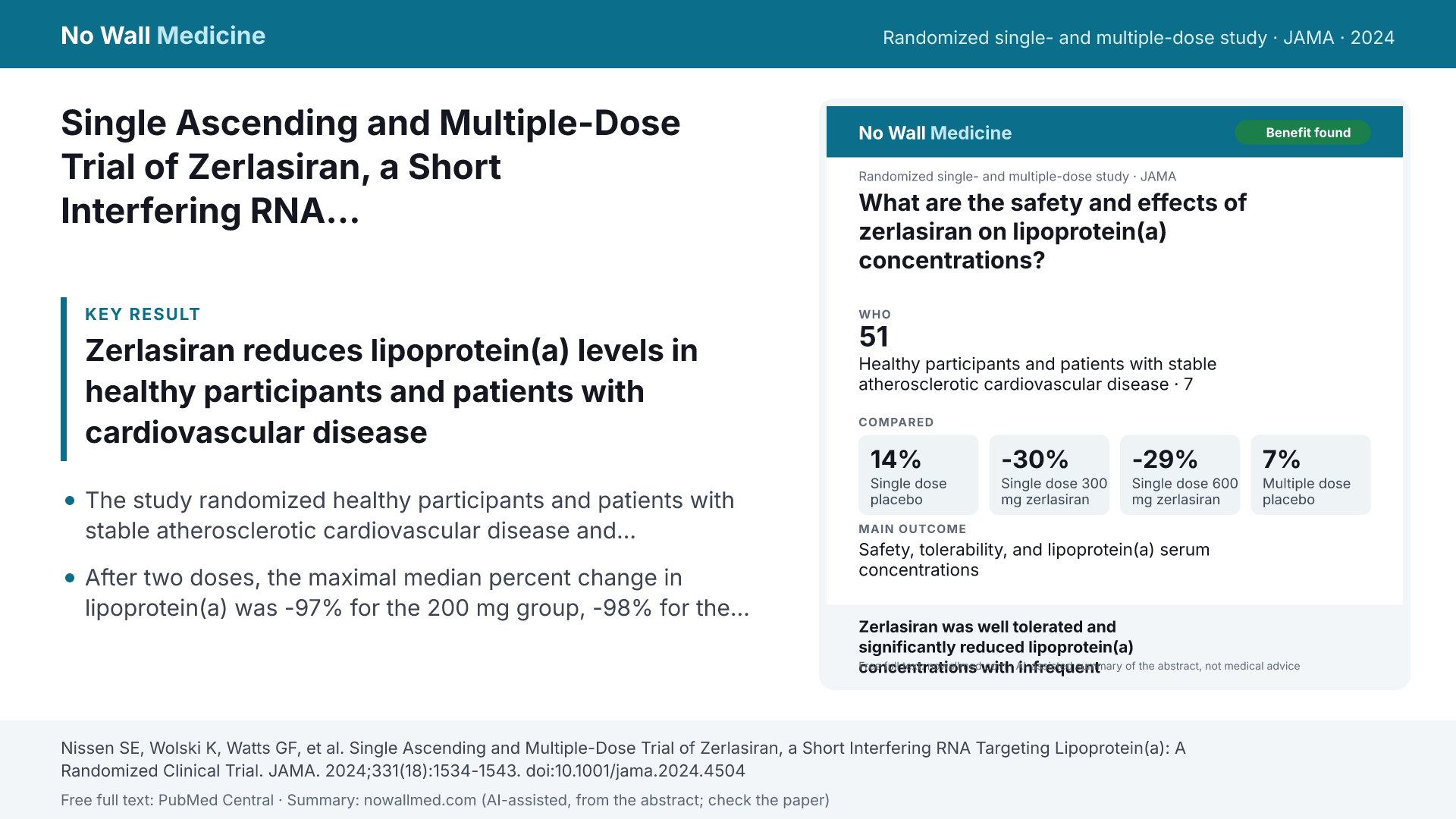
Single Ascending and Multiple-Dose Trial of Zerlasiran, a Short Interfering RNA Targeting Lipoprotein(a): A Randomized Clinical Trial
Key result: Zerlasiran reduces lipoprotein(a) levels in healthy participants and patients with cardiovascular disease
Key points
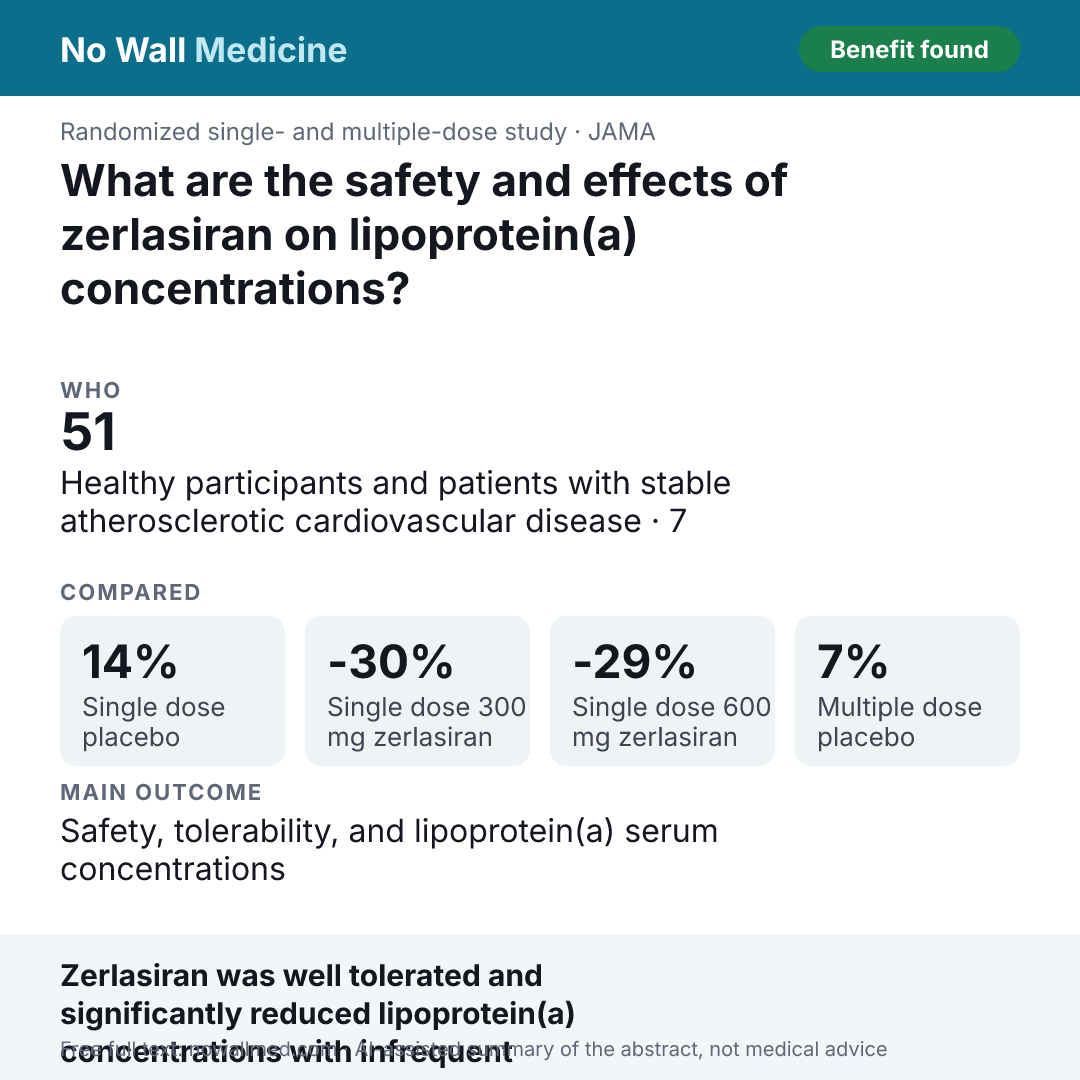
- The study randomized healthy participants and patients with stable atherosclerotic cardiovascular disease and high lipoprotein(a) to receive single or multiple doses of zerlasiran or placebo.
- After two doses, the maximal median percent change in lipoprotein(a) was -97% for the 200 mg group, -98% for the 300 mg group, and -99% for the 450 mg group.
- No serious adverse events were reported during the trial involving 37 patients in the multiple-dose group and 14 participants in the single-dose group.
Why it matters: There are currently no approved pharmacological treatments for lipoprotein(a), which is a causal risk factor for atherosclerotic cardiovascular disease and calcific aortic stenosis.
Discussion prompts
- Would these patients look like yours? Who was left out?
- Is the main outcome one that matters to patients?
- Is the difference large enough to change what you do?
Cite: Nissen SE, Wolski K, Watts GF, et al. Single Ascending and Multiple-Dose Trial of Zerlasiran, a Short Interfering RNA Targeting Lipoprotein(a): A Randomized Clinical Trial. JAMA. 2024;331(18):1534-1543. doi:10.1001/jama.2024.4504
Free full text: PubMed Central · Summary and visual abstract: nowallmed.com/a/single-ascending-and-multiple-dose-trial-of-zerlasiran-a-short-rsewmx/ (AI-assisted from the abstract; check the paper before relying on it).