Single-dose versus low-dose rituximab in corticosteroid-resistant or relapsed ITP: A multicenter, randomized, controlled study
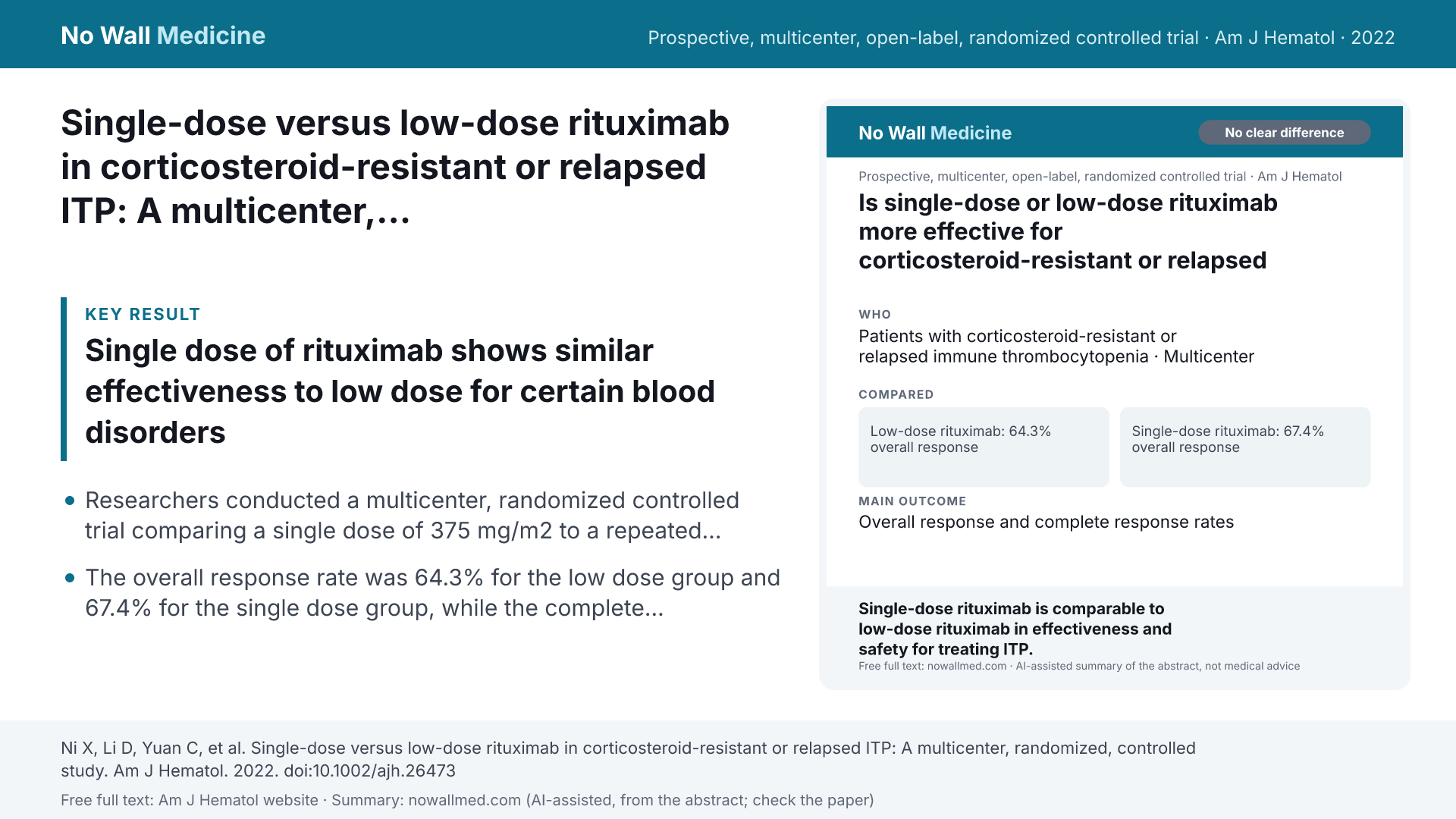
Key result: Single dose of rituximab shows similar effectiveness to low dose for certain blood disorders
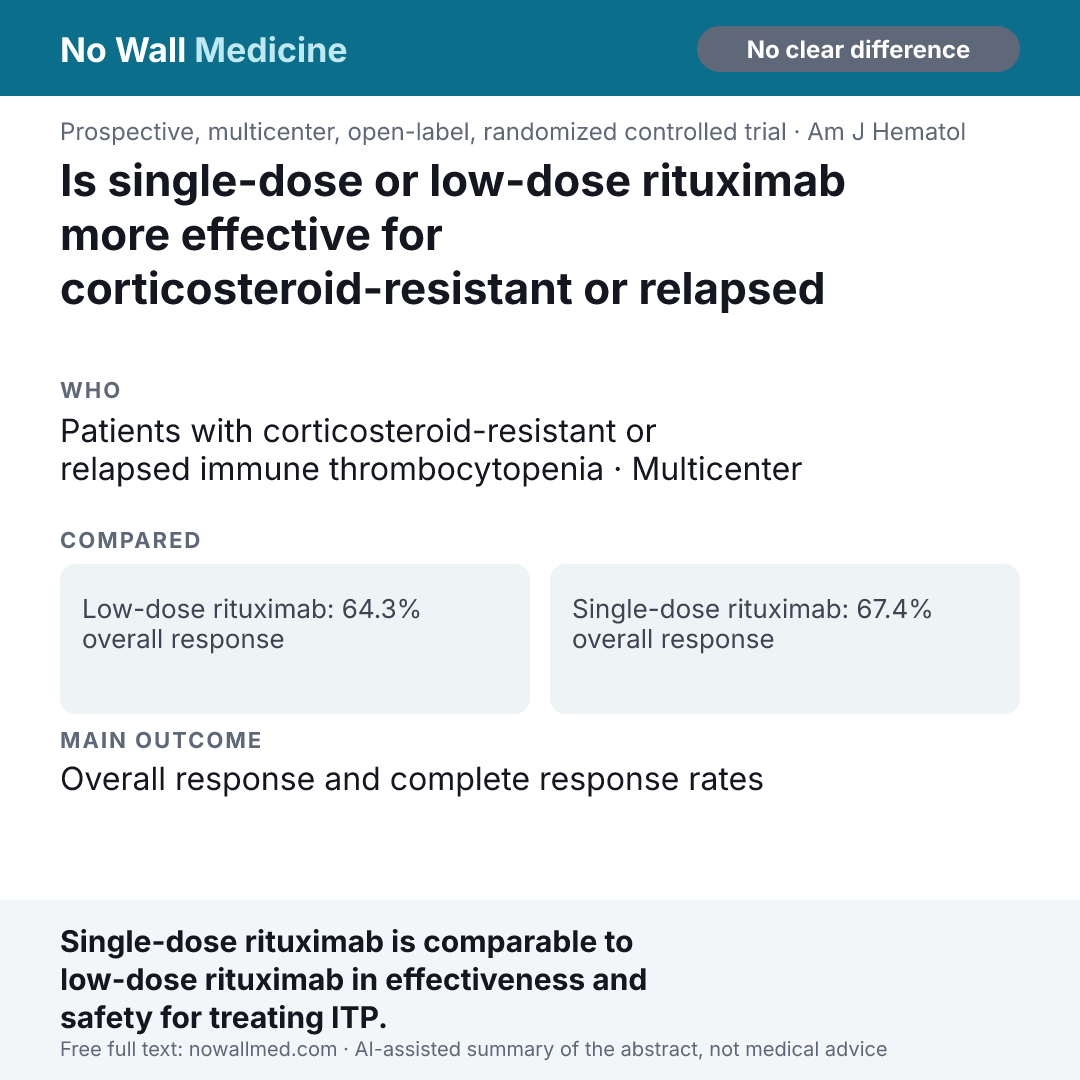
Prospective, multicenter, open-label, randomized controlled trialNo clear difference
Is single-dose or low-dose rituximab more effective for corticosteroid-resistant or relapsed ITP?
Who
Patients with corticosteroid-resistant or relapsed immune thrombocytopenia · Multicenter
Compared
Low-dose rituximab: 64.3% overall response
Single-dose rituximab: 67.4% overall response
Main outcome
Overall response and complete response rates
Bottom line: Single-dose rituximab is comparable to low-dose rituximab in effectiveness and safety for treating ITP.
Am J Hematol · 2022-01-25 · Save PNG
Key points
- Researchers conducted a multicenter, randomized controlled trial comparing a single dose of 375 mg/m2 to a repeated low dose of 100 mg weekly for 4 weeks in patients with corticosteroid-resistant or relapsed immune thrombocytopenia.
- The overall response rate was 64.3% for the low dose group and 67.4% for the single dose group, while the complete response rate was 23.8% and 28.3%, respectively.
- Patients receiving the single dose reported better psychological status, quality of life, social activities, and work, and had fewer physician visits.
Discussion prompts
- Would these patients look like yours? Who was left out?
- Is the main outcome one that matters to patients?
- Is the difference large enough to change what you do?
Cite: Ni X, Li D, Yuan C, et al. Single-dose versus low-dose rituximab in corticosteroid-resistant or relapsed ITP: A multicenter, randomized, controlled study. Am J Hematol. 2022. doi:10.1002/ajh.26473
Free full text: Am J Hematol website · Summary and visual abstract: nowallmed.com/a/single-dose-versus-low-dose-rituximab-in-corticosteroid-resistant-or-l4avff/ (AI-assisted from the abstract; check the paper before relying on it).