Skeletal muscle wasting during neoadjuvant therapy as a prognosticator in patients with esophageal and esophagogastric junction cancer: A systematic review and meta-analysis
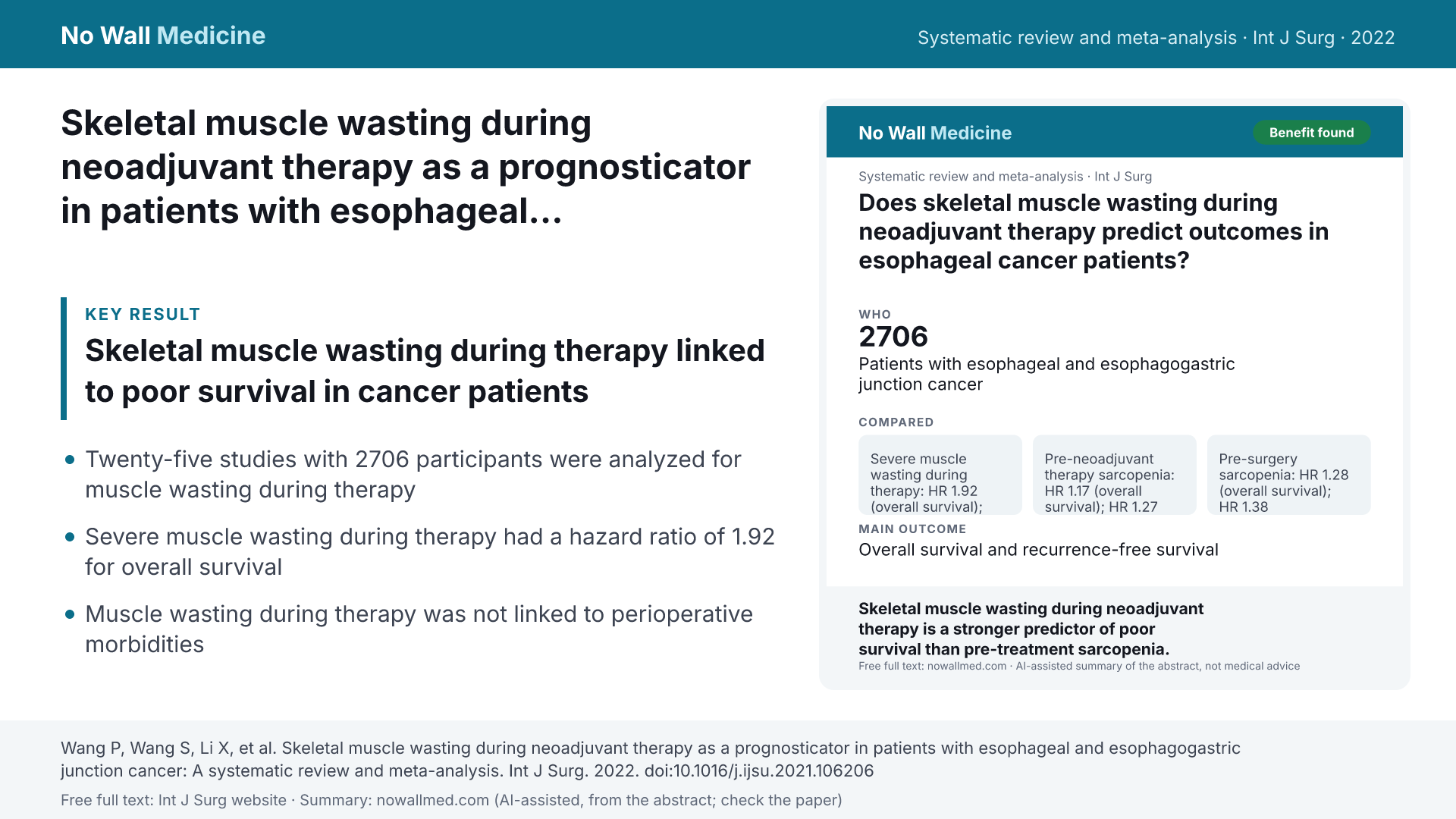
Key result: Skeletal muscle wasting during therapy linked to poor survival in cancer patients
Systematic review and meta-analysisBenefit found
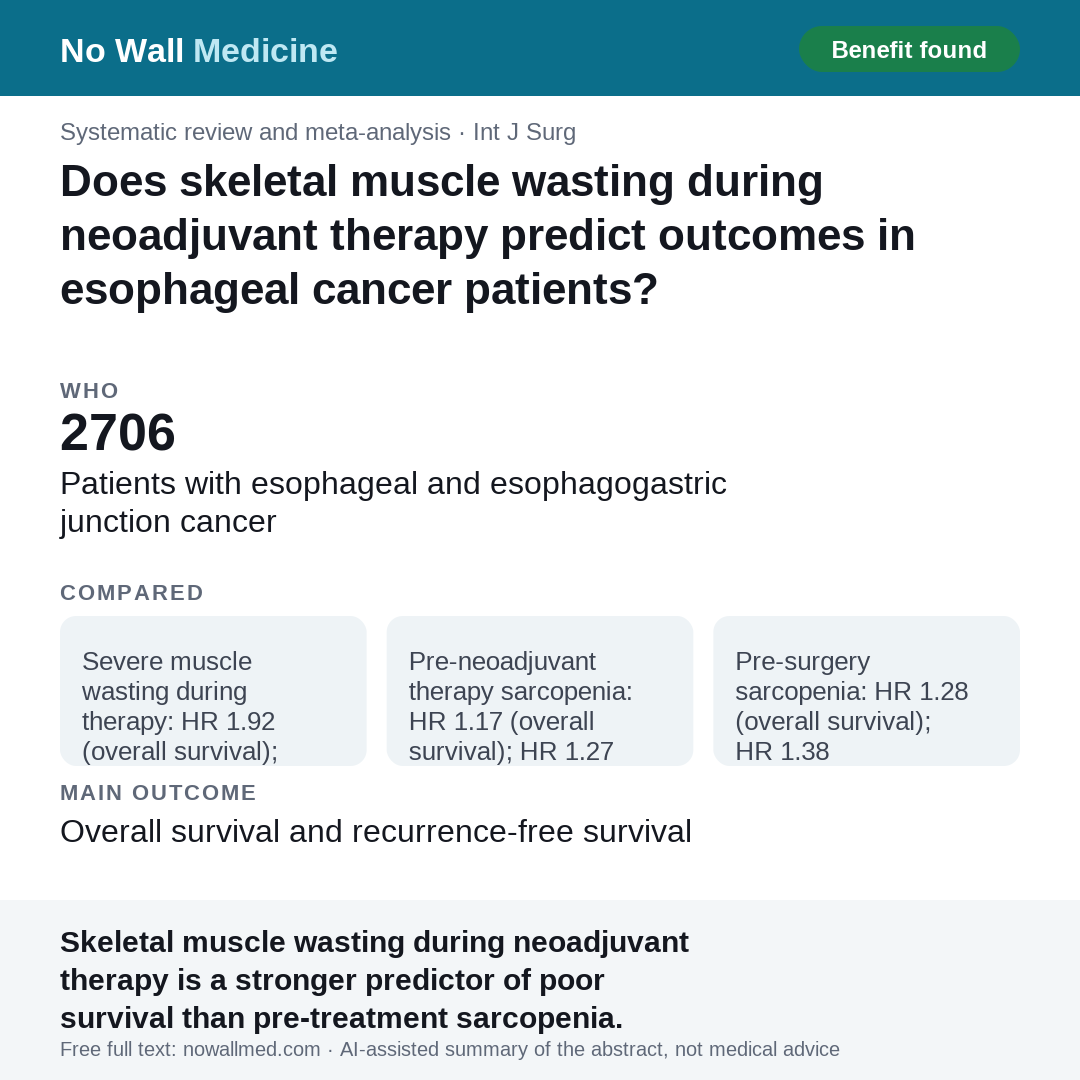
Does skeletal muscle wasting during neoadjuvant therapy predict outcomes in esophageal cancer patients?
Who
2706
Patients with esophageal and esophagogastric junction cancer
Compared
Severe muscle wasting during therapy: HR 1.92 (overall survival); HR 1.51 (recurrence-free survival)
Pre-neoadjuvant therapy sarcopenia: HR 1.17 (overall survival); HR 1.27 (recurrence-free survival)
Pre-surgery sarcopenia: HR 1.28 (overall survival); HR 1.38 (recurrence-free survival)
Main outcome
Overall survival and recurrence-free survival
Result: HR 1.92 (overall survival); HR 1.51 (recurrence-free survival)
Bottom line: Skeletal muscle wasting during neoadjuvant therapy is a stronger predictor of poor survival than pre-treatment sarcopenia.
Int J Surg · 2022-01-04Download image
Key points
- Twenty-five studies with 2706 participants were analyzed for muscle wasting during therapy.
- Severe muscle wasting during therapy had a hazard ratio of 1.92 for overall survival.
- Muscle wasting during therapy was not linked to perioperative morbidities.
Why it matters: The impact of muscle wasting during therapy on cancer outcomes was unclear
Discussion prompts
- Would these patients look like yours? Who was left out?
- Is the main outcome one that matters to patients?
- Is the difference large enough to change what you do?
Cite: Wang P, Wang S, Li X, et al. Skeletal muscle wasting during neoadjuvant therapy as a prognosticator in patients with esophageal and esophagogastric junction cancer: A systematic review and meta-analysis. Int J Surg. 2022. doi:10.1016/j.ijsu.2021.106206
Free full text: Int J Surg website · Summary and visual abstract: nowallmed.com/a/skeletal-muscle-wasting-during-neoadjuvant-therapy-as-a-a2xw88/ (AI-assisted from the abstract; check the paper before relying on it).