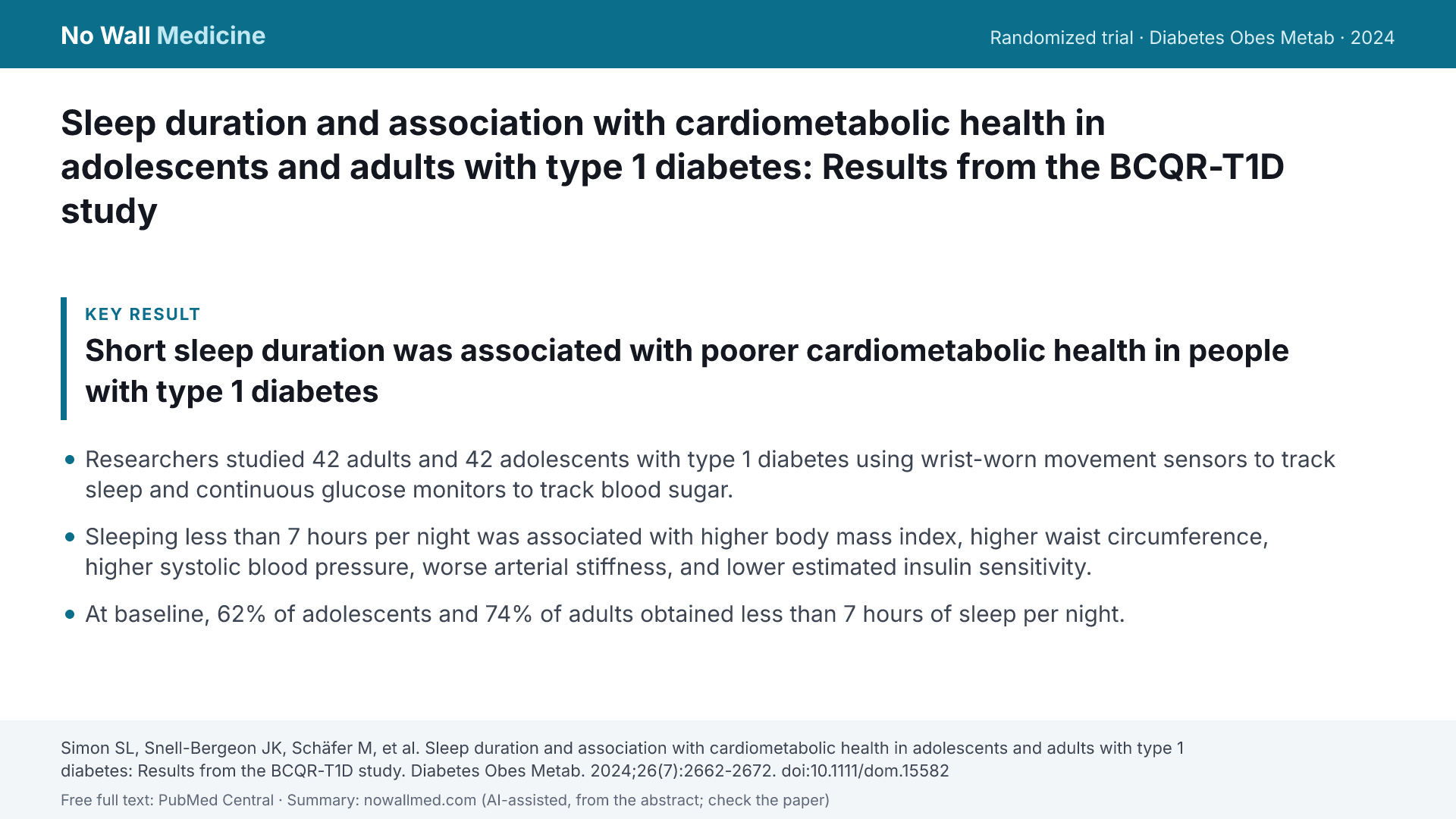
Short sleep duration was associated with poorer cardiometabolic health in people with type 1 diabetes
Sleep duration and association with cardiometabolic health in adolescents and adults with type 1 diabetes: Results from the BCQR-T1D study
Key points
- Researchers studied 42 adults and 42 adolescents with type 1 diabetes using wrist-worn movement sensors to track sleep and continuous glucose monitors to track blood sugar.
- Sleeping less than 7 hours per night was associated with higher body mass index, higher waist circumference, higher systolic blood pressure, worse arterial stiffness, and lower estimated insulin sensitivity.
- At baseline, 62% of adolescents and 74% of adults obtained less than 7 hours of sleep per night.
Headline and key points written with AI from the paper’s abstract, with every number checked against it. Read the paper before relying on them.
Was this summary helpful?
Subject terms
Headline, design, result, key points, caveat and citation as plain text.
Cite this article
Simon SL, Snell-Bergeon JK, Schäfer M, et al. Sleep duration and association with cardiometabolic health in adolescents and adults with type 1 diabetes: Results from the BCQR-T1D study. Diabetes Obes Metab. 2024;26(7):2662-2672. doi:10.1111/dom.15582
Spotted a mistake? Suggest a correction