Sleep problems during COVID-19 pandemic and its' association to psychological distress: A systematic review and meta-analysis
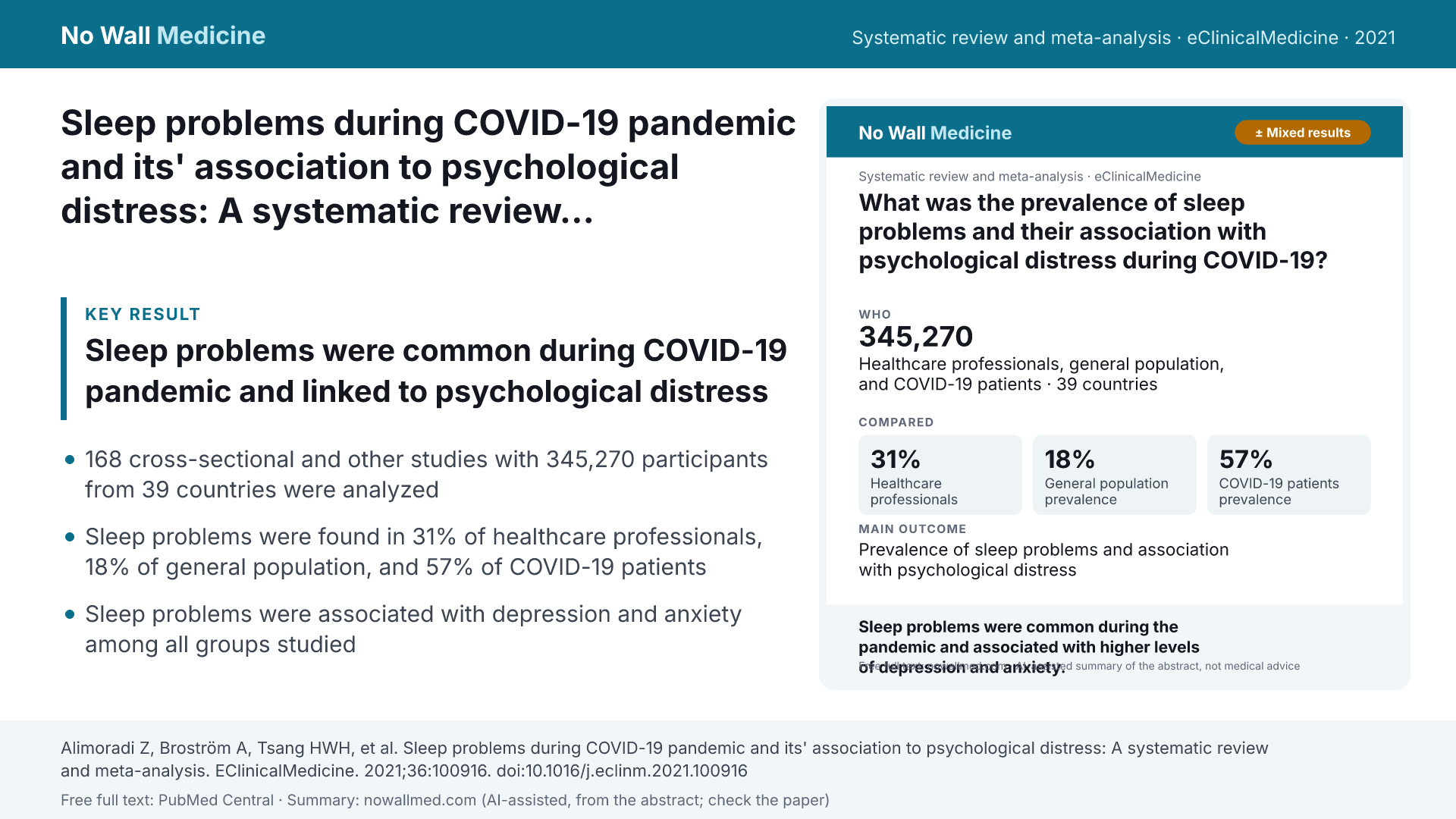
Key result: Sleep problems were common during COVID-19 pandemic and linked to psychological distress
Systematic review and meta-analysisMixed results
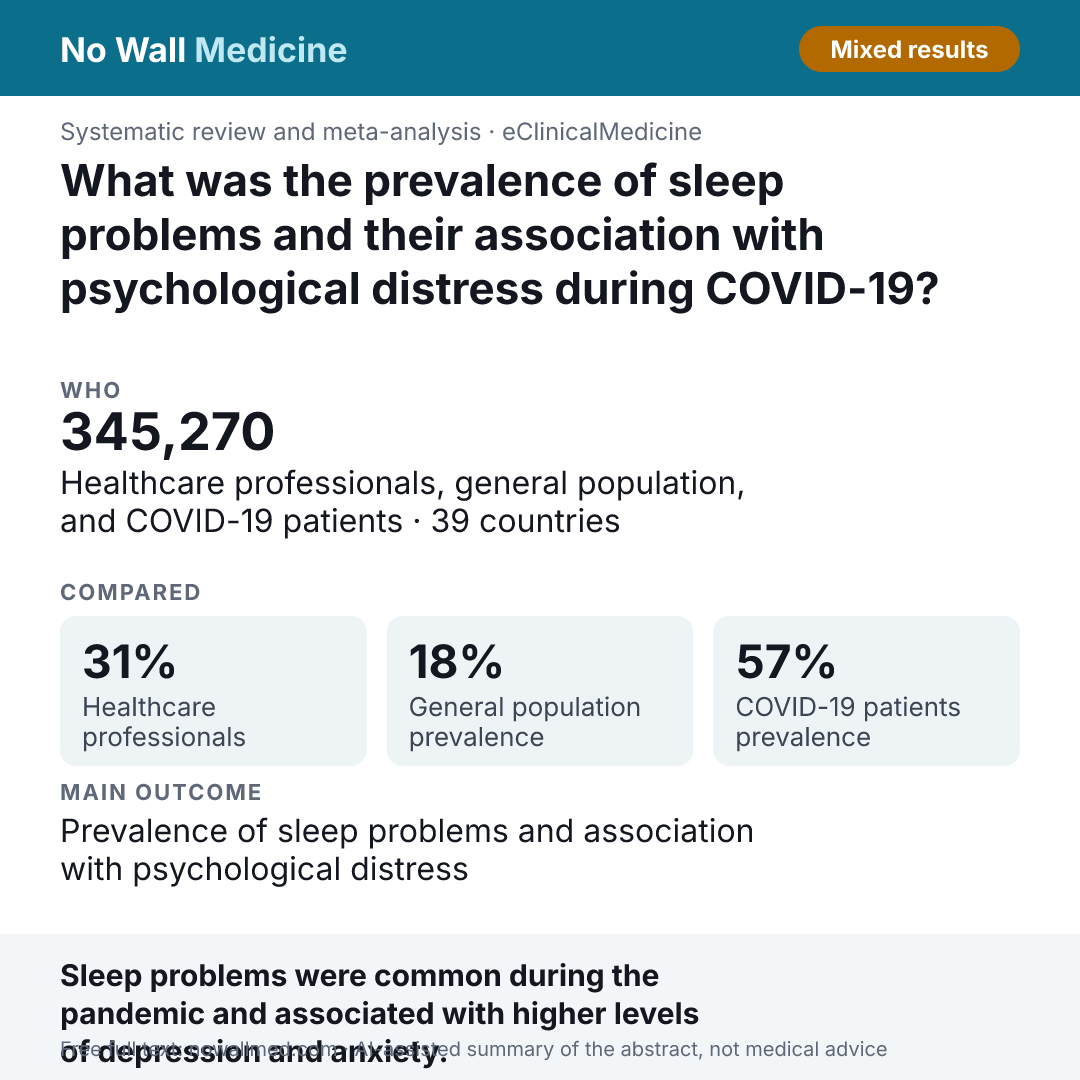
What was the prevalence of sleep problems and their association with psychological distress during COVID-19?
Who
345,270
Healthcare professionals, general population, and COVID-19 patients · 39 countries
Compared
31%Healthcare professionals prevalence
18%General population prevalence
57%COVID-19 patients prevalence
Main outcome
Prevalence of sleep problems and association with psychological distress
Bottom line: Sleep problems were common during the pandemic and associated with higher levels of depression and anxiety.
eClinicalMedicine · 2021-06-10 · Save PNG
Key points
- 168 cross-sectional and other studies with 345,270 participants from 39 countries were analyzed.
- Sleep problems were found in 31% of healthcare professionals, 18% of general population, and 57% of COVID-19 patients.
- Sleep problems were associated with depression and anxiety among all groups studied.
Limitation the authors note: The study had an observational design, which can only show links, not cause and effect
Discussion prompts
- Would these patients look like yours? Who was left out?
- Is the main outcome one that matters to patients?
- Is the difference large enough to change what you do?
Cite: Alimoradi Z, Broström A, Tsang HWH, et al. Sleep problems during COVID-19 pandemic and its' association to psychological distress: A systematic review and meta-analysis. EClinicalMedicine. 2021;36:100916. doi:10.1016/j.eclinm.2021.100916
Free full text: PubMed Central · Summary and visual abstract: nowallmed.com/a/sleep-problems-during-covid-19-pandemic-and-its-association-to-kuuxar/ (AI-assisted from the abstract; check the paper before relying on it).