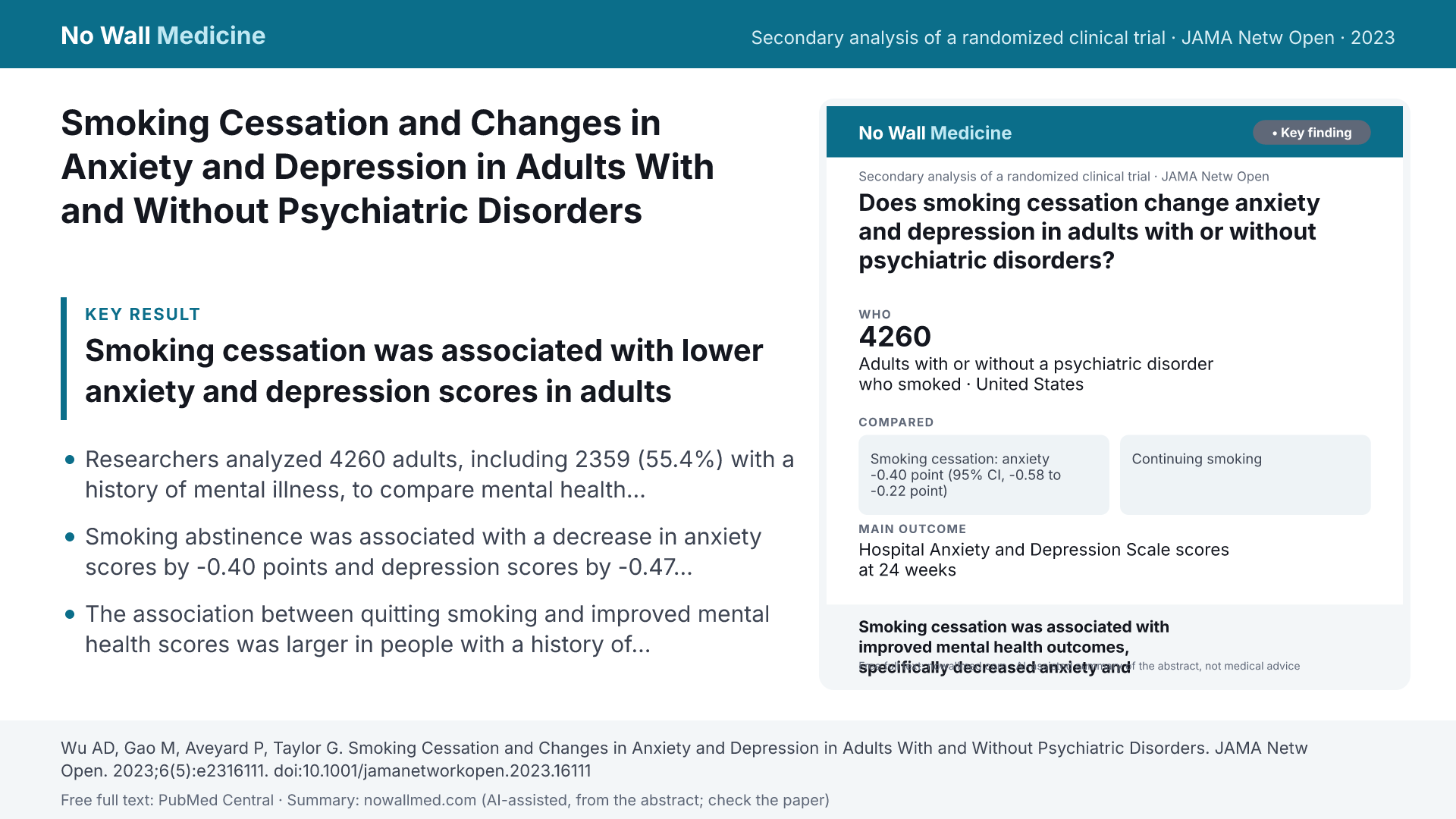
Smoking cessation was associated with lower anxiety and depression scores in adults
Smoking Cessation and Changes in Anxiety and Depression in Adults With and Without Psychiatric Disorders
Secondary analysis of a randomized clinical trialKey finding
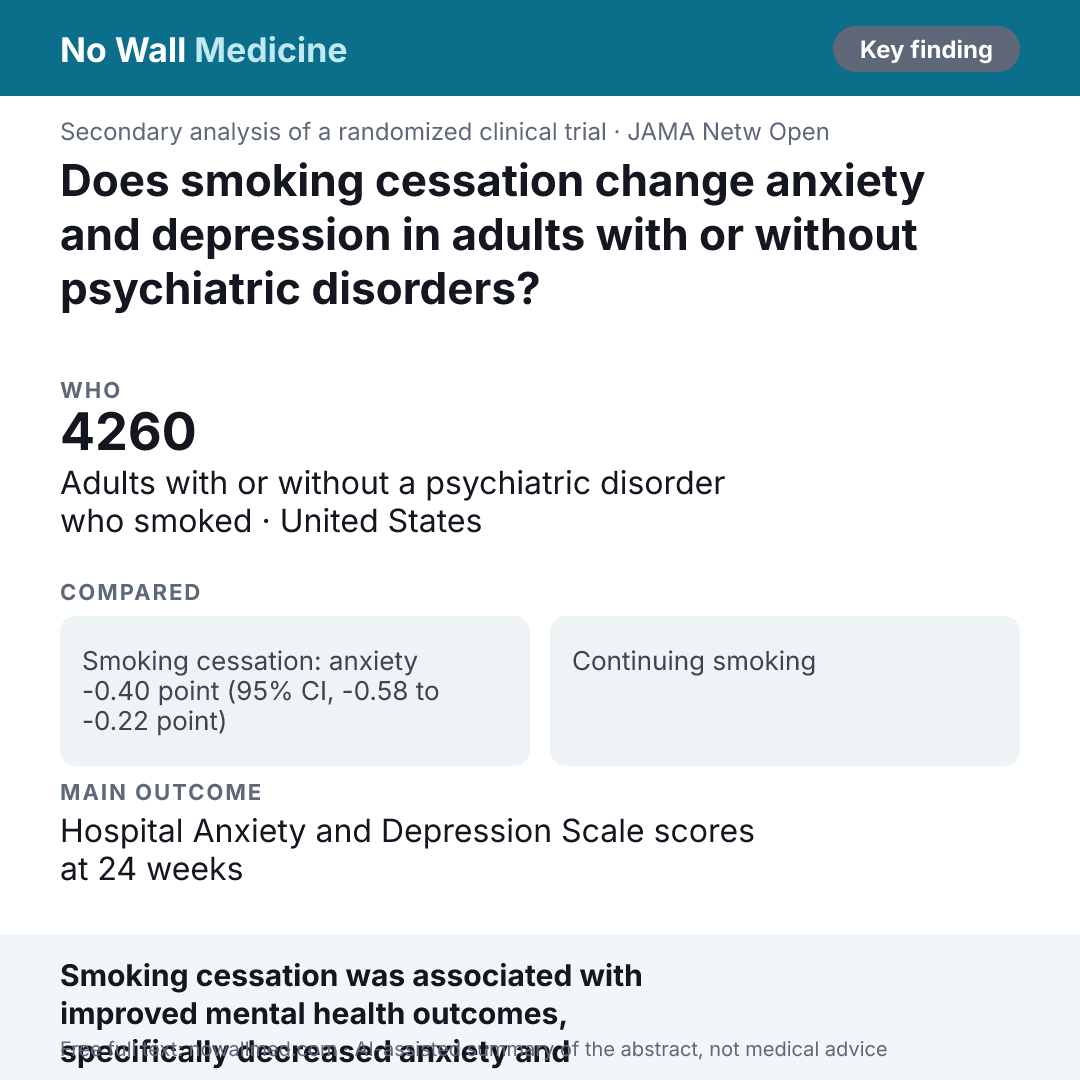
Does smoking cessation change anxiety and depression in adults with or without psychiatric disorders?
Who
4260
Adults with or without a psychiatric disorder who smoked · United States
Compared
Smoking cessation: anxiety -0.40 point (95% CI, -0.58 to -0.22 point)
Continuing smoking
Main outcome
Hospital Anxiety and Depression Scale scores at 24 weeks
Result: anxiety -0.40 point (95% CI, -0.58 to -0.22 point)
Bottom line: Smoking cessation was associated with improved mental health outcomes, specifically decreased anxiety and depression scores.
JAMA Netw Open · 2023-05-01 · Save PNG
Clinical question: Does smoking cessation change anxiety and depression in adults with or without psychiatric disorders?
Why it matters: Clinicians and smokers often express concerns that mental health might worsen after quitting smoking.
Key points
- Researchers analyzed 4260 adults, including 2359 (55.4%) with a history of mental illness, to compare mental health outcomes between those who quit smoking and those who continued.
- Smoking abstinence was associated with a decrease in anxiety scores by -0.40 points and depression scores by -0.47 points compared to continuing to smoke.
- The association between quitting smoking and improved mental health scores was larger in people with a history of mental illness.
Limitation the authors note: The instrumental variable analysis was underpowered and the estimates were imprecise.
Headline and key points written with AI from the paper’s abstract, with every number checked against it. Read the paper before relying on them.
Was this summary helpful?
Subject terms
Headline, design, result, key points, caveat and citation as plain text.
Cite this article
Wu AD, Gao M, Aveyard P, Taylor G. Smoking Cessation and Changes in Anxiety and Depression in Adults With and Without Psychiatric Disorders. JAMA Netw Open. 2023;6(5):e2316111. doi:10.1001/jamanetworkopen.2023.16111
Spotted a mistake? Suggest a correction