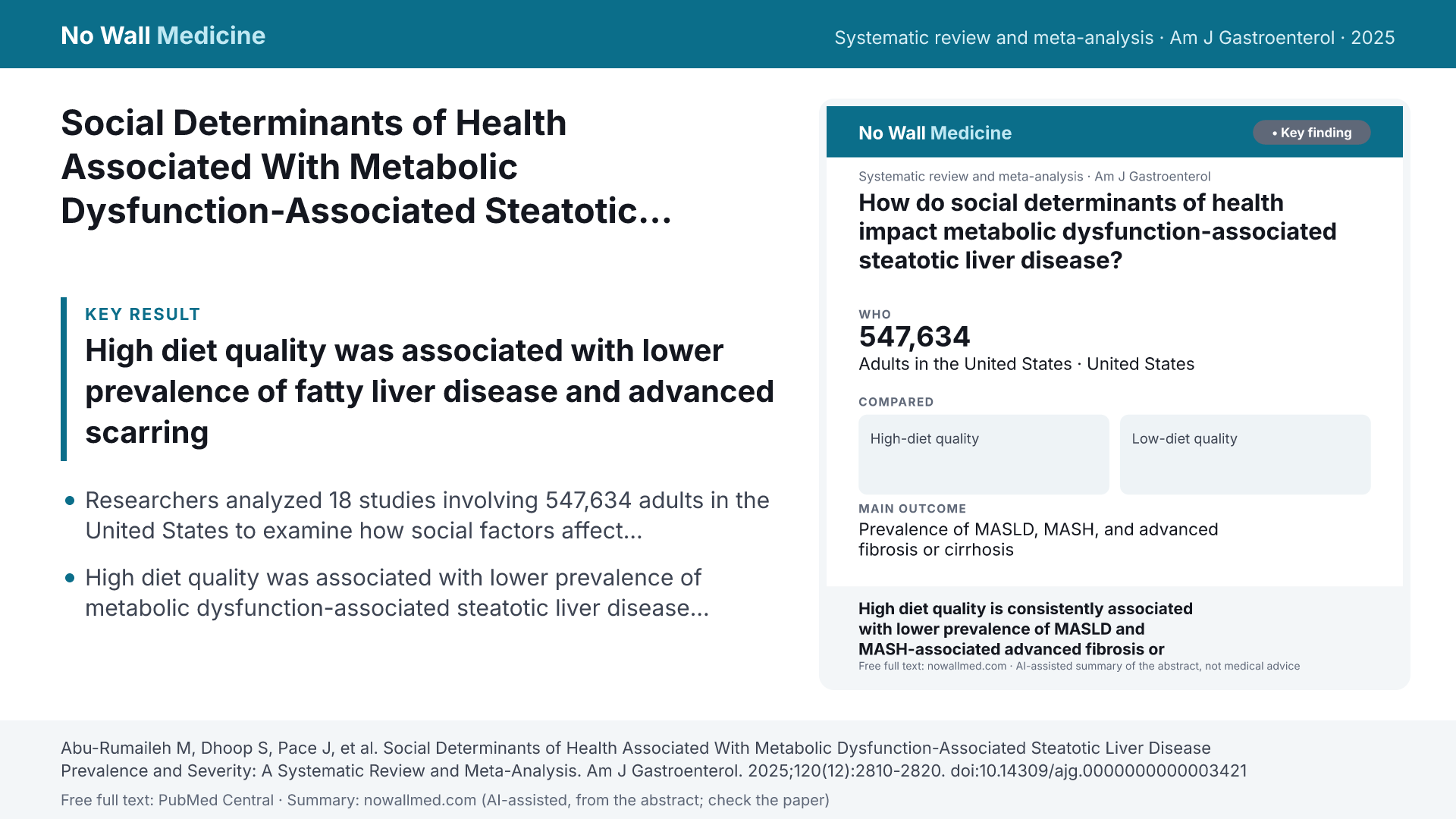
Social Determinants of Health Associated With Metabolic Dysfunction-Associated Steatotic Liver Disease Prevalence and Severity: A Systematic Review and Meta-Analysis
Key result: High diet quality was associated with lower prevalence of fatty liver disease and advanced scarring
Key points
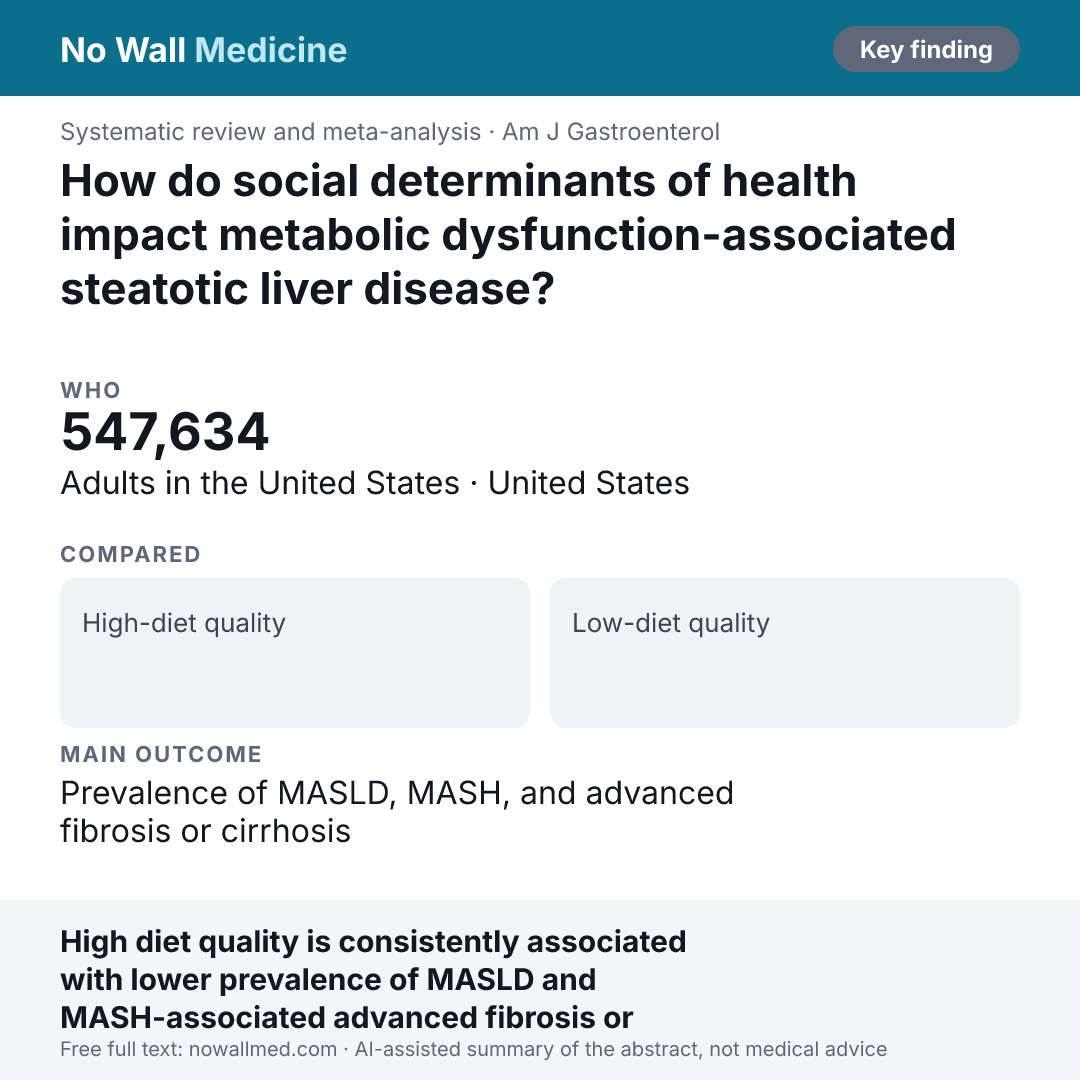
- Researchers analyzed 18 studies involving 547,634 adults in the United States to examine how social factors affect metabolic dysfunction-associated steatotic liver disease.
- High diet quality was associated with lower prevalence of metabolic dysfunction-associated steatotic liver disease (odds ratio 0.76, P < 0.01) and advanced scarring (odds ratio 0.74, P < 0.01).
- Lower income was associated with the risk of clinical outcomes in 3/9 studies evaluated.
Why it matters: The impact of individual social determinants of health on the prevalence and severity of metabolic dysfunction-associated steatotic liver disease is poorly characterized and results are conflicting.
Discussion prompts
- Would these patients look like yours? Who was left out?
- Is the main outcome one that matters to patients?
- Is the difference large enough to change what you do?
Cite: Abu-Rumaileh M, Dhoop S, Pace J, et al. Social Determinants of Health Associated With Metabolic Dysfunction-Associated Steatotic Liver Disease Prevalence and Severity: A Systematic Review and Meta-Analysis. Am J Gastroenterol. 2025;120(12):2810-2820. doi:10.14309/ajg.0000000000003421
Free full text: PubMed Central · Summary and visual abstract: nowallmed.com/a/social-determinants-of-health-associated-with-metabolic-dysfunction-sudqe4/ (AI-assisted from the abstract; check the paper before relying on it).