Social media intervention increased HIV testing and reduced high-risk behaviors among men in China
Social Media Intervention Based on the Information-Motivation-Behavioral Skills Model Promotes HIV Testing and Reduces High-Risk Behaviors Among Men Who Have Sex With Men in Resource-Limited Settings in China: Randomized Controlled Trial
Randomized controlled trialBenefit found
Does a social media intervention promote HIV testing and reduce high-risk behaviors?
Who
180
Men who have sex with men in resource-limited settings · Nanning, China
Compared
social media intervention group
routine HIV prevention services control group
Main outcome
HIV testing uptake and high-risk behavior
Bottom line: A social media intervention improves HIV testing, reduces high-risk behavior, and enhances AIDS-related knowledge among men who have sex with men.
J Med Internet Res · 2026-04-07Download image
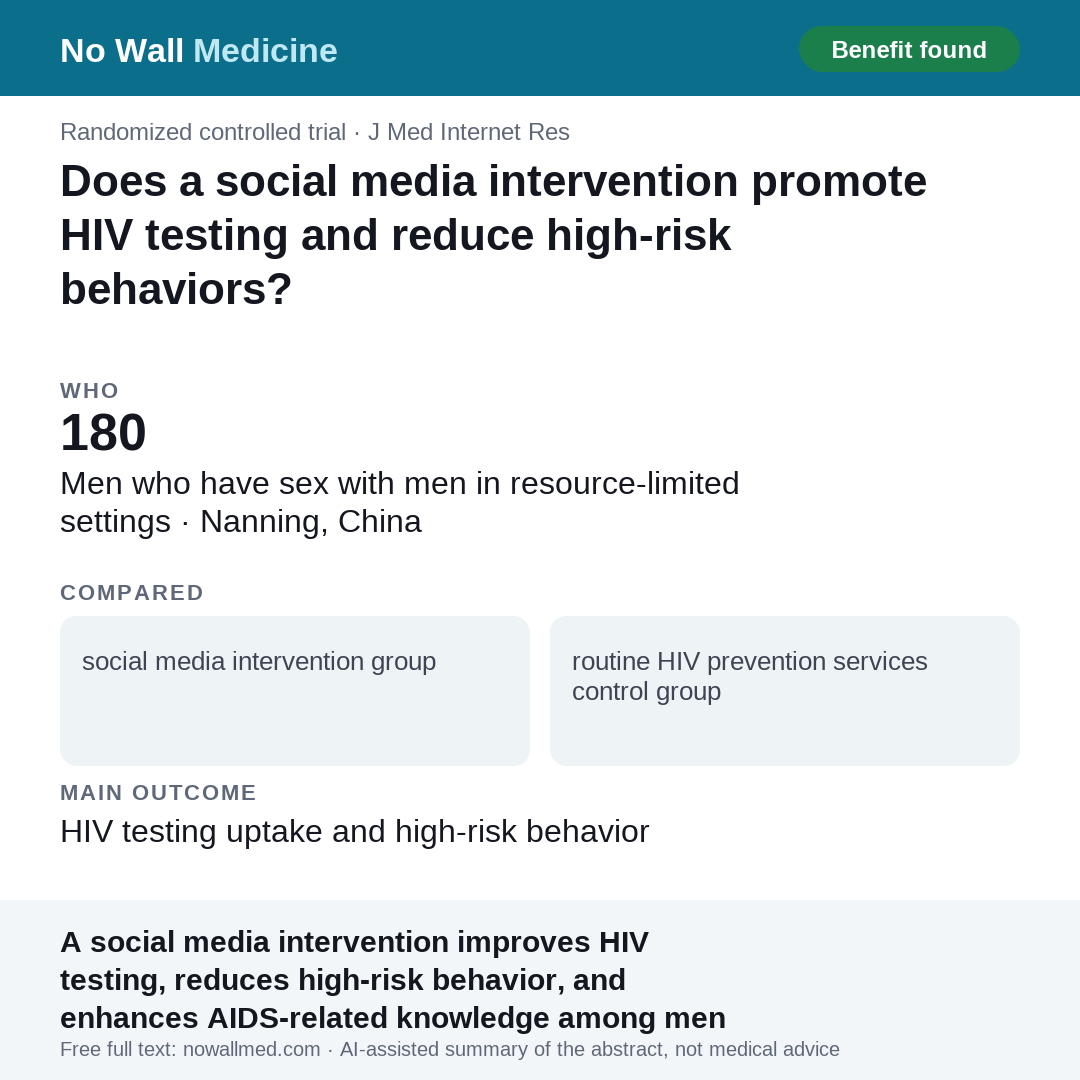
Clinical question: Does a social media intervention promote HIV testing and reduce high-risk behaviors?
Why it matters: The effect of social media interventions on HIV prevention among men who have sex with men in resource-limited settings remains unclear.
Key points
- Researchers conducted a randomized controlled trial with 180 men who have sex with men in Nanning, China, comparing a social media intervention to routine prevention services.
- The intervention group showed significantly higher HIV testing uptake, lower high-risk sexual behaviors, and higher condom use self-efficacy compared to the control group.
- The social media program also improved AIDS-related knowledge and safe sex self-efficacy among the participants.
Headline and key points written with AI from the paper’s abstract, with every number checked against it. Read the paper before relying on them.
Topics
Spotted a mistake? Suggest a correction