Solomon technique vs selective fetoscopic laser photocoagulation for twin-twin transfusion syndrome: systematic review and meta-analysis of maternal and perinatal outcomes
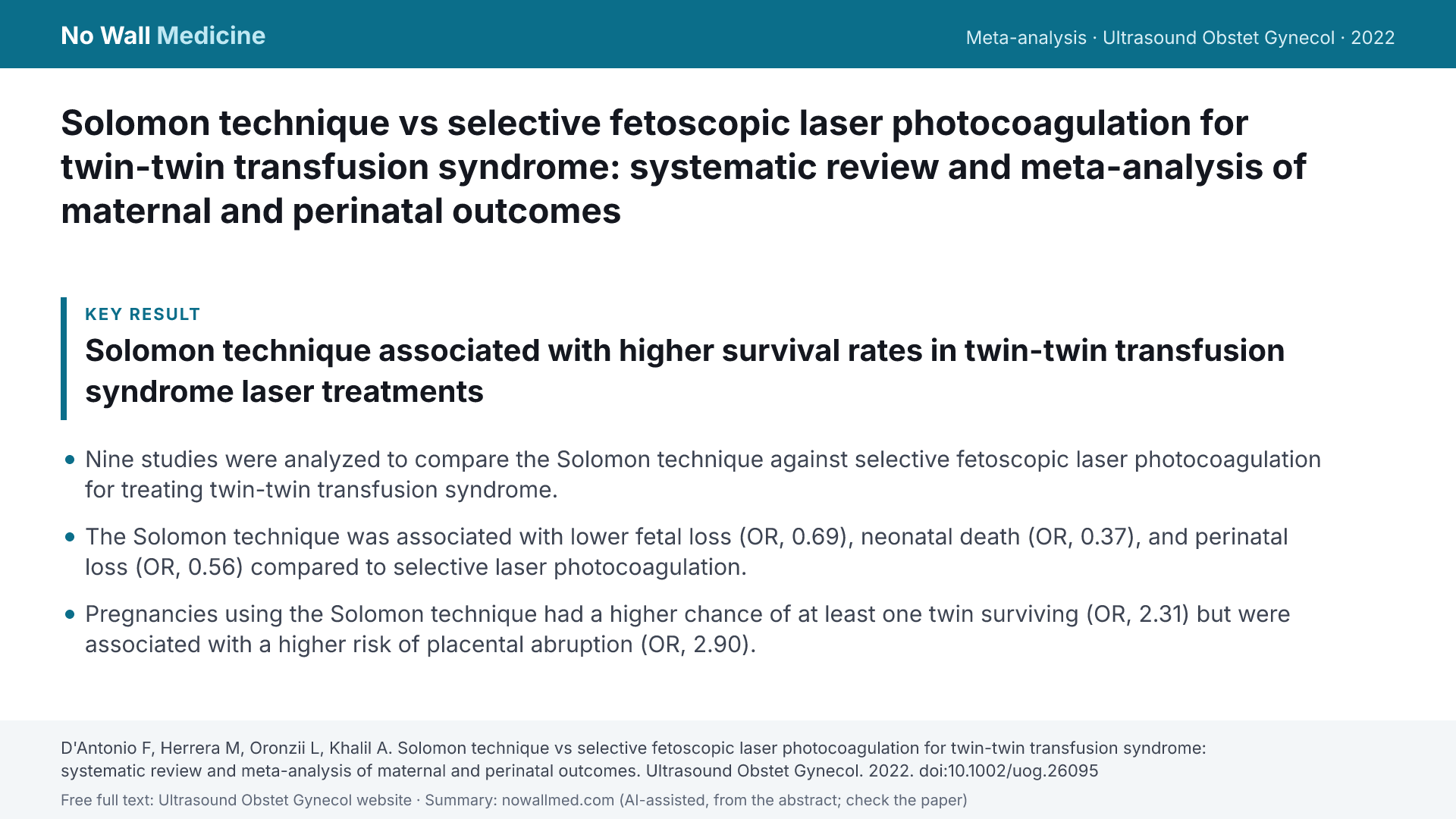
Key result: Solomon technique associated with higher survival rates in twin-twin transfusion syndrome laser treatments
Key points
- Nine studies were analyzed to compare the Solomon technique against selective fetoscopic laser photocoagulation for treating twin-twin transfusion syndrome.
- The Solomon technique was associated with lower fetal loss (OR, 0.69), neonatal death (OR, 0.37), and perinatal loss (OR, 0.56) compared to selective laser photocoagulation.
- Pregnancies using the Solomon technique had a higher chance of at least one twin surviving (OR, 2.31) but were associated with a higher risk of placental abruption (OR, 2.90).
Why it matters: It is unknown how the Solomon technique compares to selective fetoscopic laser photocoagulation regarding maternal and perinatal outcomes in twin pregnancies with twin-twin transfusion syndrome.
Discussion prompts
- Would these patients look like yours? Who was left out?
- Is the main outcome one that matters to patients?
- Is the difference large enough to change what you do?
Cite: D'Antonio F, Herrera M, Oronzii L, Khalil A. Solomon technique vs selective fetoscopic laser photocoagulation for twin-twin transfusion syndrome: systematic review and meta-analysis of maternal and perinatal outcomes. Ultrasound Obstet Gynecol. 2022. doi:10.1002/uog.26095
Free full text: Ultrasound Obstet Gynecol website · Summary and visual abstract: nowallmed.com/a/solomon-technique-vs-selective-fetoscopic-laser-photocoagulation-for-1y3llxf/ (AI-assisted from the abstract; check the paper before relying on it).