Routine use of lumbar puncture or drains does not affect cerebrospinal fluid leak recurrence rates
Spontaneous Middle Cranial Fossa Cerebrospinal Fluid Leaks and Intracranial Hypertension: Systematic Review With Meta-Analysis
Systematic review with meta-analysisNo clear difference
Does perioperative lumbar puncture or drain affect spontaneous middle cranial fossa cerebrospinal fluid leak recurrence?
Who
2039
Patients undergoing surgical treatment of lateral spontaneous cerebrospinal fluid leaks
Compared
10.1%Routine lumbar puncture or drain use
8.9%Occasional lumbar puncture or drain use
Main outcome
Recurrence or persistence rates of cerebrospinal fluid leaks
Bottom line: Systematic perioperative lumbar puncture or drain use does not affect the recurrence or persistence rates of cerebrospinal fluid leaks.
Limitation: Decision making for lumbar puncture, drain, acetazolamide, or shunt use is inconsistently reported.
Laryngoscope Investig Otolaryngol · 2026-05-12 · Save PNG
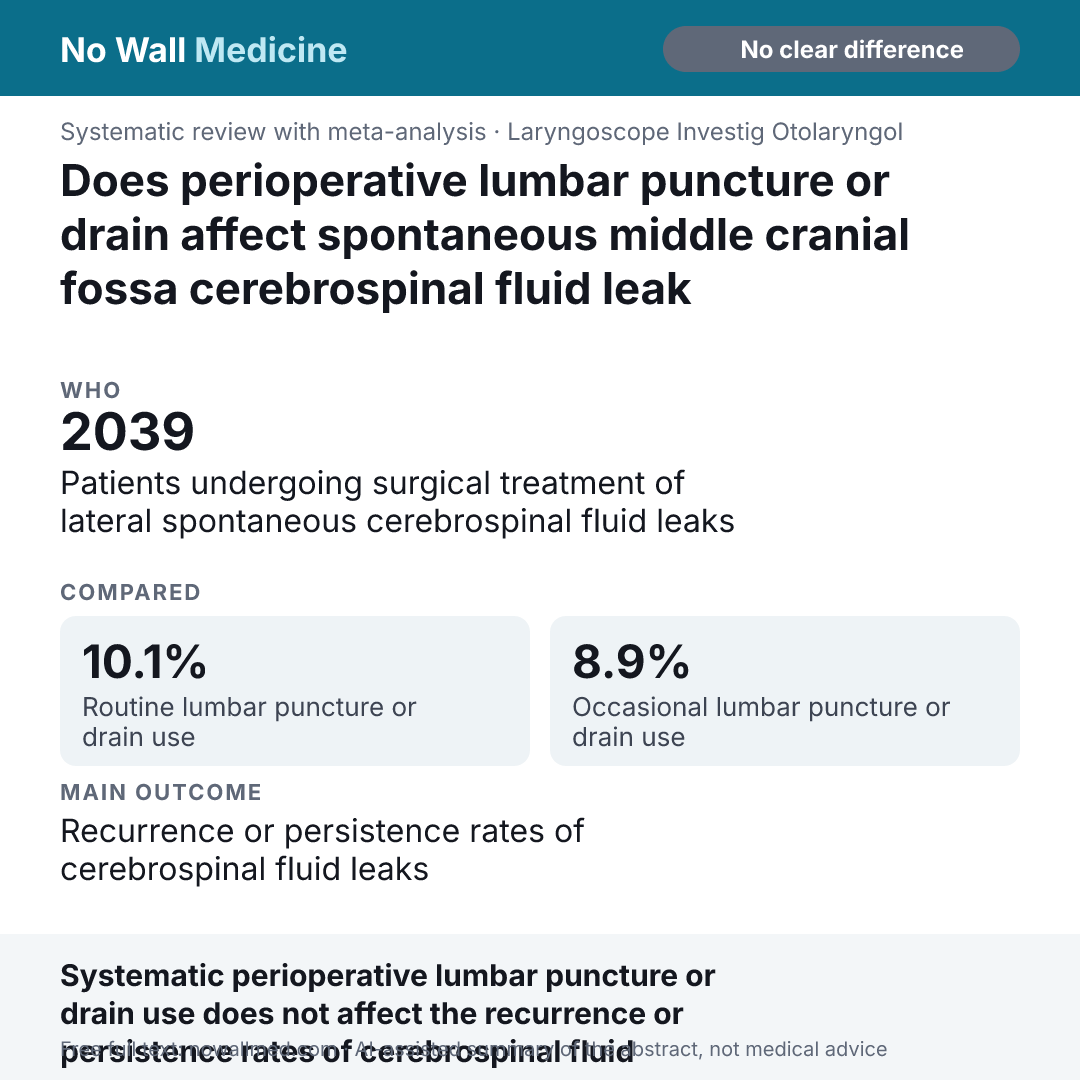
Clinical question: Does perioperative lumbar puncture or drain affect spontaneous middle cranial fossa cerebrospinal fluid leak recurrence?
Why it matters: The perioperative management of spontaneous cerebrospinal fluid leaks of the lateral skull base remains under debate regarding pressure assessment and relief methods.
Key points
- Researchers analyzed data from 2039 operations involving spontaneous cerebrospinal fluid leaks of the lateral skull base.
- In patients where recurrence or persistence was measured, routine use of lumbar puncture or drains showed rates of 10.1% compared to 8.9% for occasional use.
- Intracranial hypertension, or high pressure inside the skull, was diagnosed in 14.3% of the 335 patients where pressure was assessed.
Headline and key points written with AI from the paper’s abstract, with every number checked against it. Read the paper before relying on them.
Was this summary helpful?
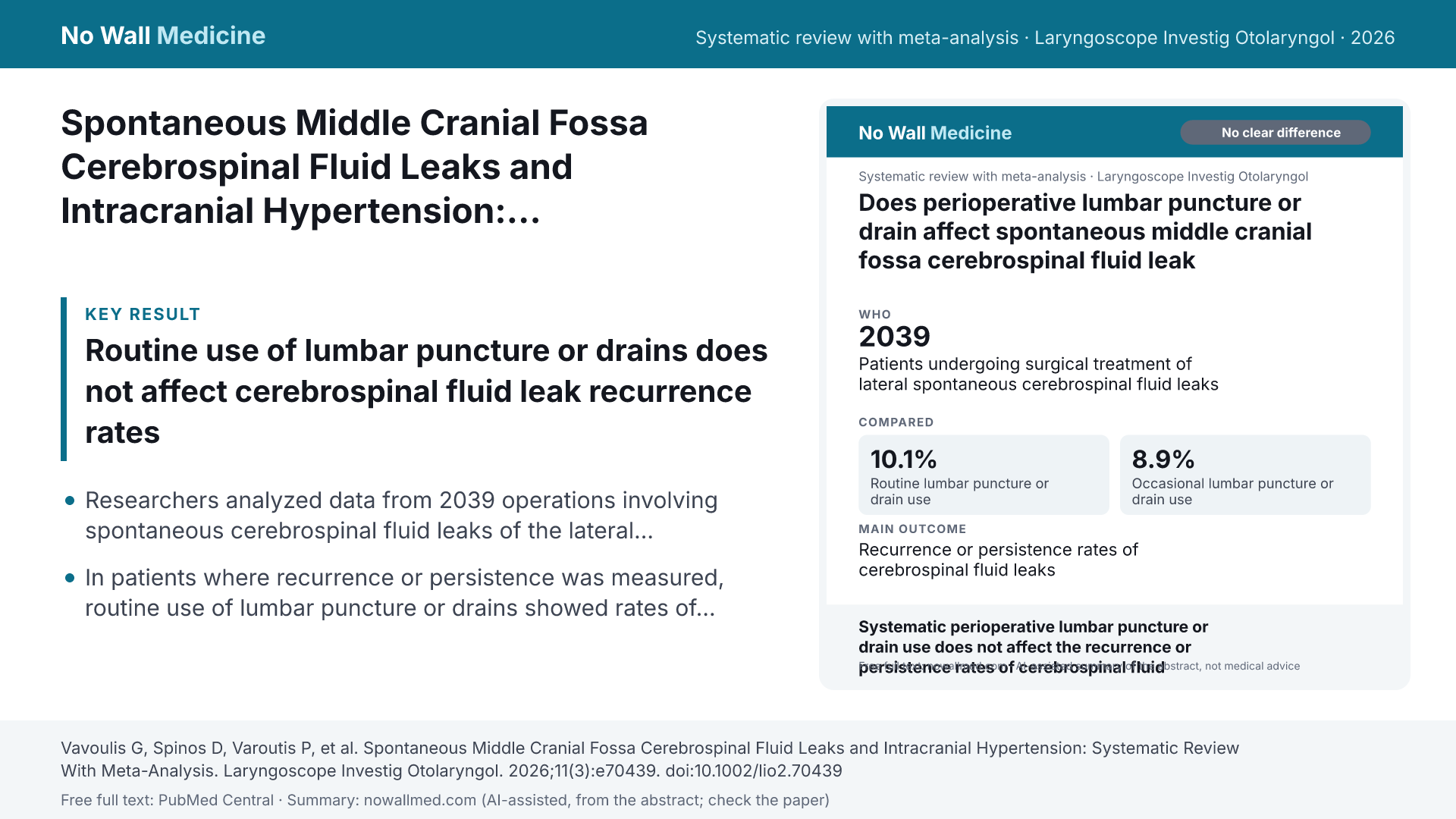
Headline, design, result, key points, caveat and citation as plain text.
Cite this article
Vavoulis G, Spinos D, Varoutis P, et al. Spontaneous Middle Cranial Fossa Cerebrospinal Fluid Leaks and Intracranial Hypertension: Systematic Review With Meta-Analysis. Laryngoscope Investig Otolaryngol. 2026;11(3):e70439. doi:10.1002/lio2.70439
Spotted a mistake? Suggest a correction