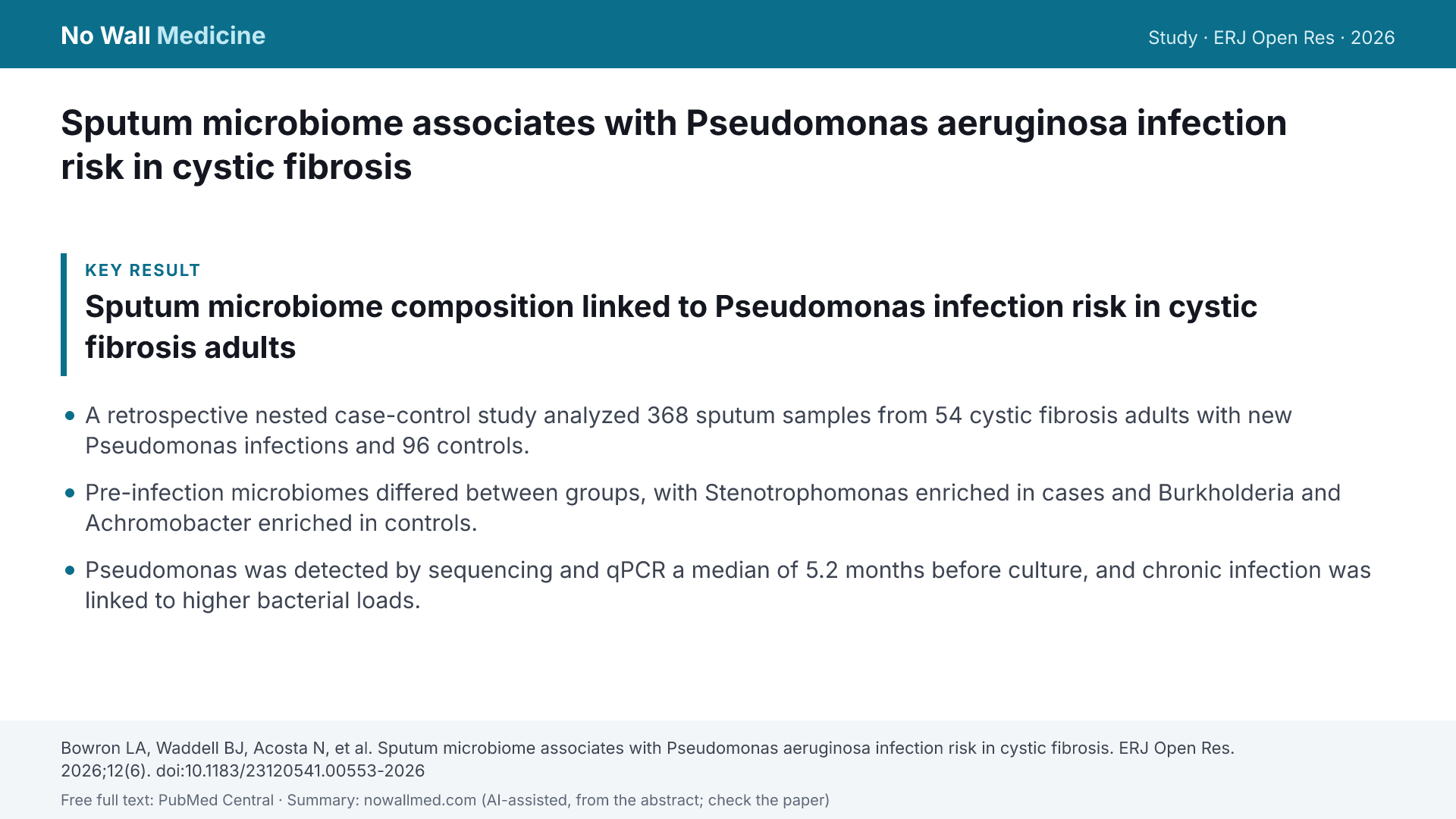
Sputum microbiome composition linked to Pseudomonas infection risk in cystic fibrosis adults
Sputum microbiome associates with Pseudomonas aeruginosa infection risk in cystic fibrosis
Why it matters: Applies to adults with cystic fibrosis; suggests microbiome profiling may help identify microbial candidates for Pseudomonas infection risk and future risk stratification.
Key points
- A retrospective nested case-control study analyzed 368 sputum samples from 54 cystic fibrosis adults with new Pseudomonas infections and 96 controls.
- Pre-infection microbiomes differed between groups, with Stenotrophomonas enriched in cases and Burkholderia and Achromobacter enriched in controls.
- Pseudomonas was detected by sequencing and qPCR a median of 5.2 months before culture, and chronic infection was linked to higher bacterial loads.
Limitation the authors note: The study used a retrospective nested case-control design, which can only show links rather than cause-and-effect relationships.
Study type: Observational study: it can show a link, but not prove that one thing causes another.
Headline and key points written with AI from the paper’s abstract, with every number checked against it. Read the paper before relying on them.
Was this summary helpful?
Headline, design, result, key points, caveat and citation as plain text.
Cite this article
Bowron LA, Waddell BJ, Acosta N, et al. Sputum microbiome associates with Pseudomonas aeruginosa infection risk in cystic fibrosis. ERJ Open Res. 2026;12(6). doi:10.1183/23120541.00553-2026
Spotted a mistake? Suggest a correction