Tenecteplase achieved higher rates of vessel reopening than low-dose alteplase in stroke patients
Standard-Dose Tenecteplase vs Low-Dose Alteplase for Acute Ischemic Stroke From Large-Vessel Occlusion: A Randomized Clinical Trial
Multicenter, randomized, controlled, open-label, superiority trialBenefit found
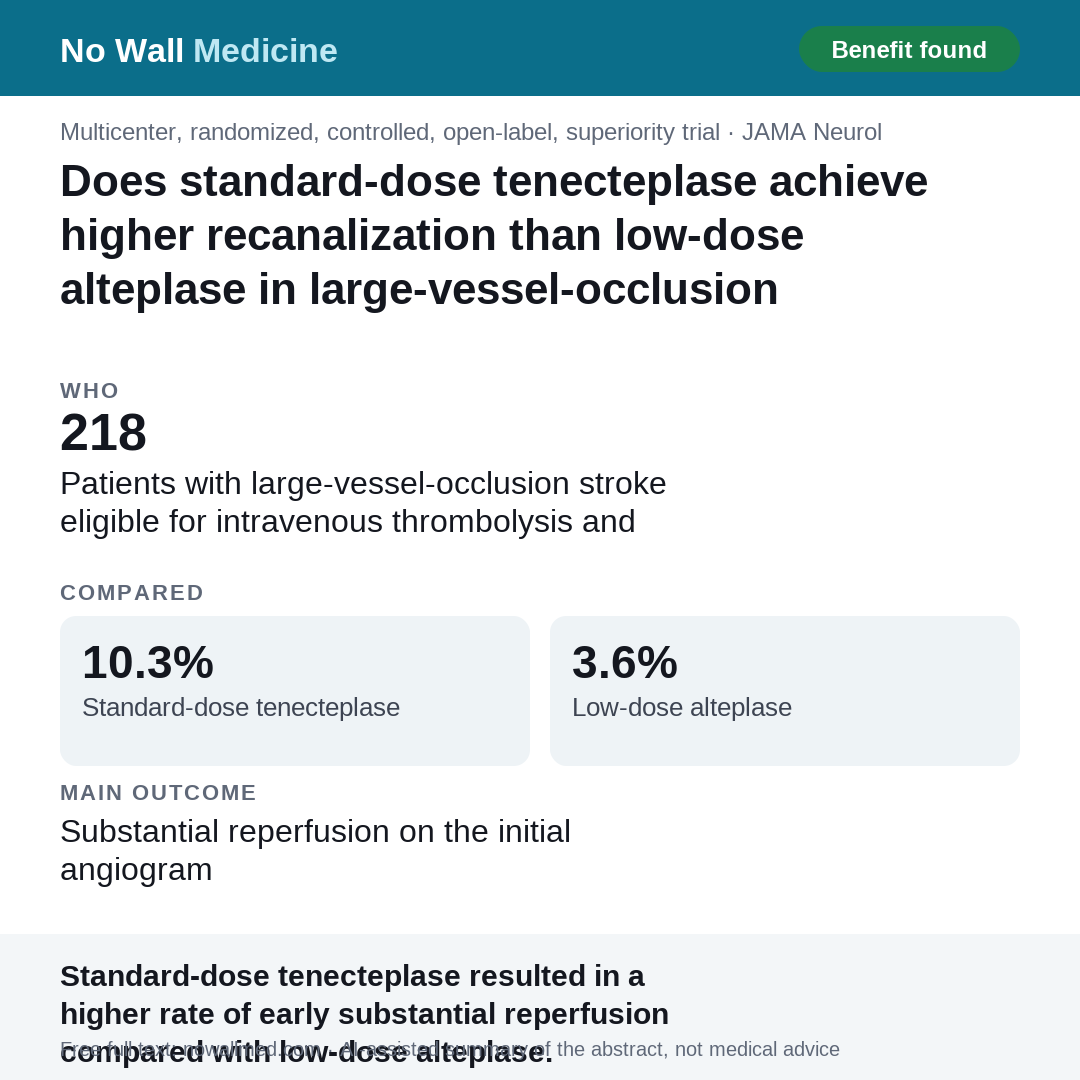
Does standard-dose tenecteplase achieve higher recanalization than low-dose alteplase in large-vessel-occlusion stroke?
Who
218
Patients with large-vessel-occlusion stroke eligible for intravenous thrombolysis and mechanical thrombectomy · Multicenter
Compared
10.3%Standard-dose tenecteplase
3.6%Low-dose alteplase
Main outcome
Substantial reperfusion on the initial angiogram
Result: absolute difference, 6.5 percentage points; 90% CI, 0.89-12.1
Bottom line: Standard-dose tenecteplase resulted in a higher rate of early substantial reperfusion compared with low-dose alteplase.
JAMA Neurol · 2026-06-01Download image
Clinical question: Does standard-dose tenecteplase achieve higher recanalization than low-dose alteplase in large-vessel-occlusion stroke?
Why it matters: Evidence is needed to support the potential regulatory approval of tenecteplase in Japan where low-dose alteplase is the standard treatment.
Key points
- Researchers studied 218 patients with large-vessel-occlusion stroke to compare standard-dose tenecteplase with low-dose alteplase before mechanical thrombectomy.
- Substantial reperfusion, or the reopening of blood vessels, occurred in 10.3% of the tenecteplase group compared to 3.6% of the alteplase group.
- Rates of symptomatic intracranial hemorrhage and 90-day mortality were similar between the tenecteplase and alteplase groups.
Headline and key points written with AI from the paper’s abstract, with every number checked against it. Read the paper before relying on them.
Topics
Spotted a mistake? Suggest a correction