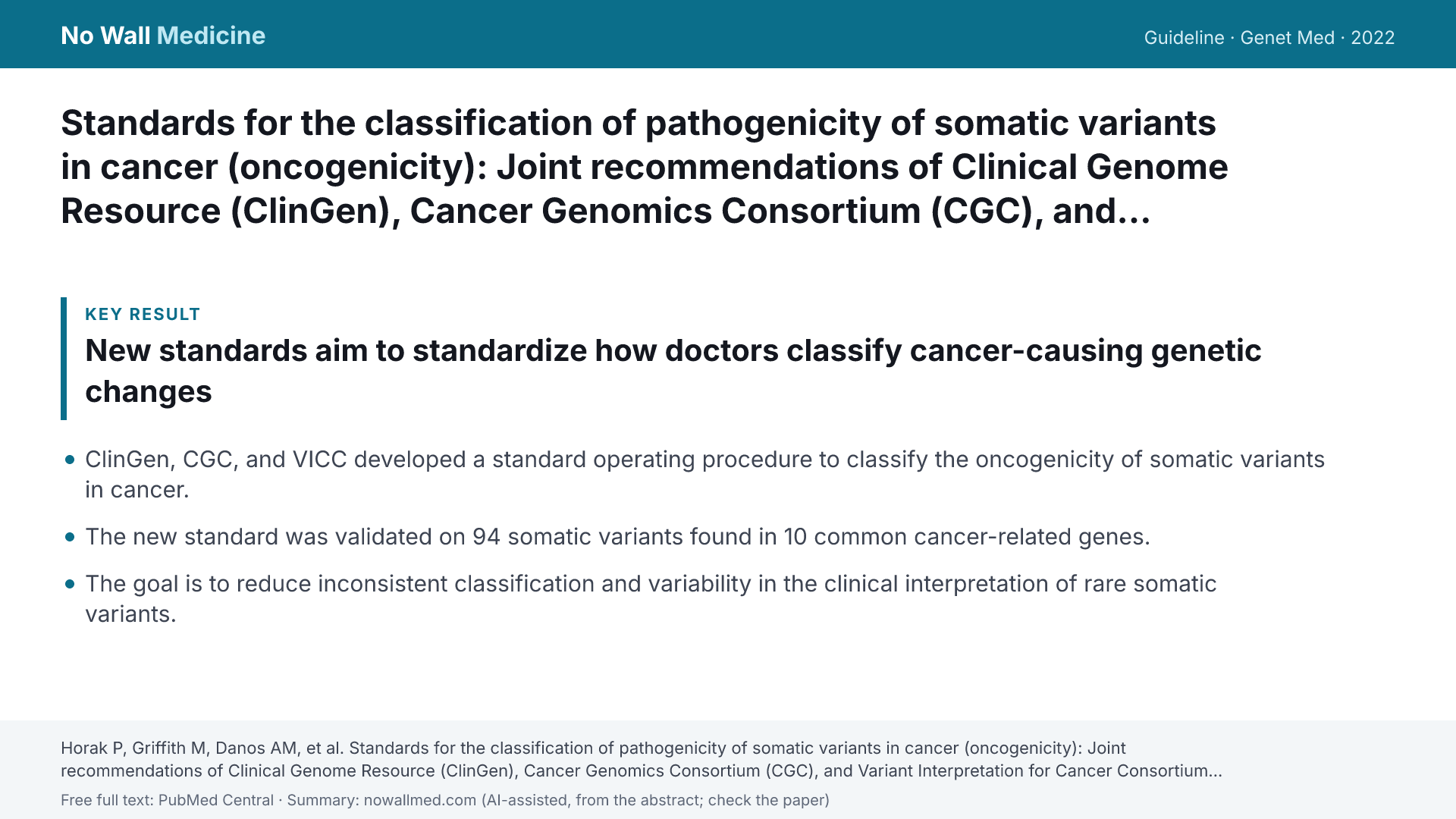
Standards for the classification of pathogenicity of somatic variants in cancer (oncogenicity): Joint recommendations of Clinical Genome Resource (ClinGen), Cancer Genomics Consortium (CGC), and Variant Interpretation for Cancer Consortium (VICC)
Key result: New standards aim to standardize how doctors classify cancer-causing genetic changes
Key points
- ClinGen, CGC, and VICC developed a standard operating procedure to classify the oncogenicity of somatic variants in cancer.
- The new standard was validated on 94 somatic variants found in 10 common cancer-related genes.
- The goal is to reduce inconsistent classification and variability in the clinical interpretation of rare somatic variants.
Why it matters: Existing guidelines for interpreting cancer variants lack direct, systematic rules for classifying oncogenicity, leading to inconsistent results and variable patient care.
Discussion prompts
- Would these patients look like yours? Who was left out?
- Is the main outcome one that matters to patients?
- Is the difference large enough to change what you do?
Cite: Horak P, Griffith M, Danos AM, et al. Standards for the classification of pathogenicity of somatic variants in cancer (oncogenicity): Joint recommendations of Clinical Genome Resource (ClinGen), Cancer Genomics Consortium (CGC), and Variant Interpretation for Cancer Consortium (VICC). Genet Med. 2022. doi:10.1016/j.gim.2022.01.001
Free full text: PubMed Central · Summary and visual abstract: nowallmed.com/a/standards-for-the-classification-of-pathogenicity-of-somatic-variants-jx3h8/ (AI-assisted from the abstract; check the paper before relying on it).