Static and Dynamic Effects of Stroke Onset on Depressive Symptoms in Middle-Aged and Older Adults: Evidence Across 21 Countries
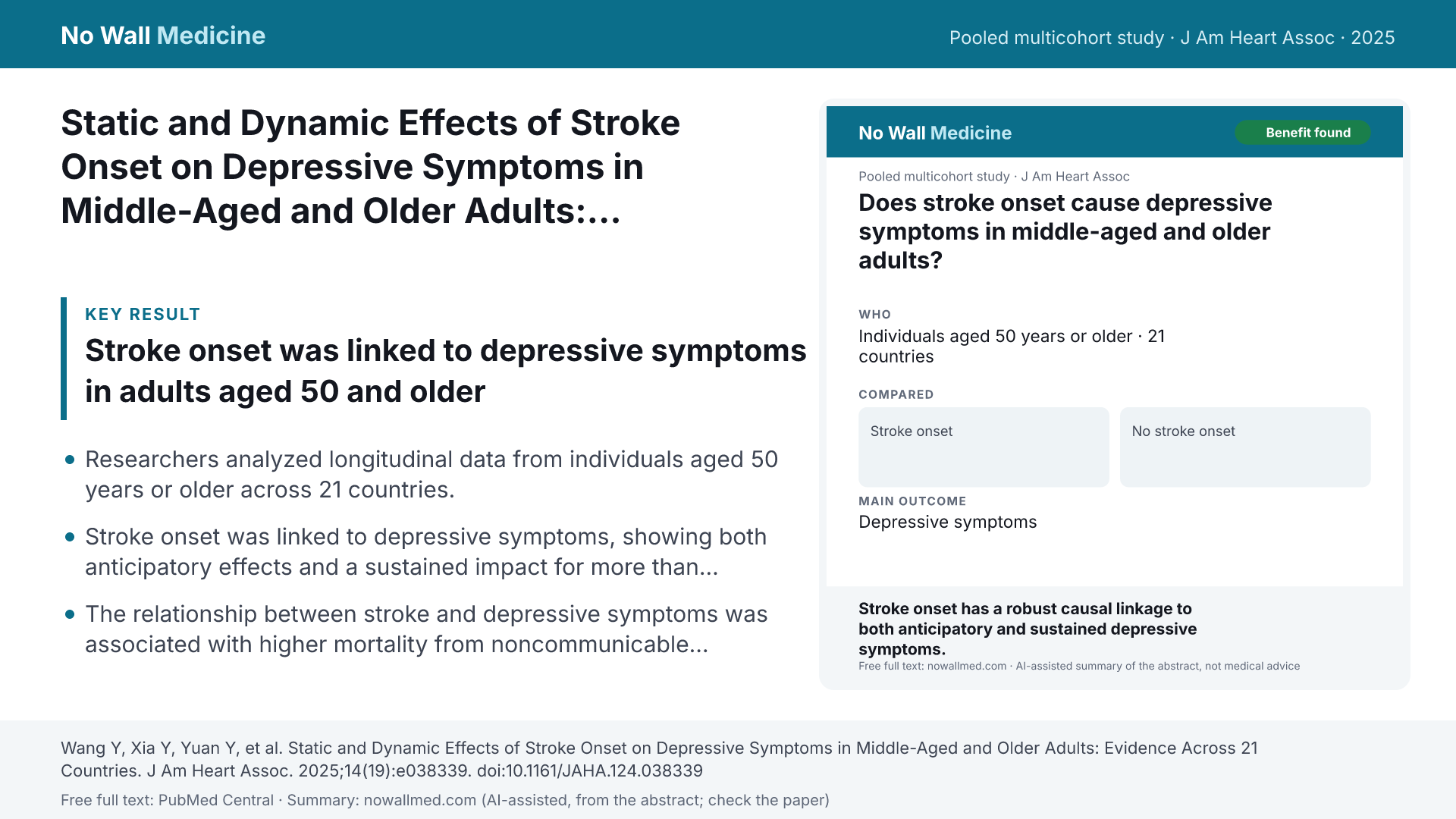
Key result: Stroke onset was linked to depressive symptoms in adults aged 50 and older
Pooled multicohort studyBenefit found
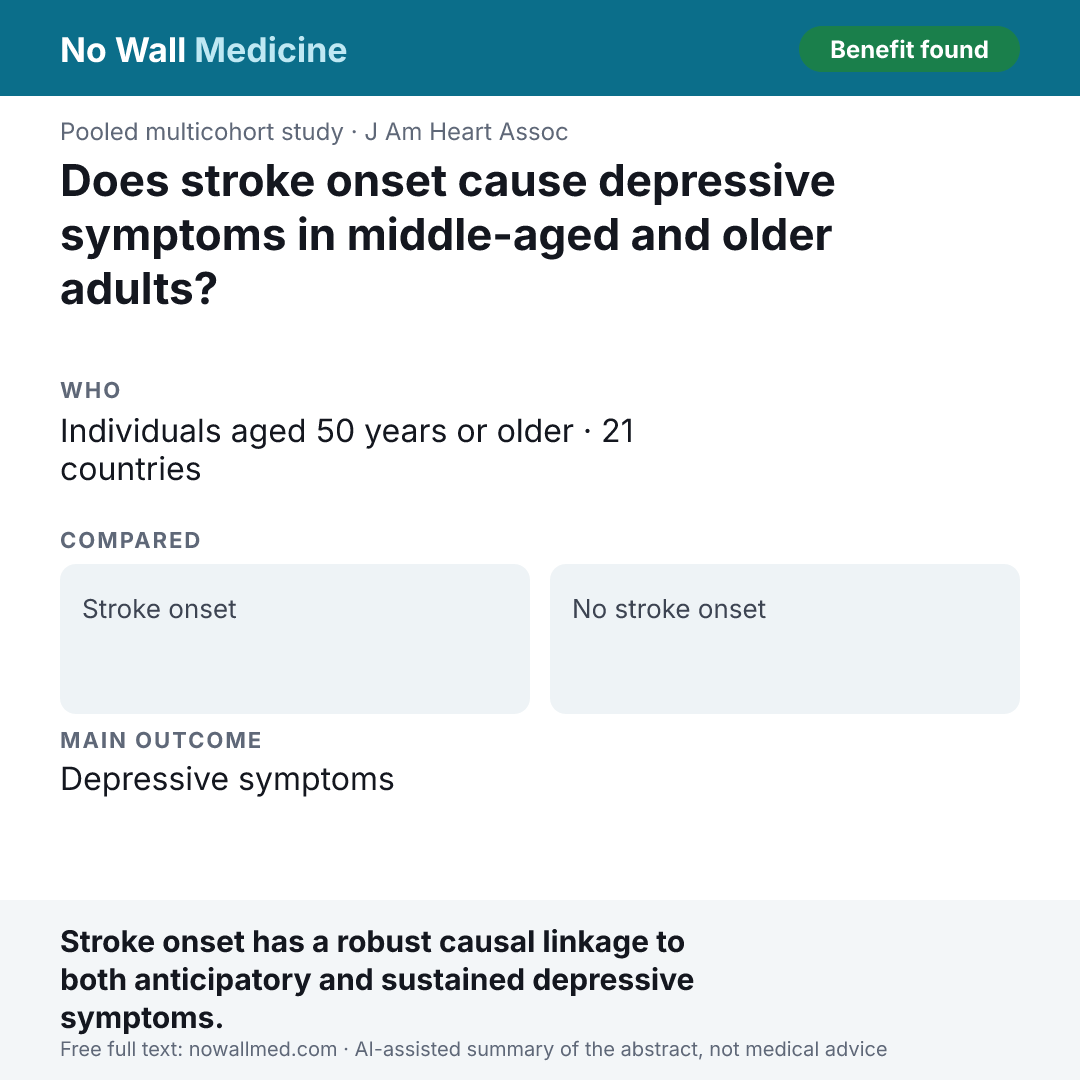
Does stroke onset cause depressive symptoms in middle-aged and older adults?
Who
Individuals aged 50 years or older · 21 countries
Compared
Stroke onset
No stroke onset
Main outcome
Depressive symptoms
Bottom line: Stroke onset has a robust causal linkage to both anticipatory and sustained depressive symptoms.
J Am Heart Assoc · 2025-09-25 · Save PNG
Key points
- Researchers analyzed longitudinal data from individuals aged 50 years or older across 21 countries.
- Stroke onset was linked to depressive symptoms, showing both anticipatory effects and a sustained impact for more than a decade.
- The relationship between stroke and depressive symptoms was associated with higher mortality from noncommunicable diseases and life expectancy.
Why it matters: The causal relationship between stroke onset and depressive symptoms remains unclear, requiring comprehensive multicountry studies to examine both static and dynamic effects over time.
Discussion prompts
- Would these patients look like yours? Who was left out?
- Is the main outcome one that matters to patients?
- Is the difference large enough to change what you do?
Cite: Wang Y, Xia Y, Yuan Y, et al. Static and Dynamic Effects of Stroke Onset on Depressive Symptoms in Middle-Aged and Older Adults: Evidence Across 21 Countries. J Am Heart Assoc. 2025;14(19):e038339. doi:10.1161/JAHA.124.038339
Free full text: PubMed Central · Summary and visual abstract: nowallmed.com/a/static-and-dynamic-effects-of-stroke-onset-on-depressive-symptoms-in-t7uryv/ (AI-assisted from the abstract; check the paper before relying on it).