Baseline profile of 1278 adults with type 2 diabetes in the SEPRA clinical trial
Study design and baseline profile for adults with type 2 diabetes in the once-weekly subcutaneous SEmaglutide randomized PRAgmatic (SEPRA) trial
Open-label, randomized, pragmatic clinical trialUnclear result
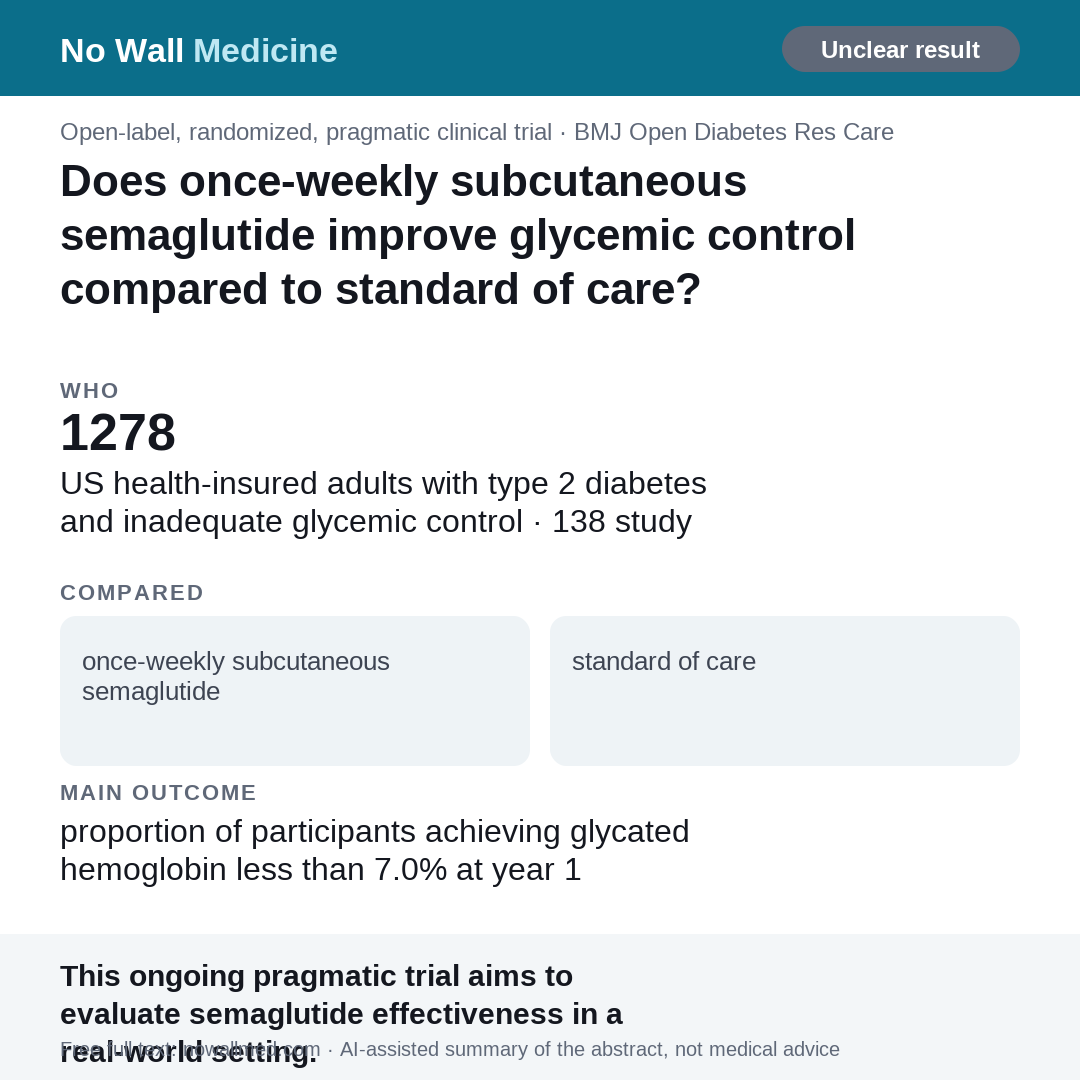
Does once-weekly subcutaneous semaglutide improve glycemic control compared to standard of care?
Who
1278
US health-insured adults with type 2 diabetes and inadequate glycemic control · 138 study sites across the USA
Compared
once-weekly subcutaneous semaglutide
standard of care
Main outcome
proportion of participants achieving glycated hemoglobin less than 7.0% at year 1
Bottom line: This ongoing pragmatic trial aims to evaluate semaglutide effectiveness in a real-world setting.
Limitation: The study is ongoing and results are not yet reported.
BMJ Open Diabetes Res Care · 2023-05-04Download image
Clinical question: Does once-weekly subcutaneous semaglutide improve glycemic control compared to standard of care?
Why it matters: It is unknown how effective once-weekly semaglutide is in a real-world setting compared to its efficacy in controlled clinical trials.
Key points
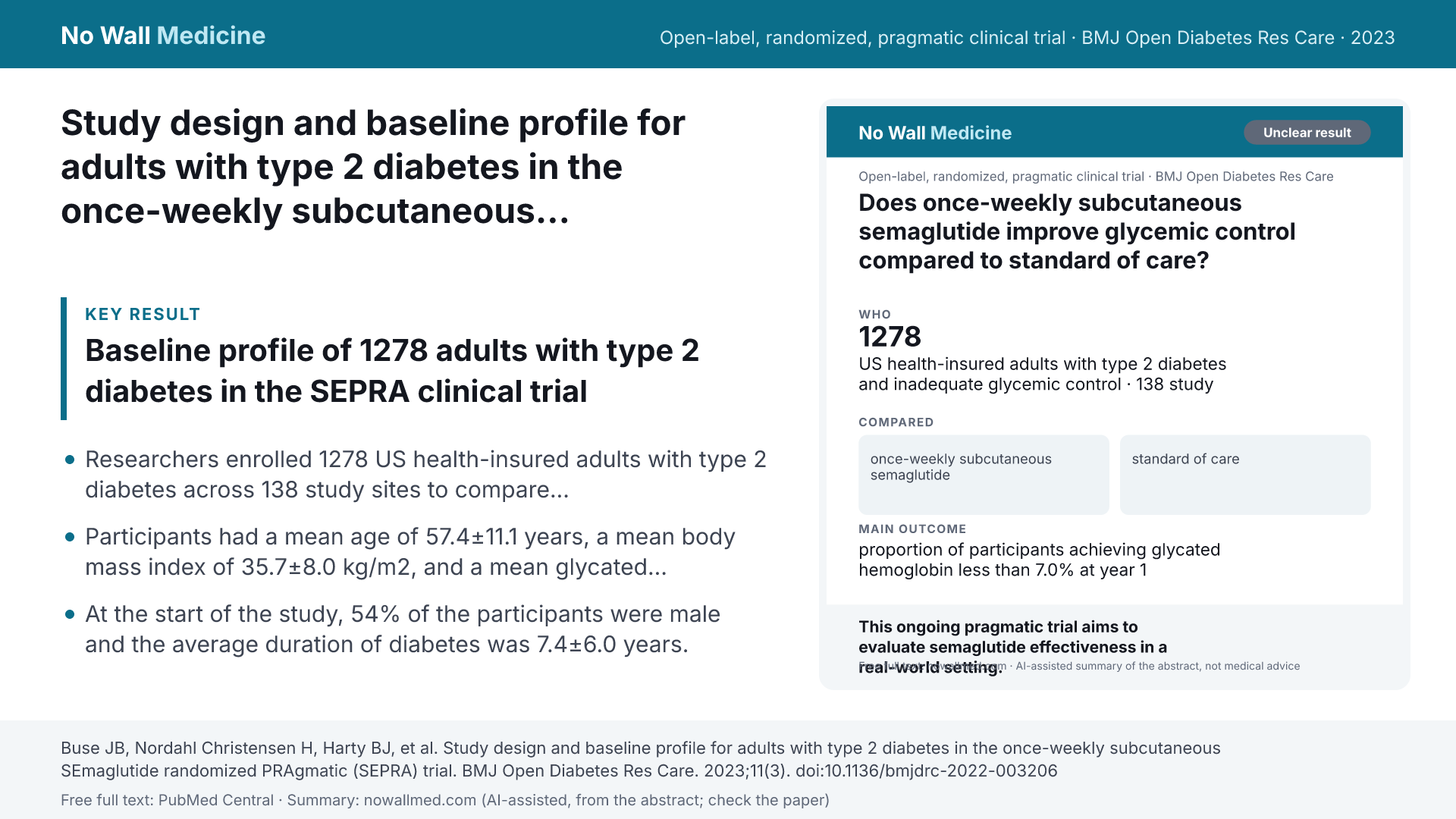
- Researchers enrolled 1278 US health-insured adults with type 2 diabetes across 138 study sites to compare once-weekly semaglutide to standard care.
- Participants had a mean age of 57.4±11.1 years, a mean body mass index of 35.7±8.0 kg/m2, and a mean glycated hemoglobin level of 8.5±1.6%.
- At the start of the study, 54% of the participants were male and the average duration of diabetes was 7.4±6.0 years.
Headline and key points written with AI from the paper’s abstract, with every number checked against it. Read the paper before relying on them.
Was this summary helpful?
Abstract
Introduction
Once-weekly subcutaneous semaglutide, a glucagon-like peptide-1 analog, is approved in the USA as an adjunct to diet and exercise for adults with inadequately controlled type 2 diabetes (T2D) to improve glycemic control and reduce the risk of major adverse cardiovascular events in people with T2D and established cardiovascular disease. The Semaglutide Unabated Sustainability in Treatment of Type 2 Diabetes (SUSTAIN) phase III clinical trial program demonstrated the efficacy and safety of once-weekly subcutaneous semaglutide; however, determining its effectiveness in a real-world setting could support decision-making by clinicians, payers and policy makers in routine clinical practice. Research design and methods
SEmaglutide PRAgmatic (SEPRA) is an ongoing open-label, randomized, pragmatic clinical trial designed to compare the effects of once-weekly subcutaneous semaglutide versus standard of care in US health-insured adults with T2D and physician-determined inadequate glycemic control. The primary end point is the proportion of participants achieving glycated hemoglobin (HbA1c) <7.0% at year 1; other key outcomes include glycemic control, weight loss, healthcare utilization, and patient-reported outcomes. Individual-level data will be collected from routine clinical practice and health insurance claims. The last patient last visit is expected by June 2023. Results
Between July 2018 and March 2021, 1278 participants were enrolled from 138 study sites across the USA. At baseline, 54% were male with mean±SD age 57.4±11.1 years and body mass index 35.7±8.0 kg/m2. Mean diabetes duration was 7.4±6.0 years and mean HbA1c was 8.5±1.6%. At baseline, concomitant antidiabetes medications included metformin, sulfonylureas, sodium-glucose co-transporter-2 inhibitors, and dipeptidyl peptidase-4 inhibitors. The majority of participants had hypertension and dyslipidemia. The trial design was self-assessed using the PRagmatic Explanatory Continuum Indicator Summary-2 tool by the study steering group and was scored 4-5 in all domains suggesting a highly pragmatic study. Conclusions
SEPRA, a highly pragmatic ongoing study, will provide data on the effects of once-weekly subcutaneous semaglutide in a real-world setting when used during routine management of T2D. Trial registration number
NCT03596450.
Abstract reproduced under the article’s CC BY NC licence.
Subject terms
Cite this article
Buse JB, Nordahl Christensen H, Harty BJ, Mitchell J, Soule BP, Zacherle E. Study design and baseline profile for adults with type 2 diabetes in the once-weekly subcutaneous SEmaglutide randomized PRAgmatic (SEPRA) trial. BMJ Open Diabetes Res Care. 2023. doi:10.1136/bmjdrc-2022-003206
Spotted a mistake? Suggest a correction
Top studies every Monday
The week’s key trials and guidelines in your specialties, plus any topics you follow. By email, free.
Get the weekly digest