Subclonal TP53 mutations in follicular lymphoma are linked to different responses to radioimmunotherapy
Subclonal TP53 mutations are frequent and predict resistance to radioimmunotherapy in follicular lymphoma
Randomized trialBenefit found
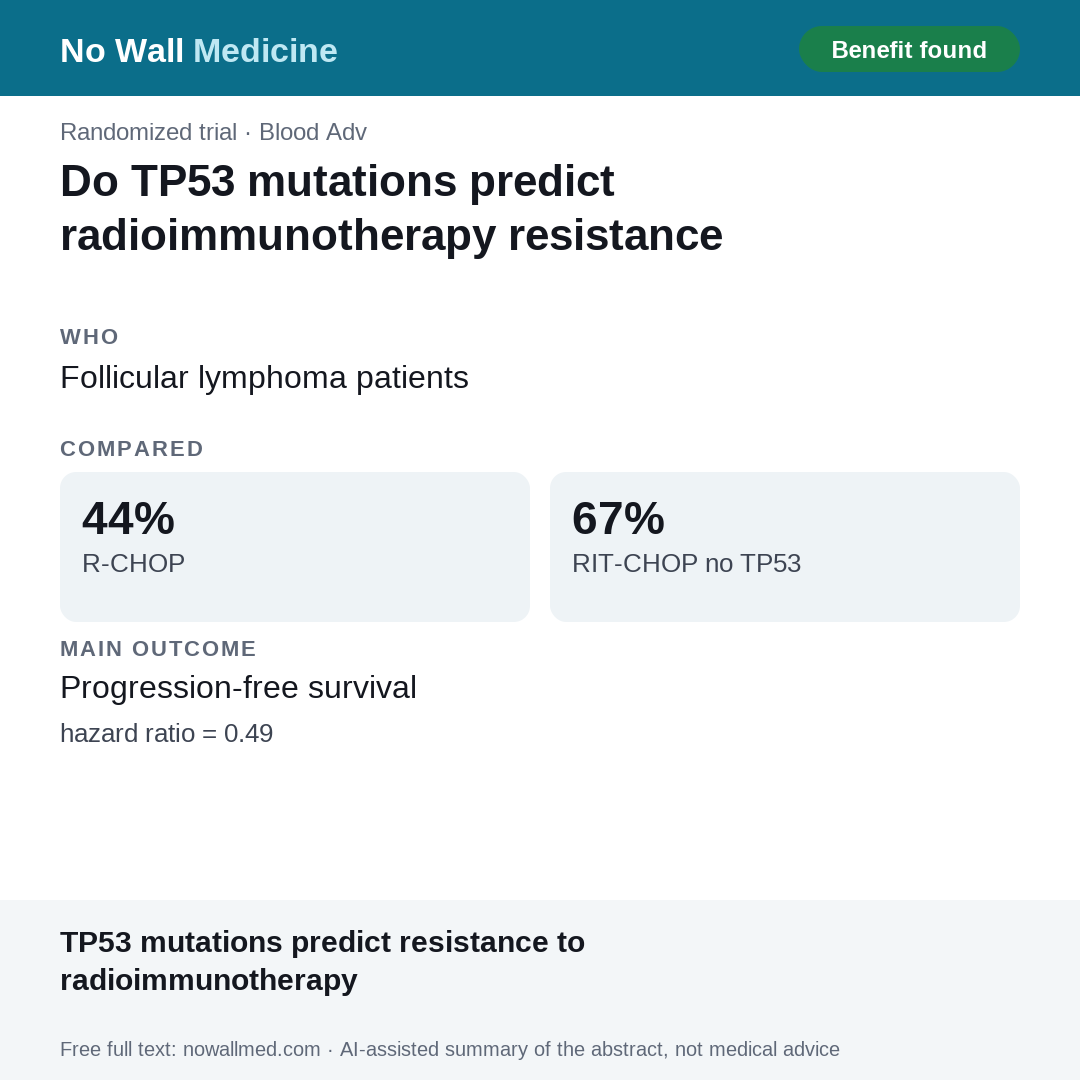
Do TP53 mutations predict radioimmunotherapy resistance
Who
Follicular lymphoma patients
Compared
44%R-CHOP
67%RIT-CHOP no TP53
Main outcome
Progression-free survival
Result: hazard ratio = 0.49
Bottom line: TP53 mutations predict resistance to radioimmunotherapy
Blood Adv · 2023-06-28Download image
Why it matters: It was unknown if subclonal TP53 mutations, which are less common than primary mutations, influence how patients respond to radioimmunotherapy in follicular lymphoma.
Key points
- Researchers analyzed archival specimens from a phase 3 randomized trial comparing chemotherapy plus rituximab to chemotherapy plus radioimmunotherapy in patients with follicular lymphoma.
- Subclonal TP53 mutations, which are mutations present in only a subset of cells, were found in 25% of diagnostic specimens and 27% of a validation cohort.
- In patients without detectable TP53 mutations, radioimmunotherapy was associated with a 10-year progression-free survival of 67% compared to 44% for rituximab-based chemotherapy.
Headline and key points written with AI from the paper’s abstract, with every number checked against it. Read the paper before relying on them.
Was this summary helpful?
Abstract
Although TP53 is commonly mutated in transformed follicular lymphoma, mutations are reported in <5% of pretreatment follicular lymphoma (FL) specimens. We assayed archival follicular B-cell non-Hodgkin lymphoma specimens from a completed clinical trial, Southwest Oncology Group S0016, a phase 3 randomized intergroup trial of CHOP (cyclophosphamide, hydroxydaunorubicin, oncovin, and prednisone) chemotherapy plus R-CHOP (rituximab-CHOP) compared with CHOP chemotherapy plus 131-iodine tositumomab (radioimmunotherapy [RIT]-CHOP). Subclonal TP53 mutations (median allele frequency 0.02) were found in 25% of diagnostic FL specimens and in 27% of a separate validation cohort. In the R-CHOP arm, pathogenic TP53 mutations were not associated with progression-free survival (PFS) (10-year PFS 43% vs 44%). In contrast, among patients with no detectable pathogenic TP53 mutation, RIT-CHOP was associated with a longer PFS than with R-CHOP (10-year PFS 67% vs 44%; hazard ratio = 0.49; P = .008). No relationship was detected between PFS and the extent of activation-induced cytidine deaminase (AICDA)-mediated heterogeneity. In summary, subclonal TP53 mutations are common in FL and are a distinct phenomenon from AICDA-mediated genetic heterogeneity. The absence of a detectable subclonal mutation in TP53 defined a population that particularly benefited from RIT.
Abstract reproduced under the article’s CC BY NC ND licence.
Subject terms
Cite this article
Burack WR, Li H, Adlowitz D, Spence JM, Rimsza LM, Shadman M. Subclonal TP53 mutations are frequent and predict resistance to radioimmunotherapy in follicular lymphoma. Blood Adv. 2023. doi:10.1182/bloodadvances.2022009467
Spotted a mistake? Suggest a correction
Top studies every Monday
The week’s key trials and guidelines in your specialties, plus any topics you follow. By email, free.
Get the weekly digest