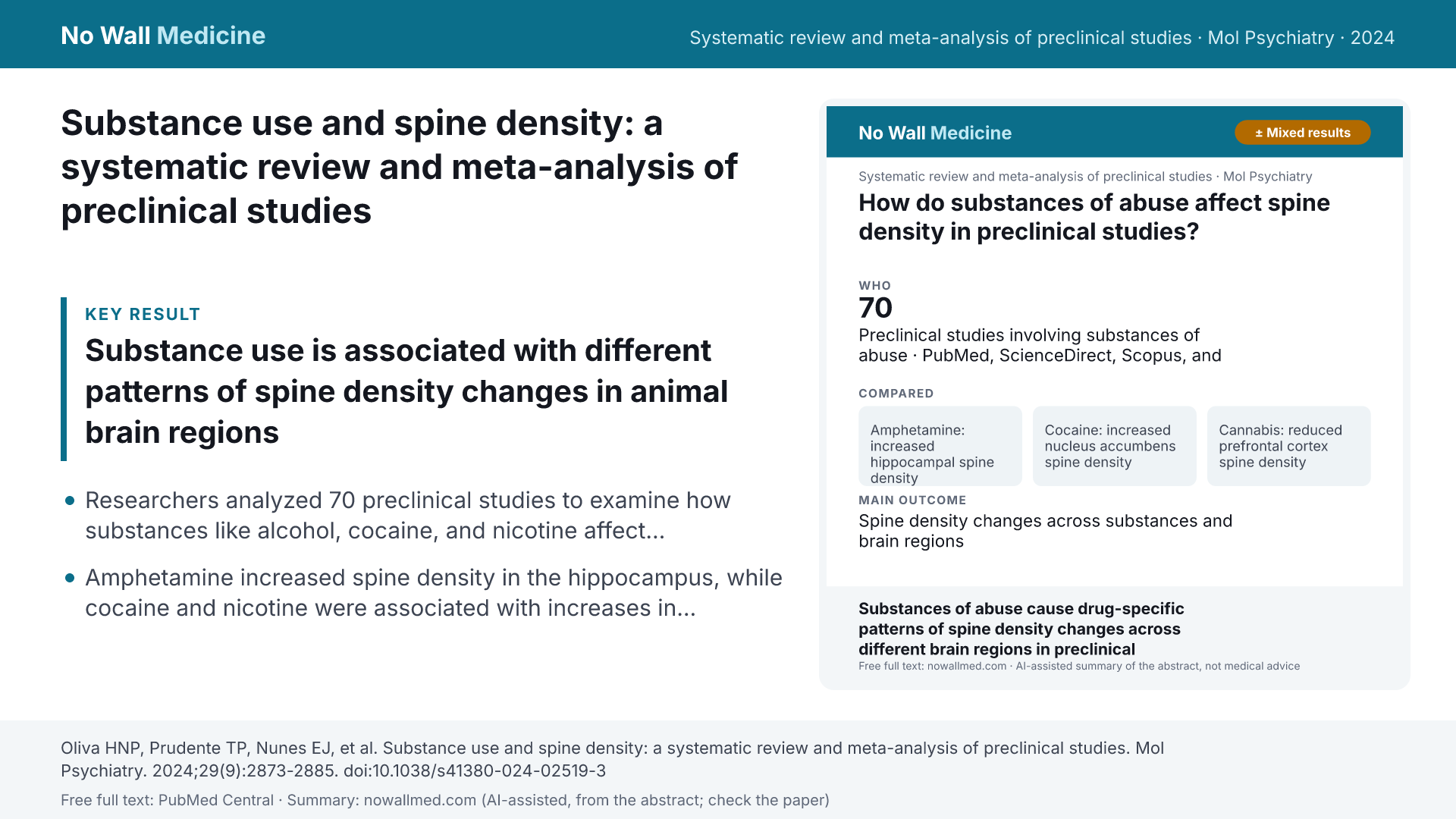
Substance use and spine density: a systematic review and meta-analysis of preclinical studies
Key result: Substance use is associated with different patterns of spine density changes in animal brain regions
Key points
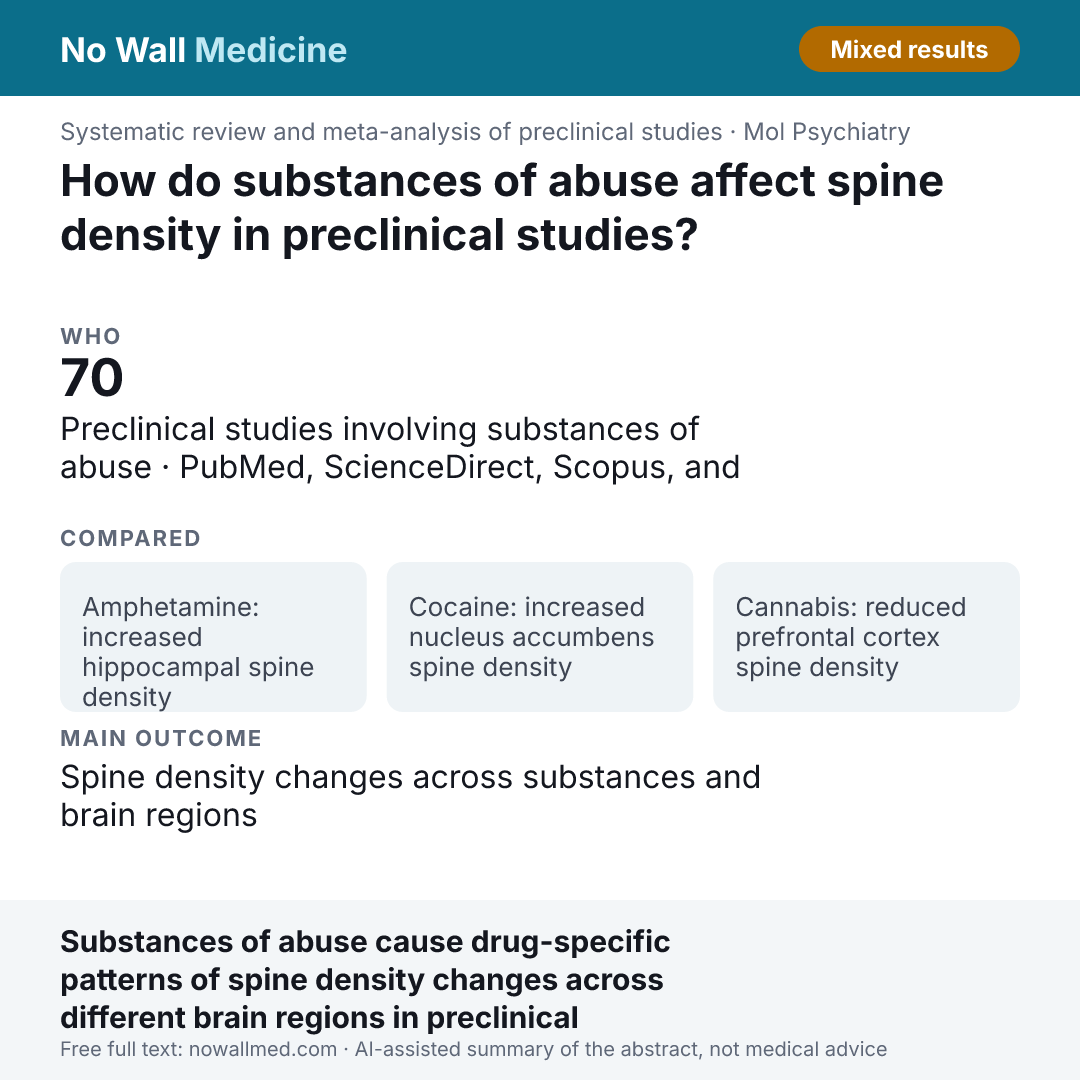
- Researchers analyzed 70 preclinical studies to examine how substances like alcohol, cocaine, and nicotine affect spine density, which refers to the number of connections between brain cells.
- Amphetamine increased spine density in the hippocampus, while cocaine and nicotine were associated with increases in the nucleus accumbens.
- In the prefrontal cortex, alcohol and amphetamine were associated with increased spine density, whereas cannabis was associated with reduced spine density.
Why it matters: Results regarding how different substances change spine density across various brain regions have been inconsistent in previous research.
Limitation the authors note: The meta-analysis showed moderate-to-high heterogeneity across all substances studied.
Discussion prompts
- Would these patients look like yours? Who was left out?
- Is the main outcome one that matters to patients?
- Is the difference large enough to change what you do?
Cite: Oliva HNP, Prudente TP, Nunes EJ, et al. Substance use and spine density: a systematic review and meta-analysis of preclinical studies. Mol Psychiatry. 2024;29(9):2873-2885. doi:10.1038/s41380-024-02519-3
Free full text: PubMed Central · Summary and visual abstract: nowallmed.com/a/substance-use-and-spine-density-a-systematic-review-and-meta-analysis-1r3uzsn/ (AI-assisted from the abstract; check the paper before relying on it).