High levels of suPAR protein predict cardiovascular risk in patients with type 2 diabetes
suPAR Identifies Treatment-Resistant Inflammatory Risk Beyond hs-CRP in Type 2 Diabetes With Coronary Artery Disease: An Ancillary Analysis of BARI 2D
Ancillary analysis of a randomized trialBenefit found
Does suPAR predict cardiovascular risk in type 2 diabetes with coronary artery disease?
Who
2277
Patients with type 2 diabetes and coronary artery disease · not specified
Compared
High suPAR: not specified
Low suPAR: not specified
Main outcome
All-cause death, nonfatal myocardial infarction, or nonfatal stroke
Result: adjusted hazard ratio 1.40 (95% CI 1.27-1.55) per standard deviation
Bottom line: Elevated suPAR independently predicts cardiovascular risk even after high-sensitivity C-reactive protein normalization.
Diabetes Care · 2026-08-11Download image
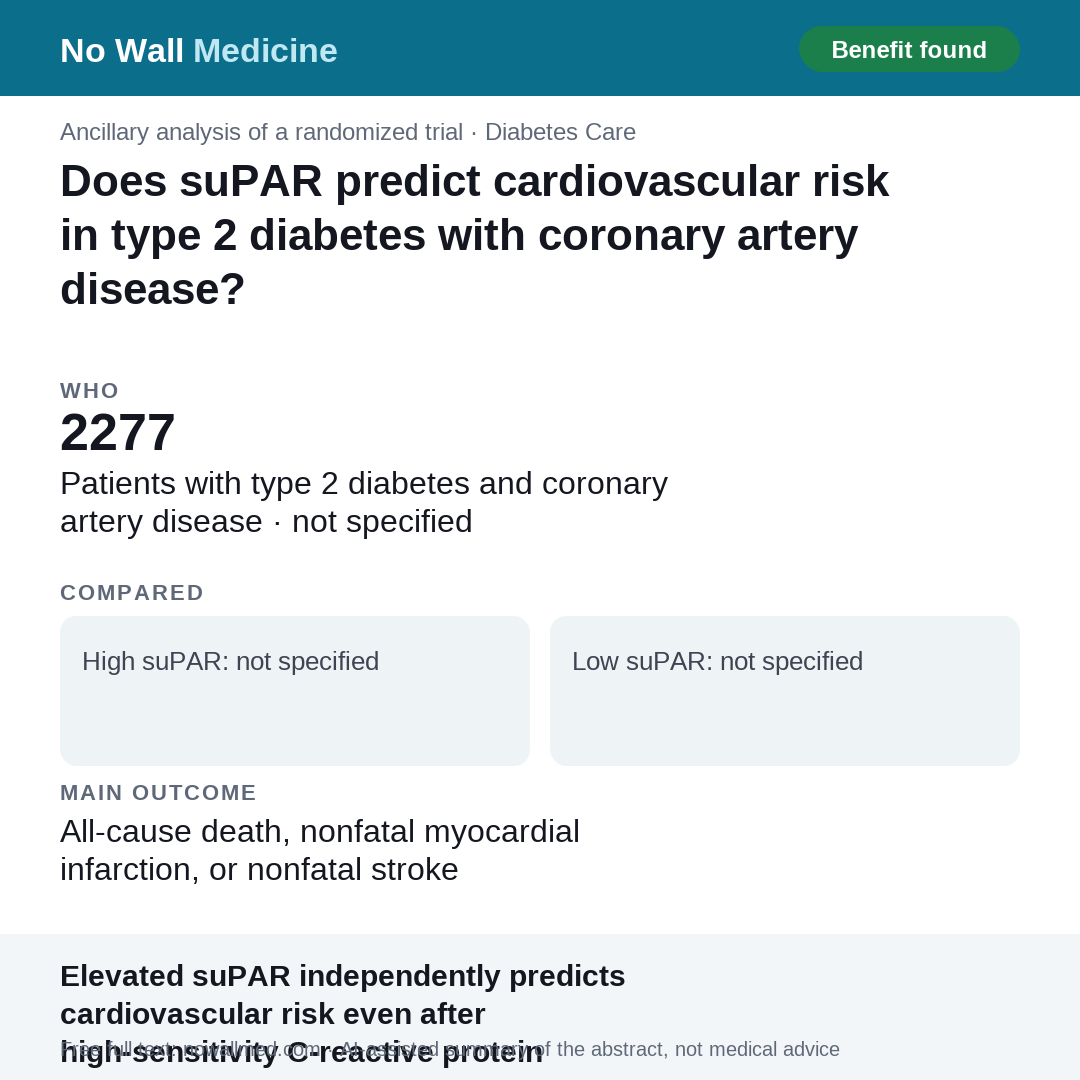
Clinical question: Does suPAR predict cardiovascular risk in type 2 diabetes with coronary artery disease?
Why it matters: Doctors need to know if suPAR can identify remaining cardiovascular risk in patients when traditional inflammatory markers like hs-CRP have already decreased.
Key points
- Researchers analyzed 2,277 patients with type 2 diabetes and coronary artery disease to compare how suPAR and high-sensitivity C-reactive protein (hs-CRP) relate to cardiovascular events.
- The protein suPAR independently predicted death, nonfatal heart attack, or nonfatal stroke with an adjusted hazard ratio of 1.40 per standard deviation.
- While hs-CRP levels declined over one year, suPAR levels remained unchanged by diabetes or cardiac treatment strategies, with median values between 2.96-3.15 ng/mL.
Headline and key points written with AI from the paper’s abstract, with every number checked against it. Read the paper before relying on them.
Topics
Cite this article
Ismail A, Huang Y, Ghazzal B, Hutten C, Farhat T, Elangovan R. suPAR Identifies Treatment-Resistant Inflammatory Risk Beyond hs-CRP in Type 2 Diabetes With Coronary Artery Disease: An Ancillary Analysis of BARI 2D. Diabetes Care. 2026. doi:10.2337/dc26-0899
Spotted a mistake? Suggest a correction