Suprazygomatic maxillary nerve blocks were associated with lower opioid use after pediatric adenotonsillectomy
Suprazygomatic Maxillary Nerve Blocks and Opioid Requirements in Pediatric Adenotonsillectomy: A Randomized Clinical Trial
Randomized, blinded, prospective trialBenefit found
Do suprazygomatic maxillary nerve blocks reduce pain and opioid use after pediatric adenotonsillectomy?
Who
53
Pediatric patients aged 2 to 14 years · Single-center tertiary pediatric hospital
Compared
Suprazygomatic maxillary nerve block group: 0.07 (0.11) mg/kg morphine equivalent
Control group: 0.15 (0.14) mg/kg morphine equivalent
Main outcome
Opioid consumption, FLACC scores, and opioid-free postanesthesia care unit stay
Result: mean difference 0.08; 95% CI, 0.01-0.15
Bottom line: Suprazygomatic maxillary nerve blocks reduce postoperative opioid consumption and pain scores in pediatric intracapsular adenotonsillectomy with low complication risk.
JAMA Otolaryngol · 2024-05-23Download image
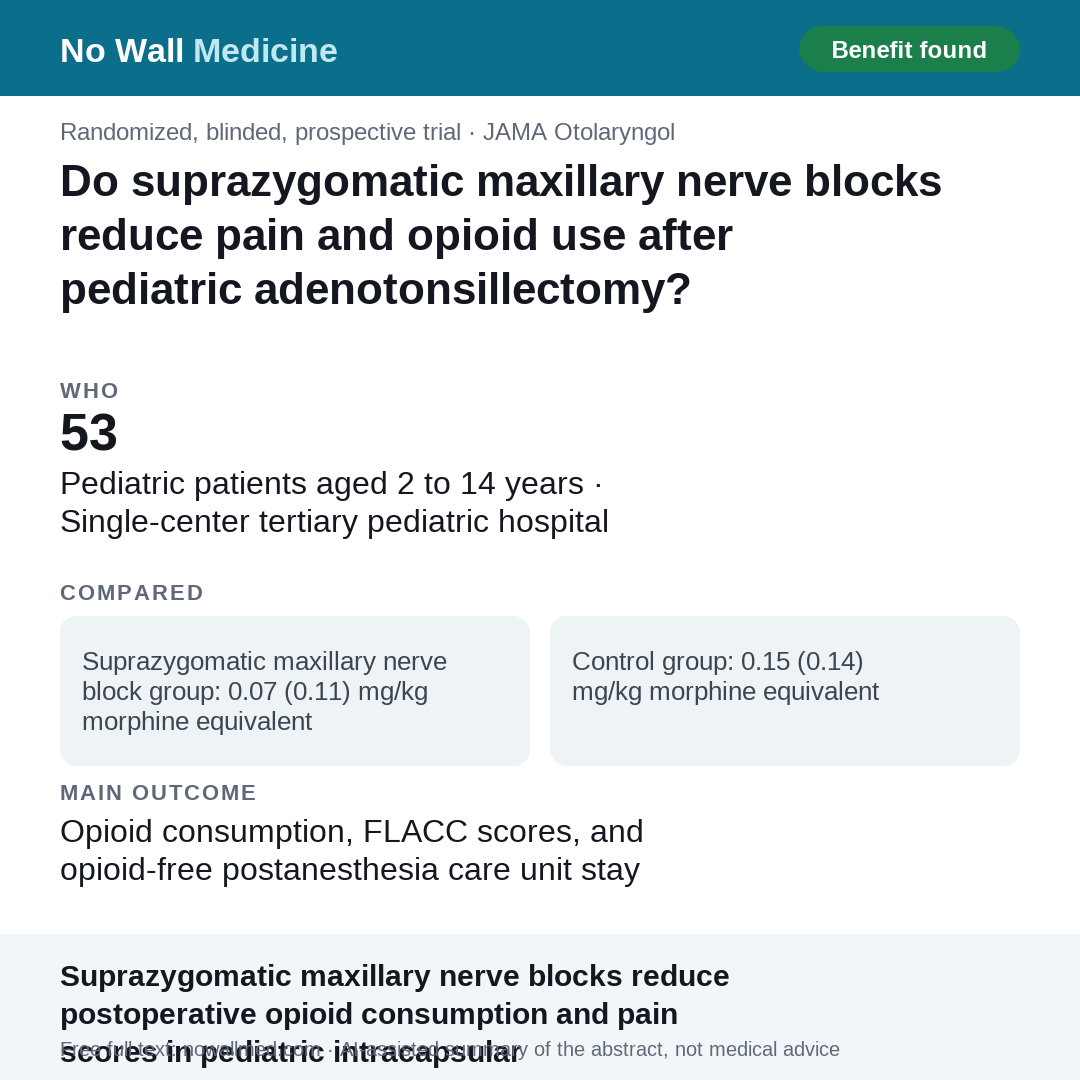
Clinical question: Do suprazygomatic maxillary nerve blocks reduce pain and opioid use after pediatric adenotonsillectomy?
Why it matters: Pain management after pediatric adenotonsillectomy often requires opioids, which can lead to potential complications.
Key points
- Researchers studied 53 pediatric patients aged 2 to 14 years who were randomized to receive either bilateral suprazygomatic maxillary nerve blocks or no blocks during surgery.
- The group receiving nerve blocks had a mean morphine equivalent consumption of 0.07 (0.11) mg/kg compared to 0.15 (0.14) mg/kg in the control group.
- Patients receiving the nerve blocks had a higher rate of opioid-free stays in the postanesthesia care unit at 58% compared to 26% in the control group.
Headline and key points written with AI from the paper’s abstract, with every number checked against it. Read the paper before relying on them.
Was this summary helpful?
Subject terms
Cite this article
Lin C, Abboud S, Zoghbi V, Kasimova K, Thein J, Meister KD. Suprazygomatic Maxillary Nerve Blocks and Opioid Requirements in Pediatric Adenotonsillectomy: A Randomized Clinical Trial. JAMA Otolaryngol. 2024. doi:10.1001/jamaoto.2024.1011
Spotted a mistake? Suggest a correction
Top studies every Monday
The week’s key trials and guidelines in your specialties, plus any topics you follow. By email, free.
Get the weekly digest