Surgical interventions for fetal hydrocephalus show varied developmental outcomes and high shunt failure rates
Surgical interventions for fetal hydrocephalus: systematic review
Systematic reviewMixed results
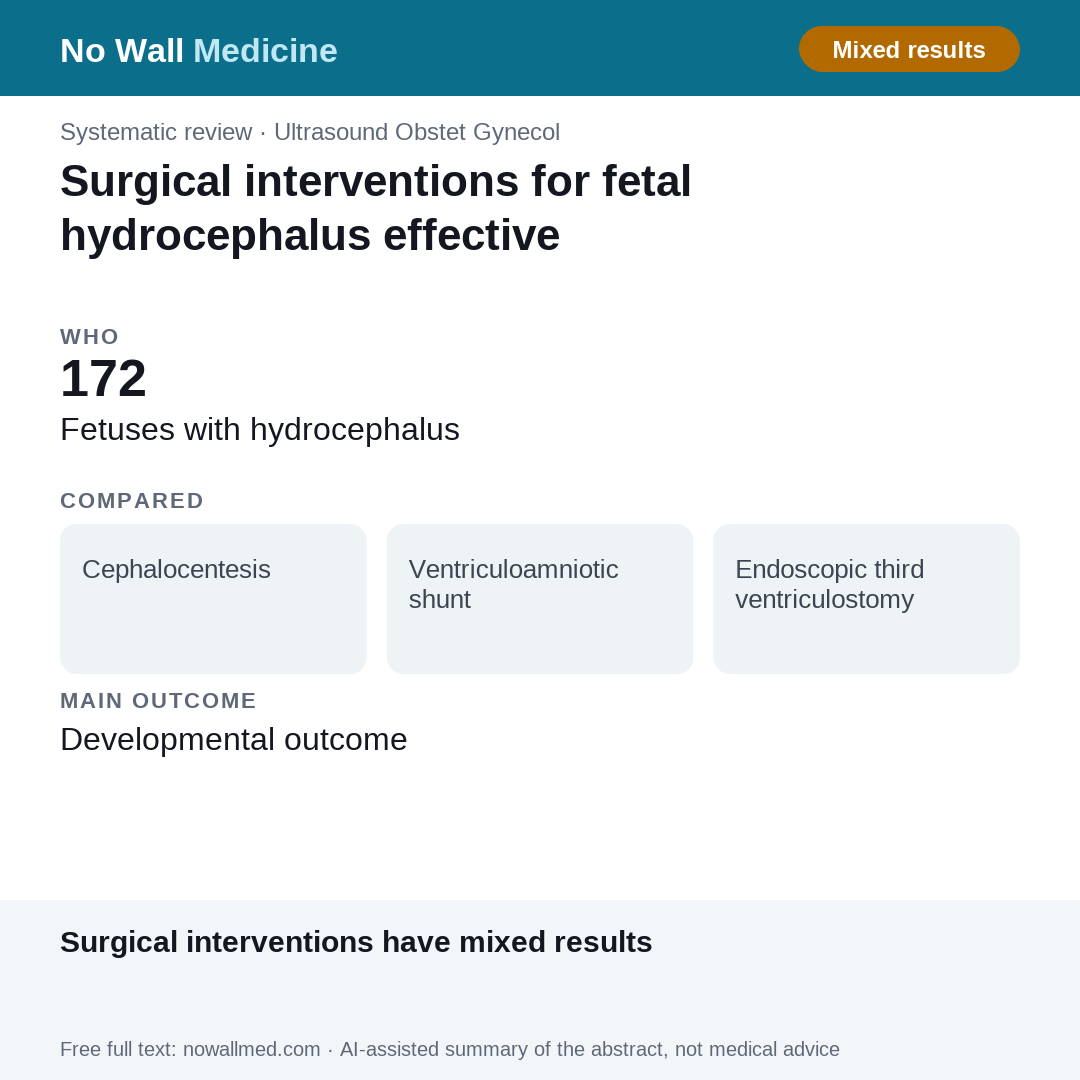
Surgical interventions for fetal hydrocephalus effective
Who
172
Fetuses with hydrocephalus
Compared
Cephalocentesis
Ventriculoamniotic shunt
Endoscopic third ventriculostomy
Main outcome
Developmental outcome
Bottom line: Surgical interventions have mixed results
Ultrasound Obstet Gynecol · 2025-08-18Download image
Why it matters: The effectiveness of surgical interventions for fetal hydrocephalus is unclear due to historical identification problems and high rates of morbidity and mortality following preterm birth.
Key points
- Researchers reviewed 12 studies involving 172 participants who underwent procedures like ventriculoamniotic shunt insertion, cephalocentesis, or endoscopic third ventriculostomy for fetal hydrocephalus.
- Among 131 fetuses with ventriculoamniotic shunts, failure occurred in 42/131 (32.1%) cases and perinatal complications were seen in nine (6.9%) participants.
- Of 137 participants with reported developmental outcomes, 63 (46.0%) had normal development, 12 (8.8%) had mild abnormalities, and 62 (45.3%) had moderate or severe difficulties.
Limitation the authors note: The authors state that the quality of developmental outcome data was poor, only assessed in the short term, and lacked a control group for comparison.
Headline and key points written with AI from the paper’s abstract, with every number checked against it. Read the paper before relying on them.
Topics
Cite this article
Murray C, Nicolaides K, Bleil C, Zebian B, Hart AR. Surgical interventions for fetal hydrocephalus: systematic review. Ultrasound Obstet Gynecol. 2025. doi:10.1002/uog.29310
Spotted a mistake? Suggest a correction