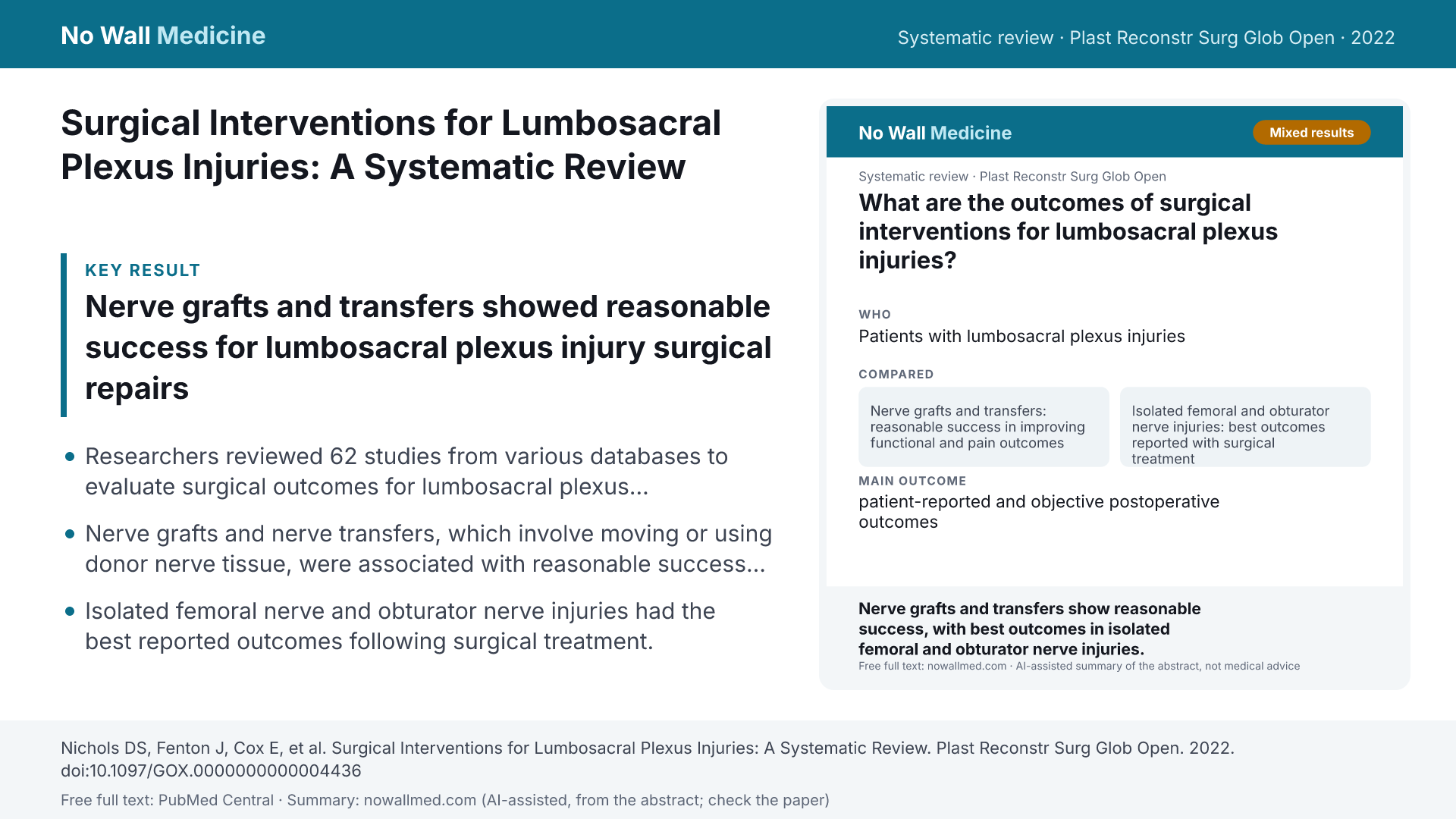
Nerve grafts and transfers showed reasonable success for lumbosacral plexus injury surgical repairs
Surgical Interventions for Lumbosacral Plexus Injuries: A Systematic Review
Systematic reviewMixed results
What are the outcomes of surgical interventions for lumbosacral plexus injuries?
Who
Patients with lumbosacral plexus injuries
Compared
Nerve grafts and transfers: reasonable success in improving functional and pain outcomes
Isolated femoral and obturator nerve injuries: best outcomes reported with surgical treatment
Main outcome
patient-reported and objective postoperative outcomes
Bottom line: Nerve grafts and transfers show reasonable success, with best outcomes in isolated femoral and obturator nerve injuries.
Plast Reconstr Surg Glob Open · 2022-08-24Download image

Clinical question: What are the outcomes of surgical interventions for lumbosacral plexus injuries?
Why it matters: Clear treatment guidelines and consolidated evaluations of surgical interventions for lumbosacral plexus injuries are currently unavailable.
Key points
- Researchers reviewed 62 studies from various databases to evaluate surgical outcomes for lumbosacral plexus injuries, which involve damage to the network of nerves in the lower back and pelvis.
- Nerve grafts and nerve transfers, which involve moving or using donor nerve tissue, were associated with reasonable success in improving pain and functional outcomes.
- Isolated femoral nerve and obturator nerve injuries had the best reported outcomes following surgical treatment.
Headline and key points written with AI from the paper’s abstract, with every number checked against it. Read the paper before relying on them.
Was this summary helpful?
Cite this article
Nichols DS, Fenton J, Cox E, et al. Surgical Interventions for Lumbosacral Plexus Injuries: A Systematic Review. Plast Reconstr Surg Glob Open. 2022. doi:10.1097/GOX.0000000000004436
Spotted a mistake? Suggest a correction